The Incredible Hulk, Red Dihedral
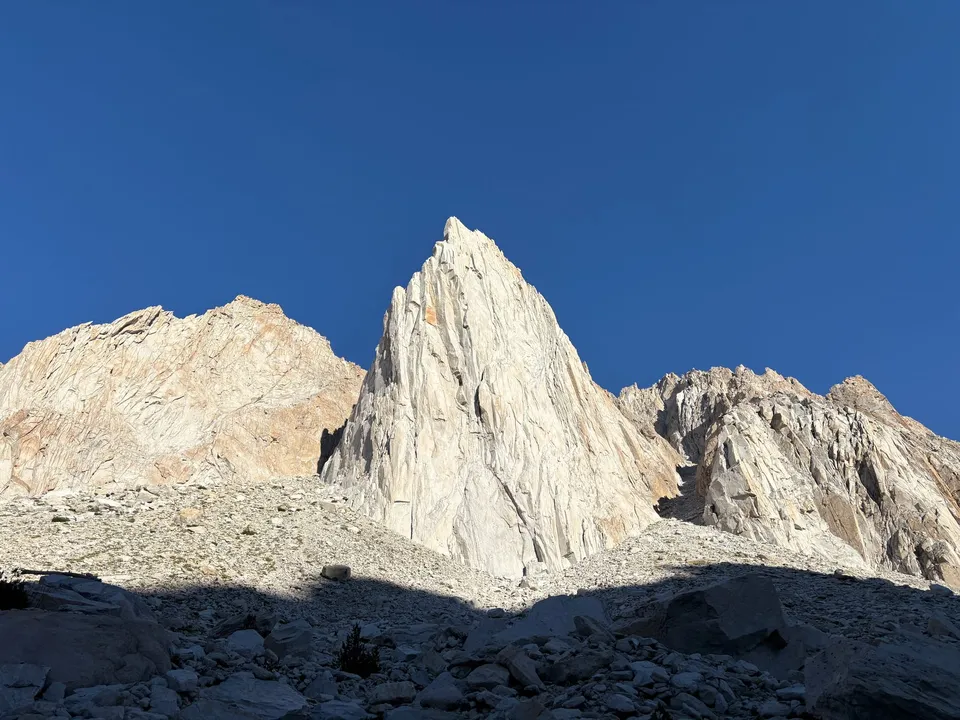
Among climbers, the Incredible Hulk is one of the most famous features in the Eastern Sierra alpine. It has a manageable approach, incredibly good granite, and is appealingly steep and pointy. To cap off her weeklong visit to the Eastside, Ellie and I decided to do the Red Dihedral, a classic 12-pitch 5.10b line that takes a direct line up the right side of the formation. The long and sustained dihedral pitch that forms the crux of the route is easy to pick out in any photo of the Hulk, and the rest of the climbing is varied and fun on excellent rock!
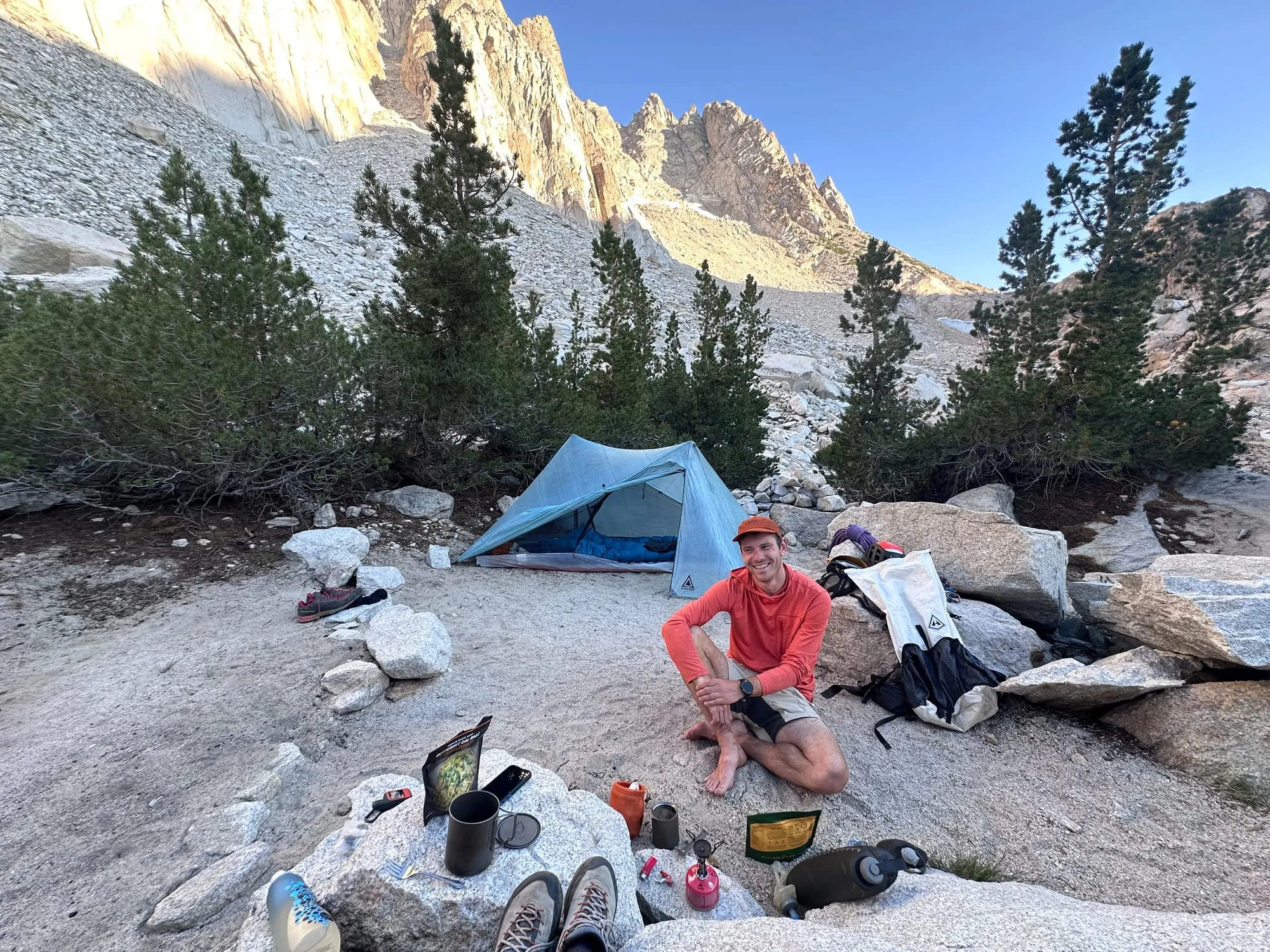
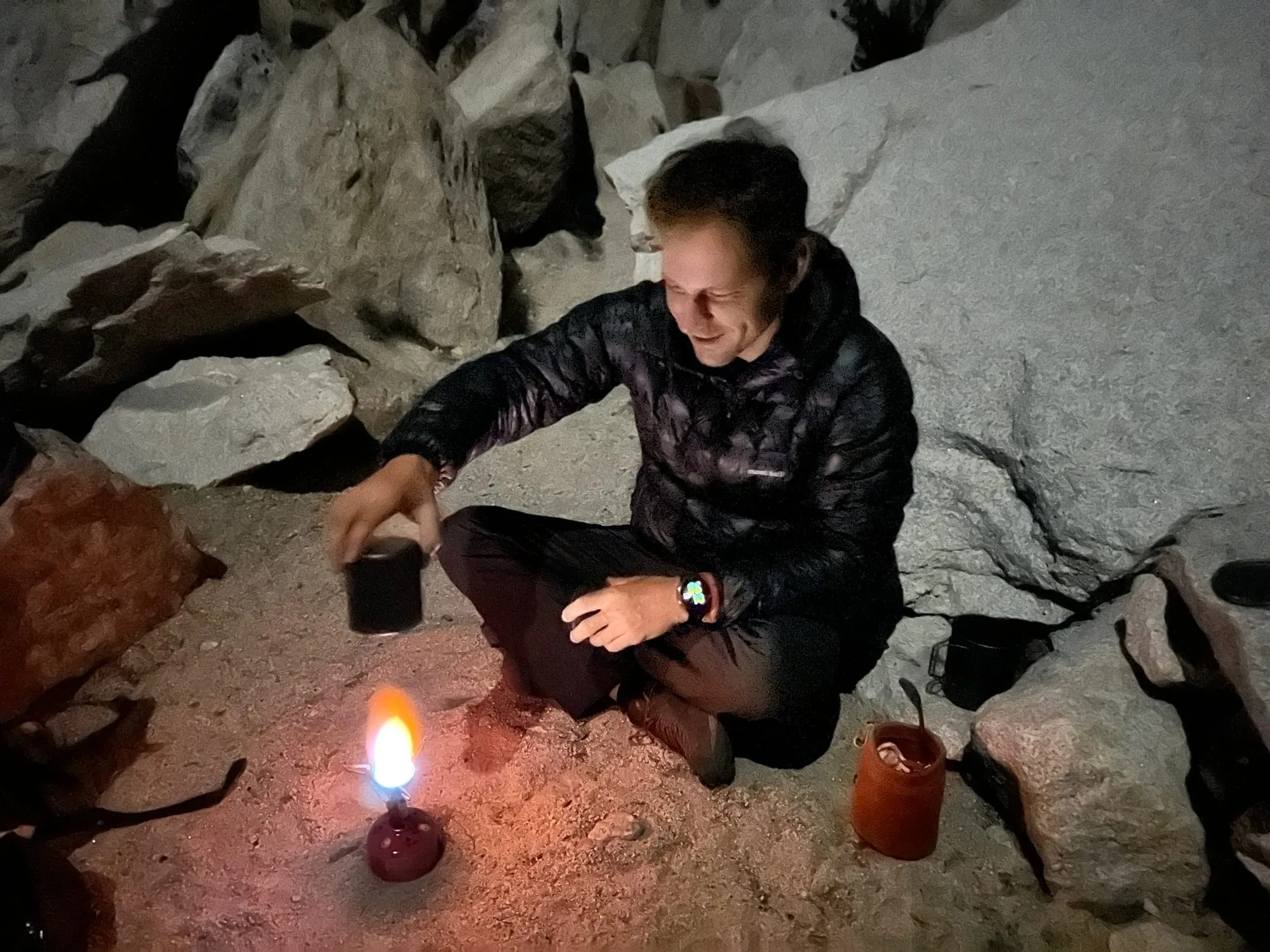
The approach to the Hulk is a relatively pleasant hike that gains about 2.5k' in a little less than 5 miles. We started our hike in at 4:30pm carrying overnight packs and took about 2hr 15min to reach camp, with the main crux of the approach being the intense sun beating down on us as we made our way up the valley. Thankfully, the steep walls on either side of us meant that our camp went into shade around 6:45 or so, and we were able to pitch our shelters and relax in the shade. As the sun went down, we started seeing shooting stars every 5-10 minutes - I hadn't realized, but we were close to the timeframe for the Perseid meteor shower, which seemed to be putting on an early show for us!
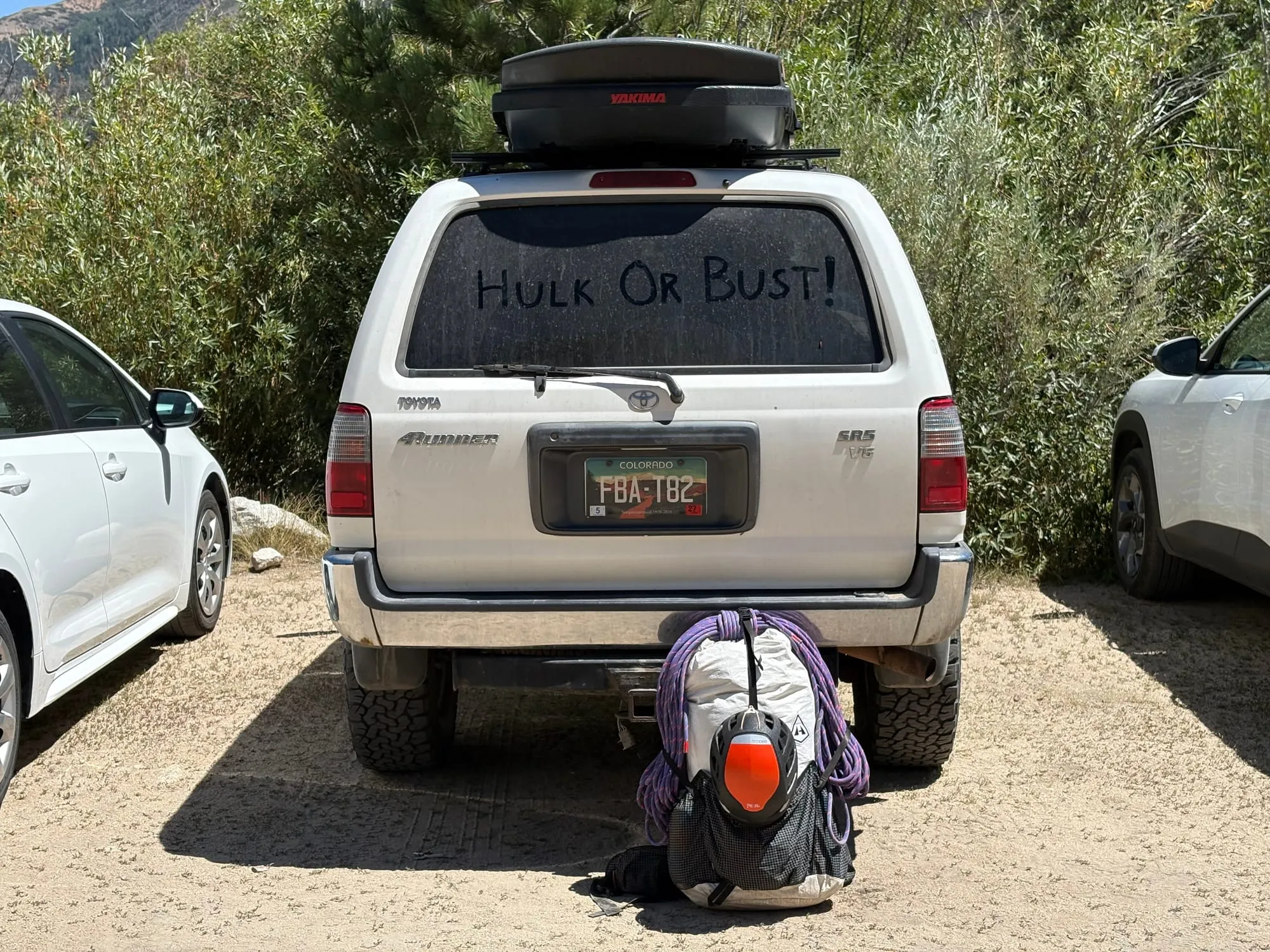
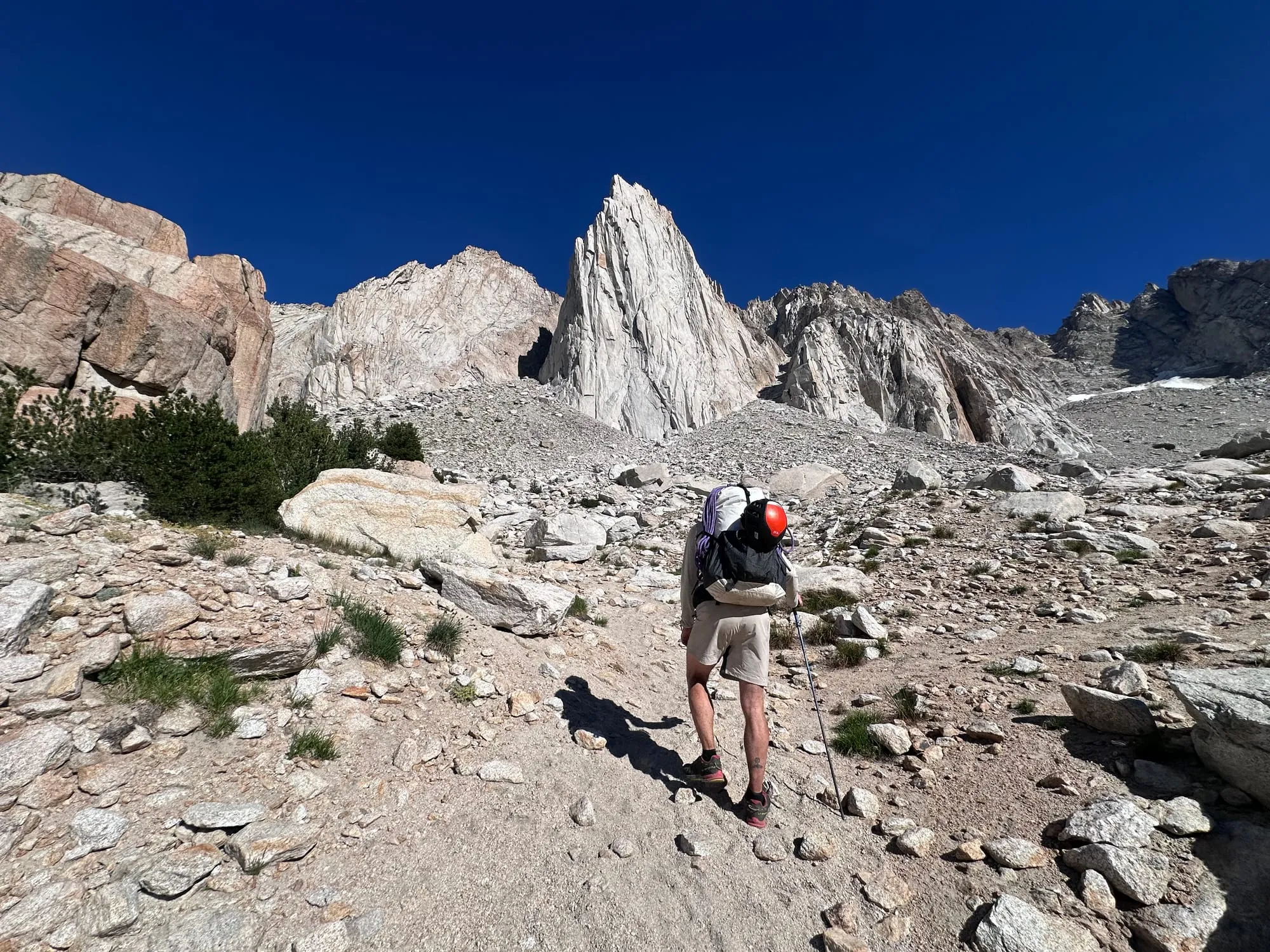
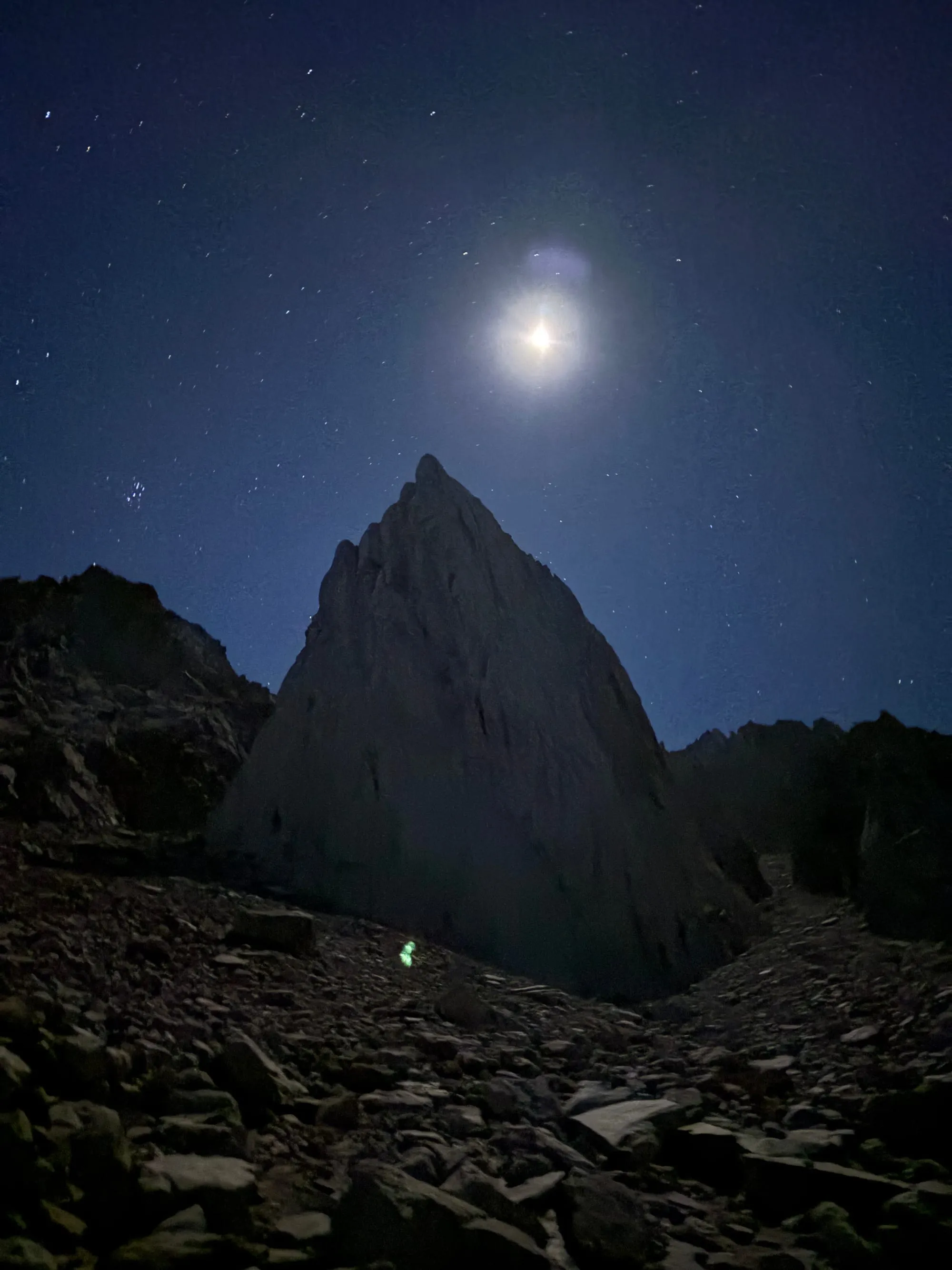
Sunrise was at about 5:30am, so we opted for a pre-dawn start around 4:45am with the aim of being on route at first light – both to avoid getting caught by the sun and to also hopefully get in front of any traffic on the route. Even though we were climbing midweek, there were at least 5 other parties camped out in the valley with us and we weren't sure how many of them were also planning to get on the Red Dihedral, or if there would be additional parties hiking in in the morning.
I'd climbed the Hulk once before in September 2023, and that time we'd gotten off route in the talus while approaching from camp and it had taken us significantly longer to reach the base of the formation. This time, I think the camp we chose set us up for success with a very well defined and easy to follow climbers' trail through the talus guiding us up to the foot of the Hulk. We made much better time than I expected to the base of the route and wound up with about 15 minutes to chill and do a very relaxed transition at the base of the route before the dawn arrived with enough light to ditch the headlamps and start climbing.
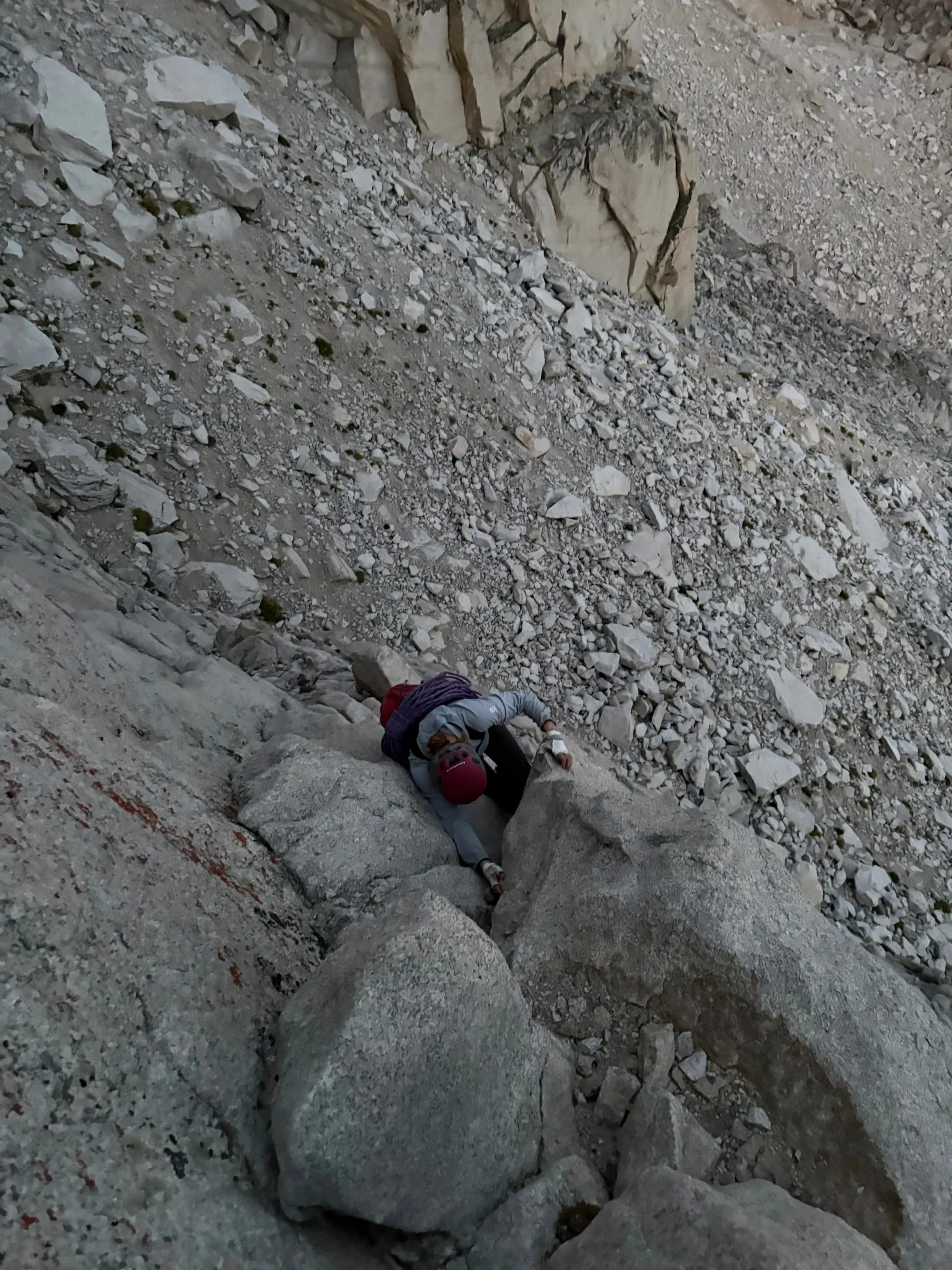
The Red Dihedral is often treated as a 14-pitch climb by people following the old Supertopo beta, and people using that beta often end up linking pitches but then dealing with weird rope drag issues or suboptimal belays. Instead, we were using a topo from Vitaliy Musiyenko's new High Sierra guidebook which breaks the climb up into 10 full-length pitches. I can wholeheartedly recommend as a great way to do this route; we enjoyed good belay ledges and zero issues with rope drag or communication all day using Vitaliy's pitch beta, and it felt like we were using roughly 50m of our 60m rope on nearly every pitch.
We had decided in camp to lead in blocks, with me leading the first five pitches which would take us up past the crux to the base of the shattered pillar, and then Ellie leading the final five pitches. I typically swing leads but the block leading strategy worked out well for us on this climb and I appreciated the more regular cadence of block leading versus swinging leads, with more frequent but shorter breaks from climbing.
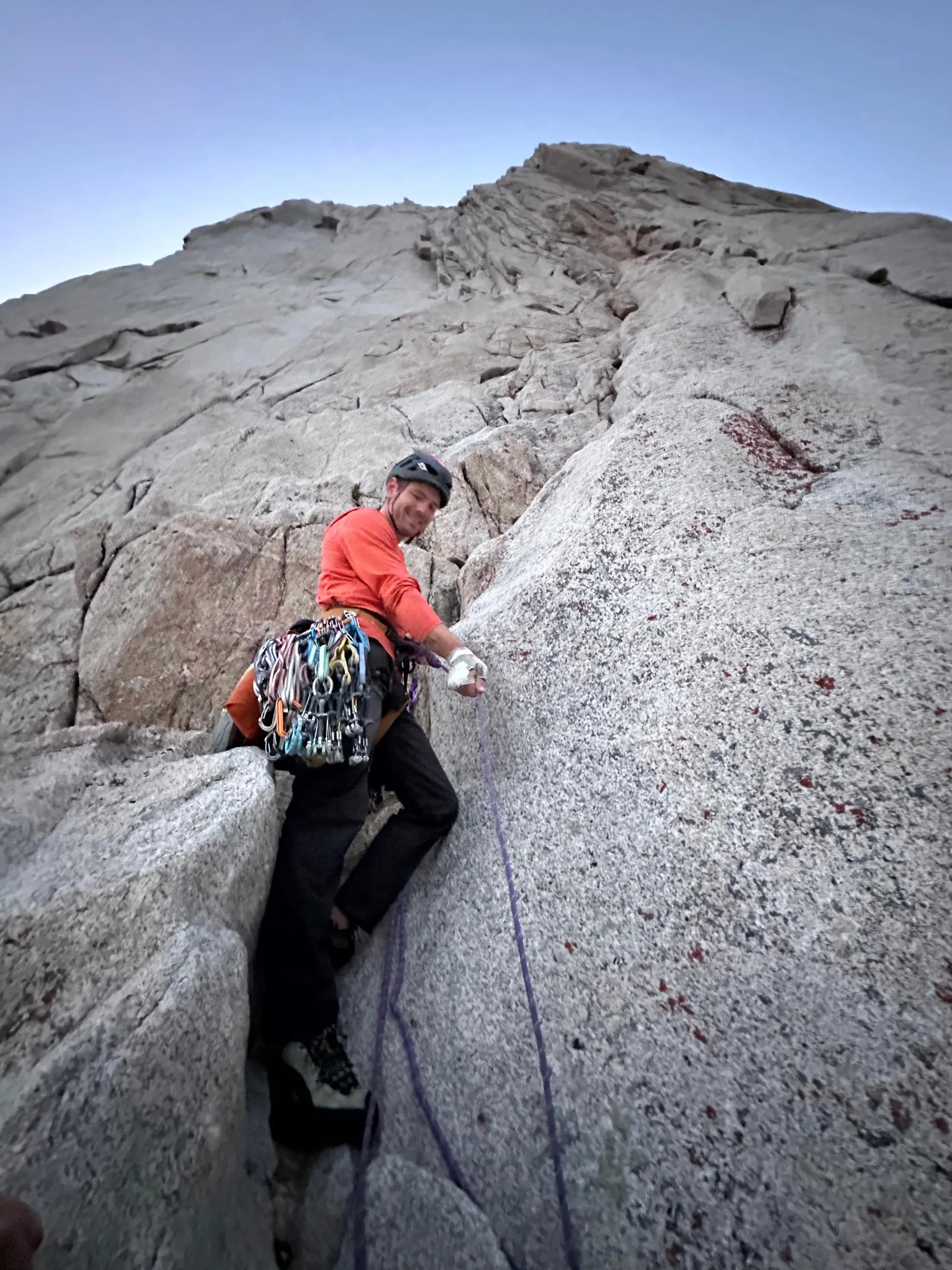
After hanging a pack at the base of the route and scrambling a 3rd class ramp system with brief sections of steeper 4th class climbing, we roped up on a good ledge below the start of the route proper. Pitch 1 is a long and scrambly pitch with a brief step of 5.8 to get around a bulge about a third of the way up. The start of the next pitch is an obvious steep V-slot chimneyish thing, and there's a good solid belay ledge and a crack behind a flake at this ledge that takes gear in the 0.4-0.5ish range.
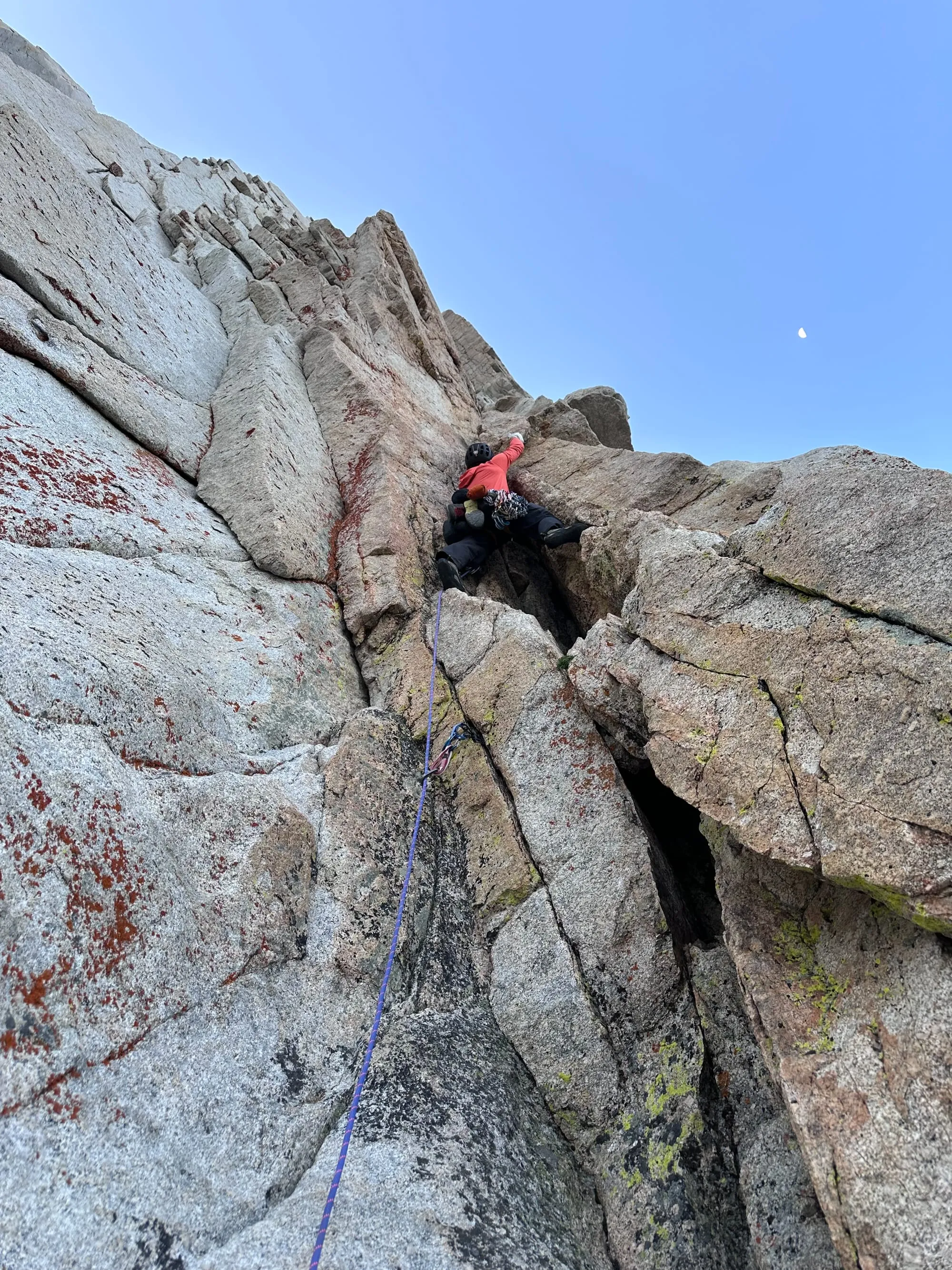
Pitch 2 has kind of a funky chimney start (5.9ish), then you follow a rightwards-trending groove towards the base of the obvious steep Red Dihedral pitch. The protection in this groove is sparse and not always obvious; I was happy to have tossed a couple of microcams and small nuts on the rack. The crux of the pitch is steep laybacking up big flakes, and then you keep running the rope up these huge spooky detached flake/pillars in the dihedral until they run out and you reach a stance on top of them with good trustworthy nuts and cams in the dihedral proper. I was glad to be at a place where this pitch felt flowy and enjoyable – both Ellie and I agreed that the climbing on pitch 2 is full value and more heady than the 5.9 grade would suggest.
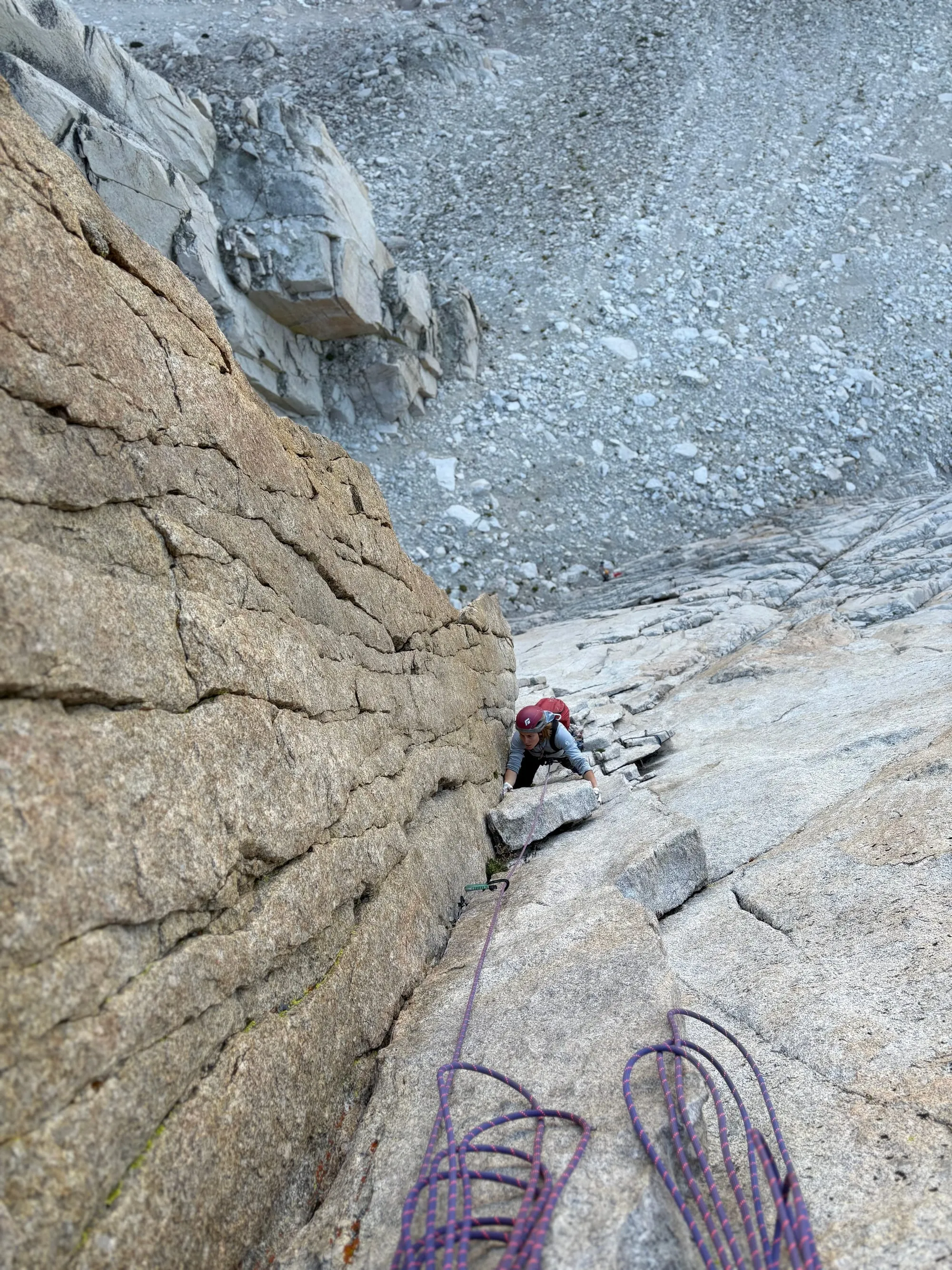
Pitch 3 is the eponymous Red Dihedral pitch - about 35 meters of sustained 5.9 climbing in a dihedral that varies from splitter tight hands to weird flaring fingers before finishing with a sporty 5.10b steep crux to pull through a roof on small holds before exiting right on face hold jugs onto a good belay ledge. This was SUPER fun with solid gear and movement the whole way. I thought that both the climbing and the protection on this pitch was way more straightforward than pitch 2, and even though the crux is mostly face holds rather than jams it protects really nicely and is very enjoyable and engaging climbing!
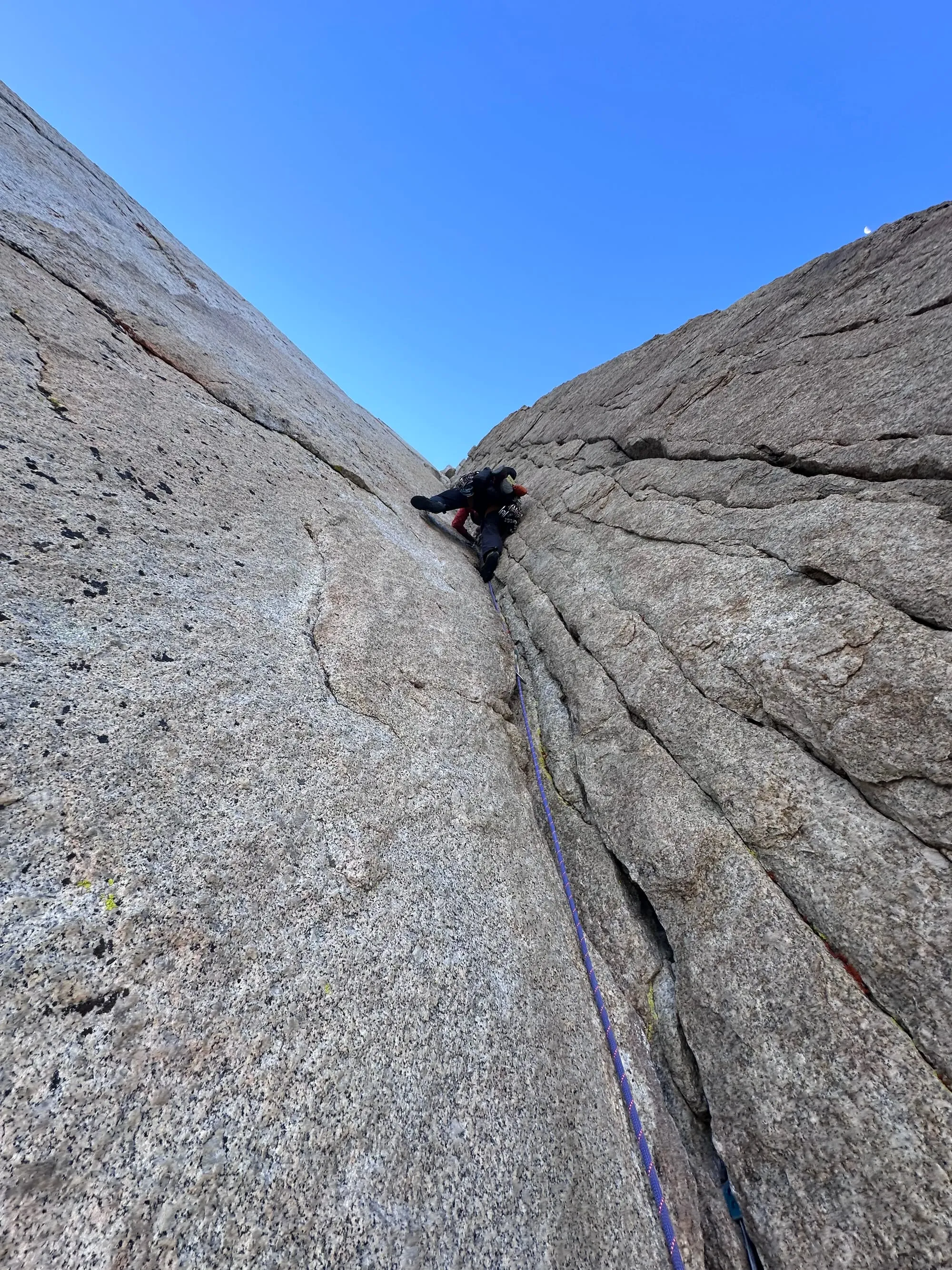
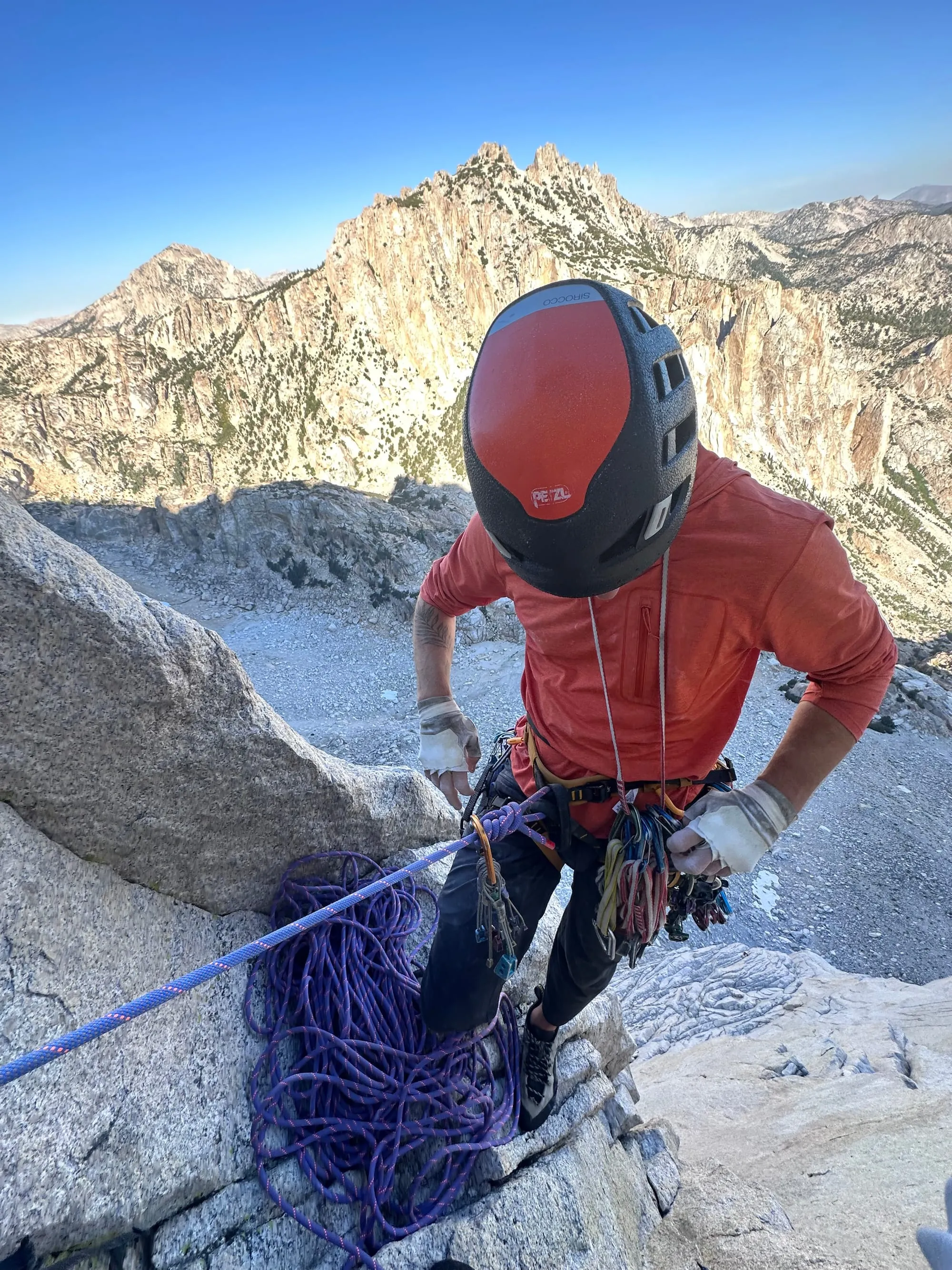
The gear options for the belay at the end of pitch 3 are small nuts and cams in a flaring 0.2-0.3ish crack and good #3 cam in a bomb-bay crack pod thing. I was happy to have the #3 for this anchor, since I didn't love the rock quality in the smaller crack. You can also keep going 5-10m up and right to a better ledge, but you'll have more rope drag and I thought it was really nice to be able to watch Ellie follow the red dihedral pitch so that I could give her a better belay through the crux.
At this point, Timmy O'Neil (pro climber, occasional rock guide, and dirtbag beatboxer extraordinaire) caught up with us. We'd met him and his client in camp the night before and talked a little, so we knew that we'd be seeing them at some point during our day. Timmy was super friendly and accommodating, and we chatted at the belay ledge as I brought Ellie up and cruised up pitch 4, which is a straightforward 5.8ish traverse up and right to a big comfortable ledge below an obvious splitter finger crack.
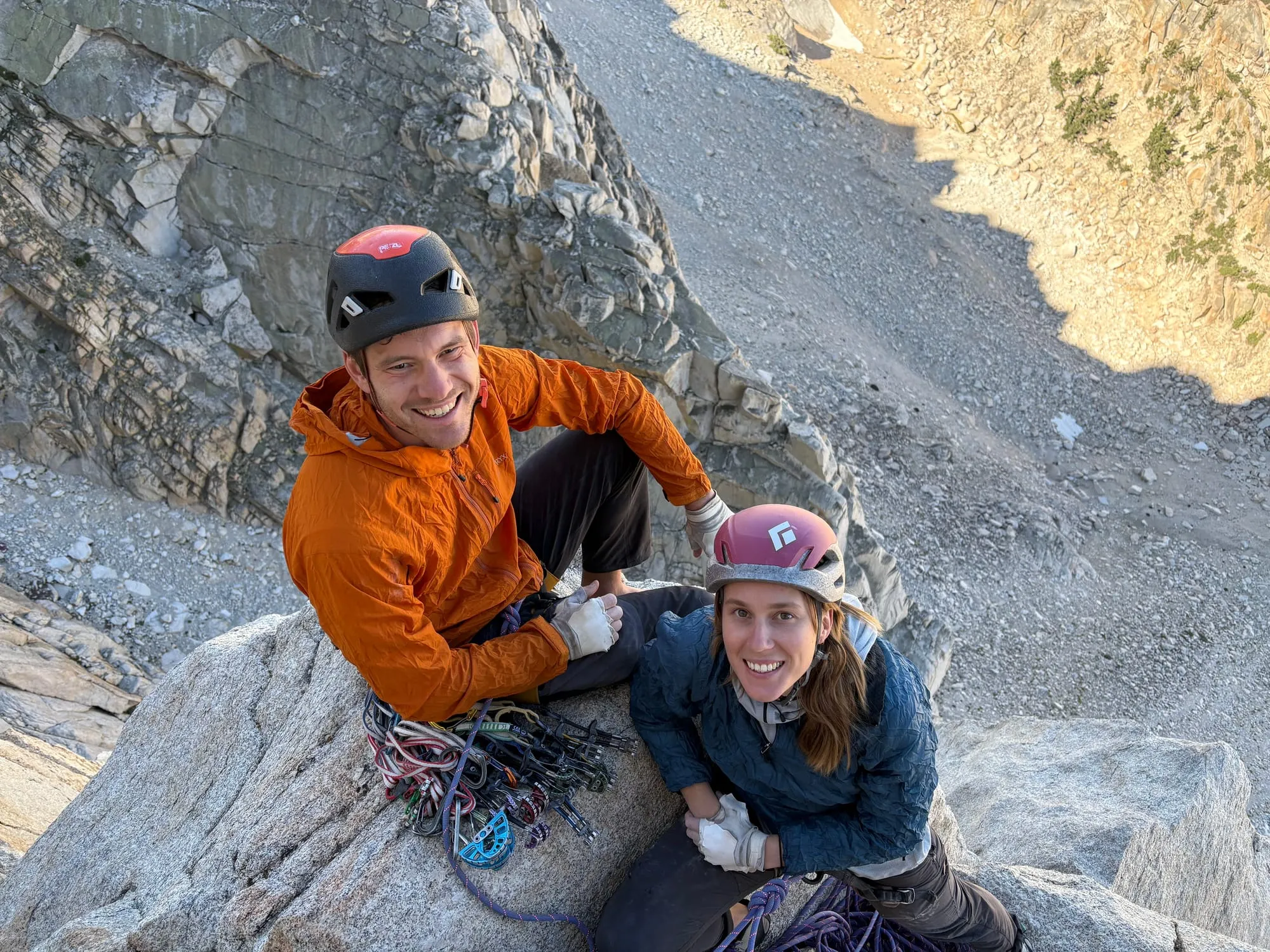
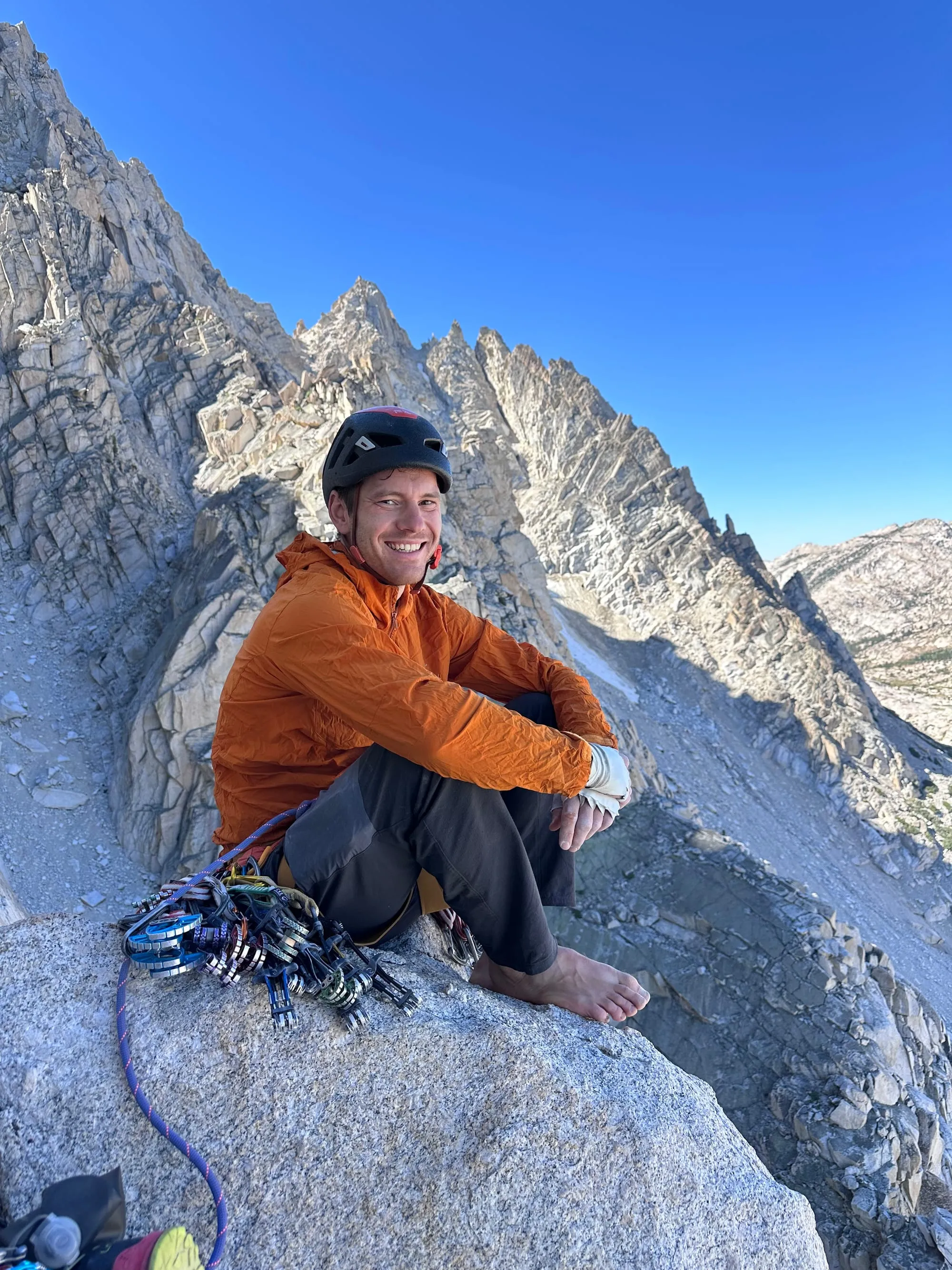
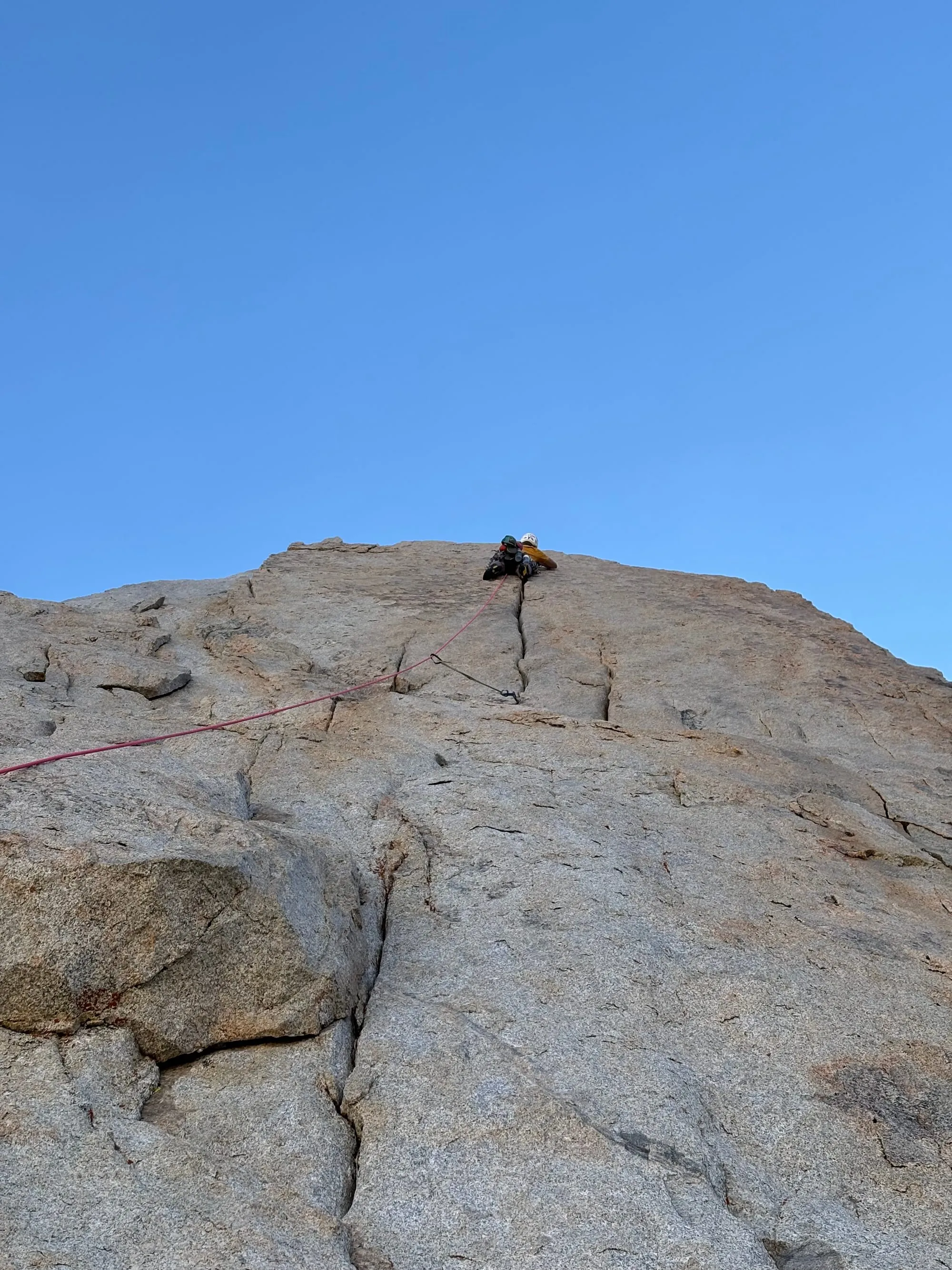
Timmy was going at Mach 10 speed up the climb and placing about 3 pieces of gear per pitch, so we hung out at the P4 belay ledge for a few minutes while he and his client flew past. This was a great spot to drink some water and have a snack, since unlike the standing-room-only P3 belay alcove, the P4 belay has plenty of nice spots to sit down, take the climbing shoes off for a minute, and chill.
Pitch 5 was my final lead of the day and a certified banger, starting with about 5-10m of enjoyable flake climbing before the beautiful splitter which starts with 10a thin fingers and quickly widens to bomber hand jams. This was a rope stretcher of a pitch, and with our 60m I had just enough rope to lasso the massive pinnacle just before the shattered pillar that marks the start of the next pitch as our belay anchor and bring Ellie up (probably should have just used my cordalette, but I was determined for some reason to do a rope anchor).
From this point, Ellie took the lead for the three pitches remaining to reach the "notch" - the point where the Red Dihedral route reaches the top of the ridge. Pitch 6 starts with some climbing to the left of the pillar that is often described as 5.9 laybacking, but I think both of us wound up stemming through this section which felt fairly easy and maybe not actually 5.9?
Pitch 7 takes you up a low angle corner to a short bulge pull with a balancy step right before depositing you on a belay ledge where you have to be kind of careful about not trusting the detached flakes/blocks when choosing a crack to place gear in for the anchor.
Pitch 8 is super short and scrambly, with a short/easy traverse right and then back left to get you to the top of the ridge; I think the main reason Vitaliy doesn't suggest linking 7+8 is rope drag, but you probably could get away with it, especially if you went straight up from the P7 belay instead of traversing right (looked ~5.8ish?).
From the top of the ridge, we unroped and walked about 200m climbers' left along a well defined trail to reach the base of the obvious pitch 9 chockstone chimney pitch. It's physical 5.8 chimney climbing, and a lot of the strategy on the pitch is just about deciding where and how to transition between the two cracks - one wide, one hands/fists.
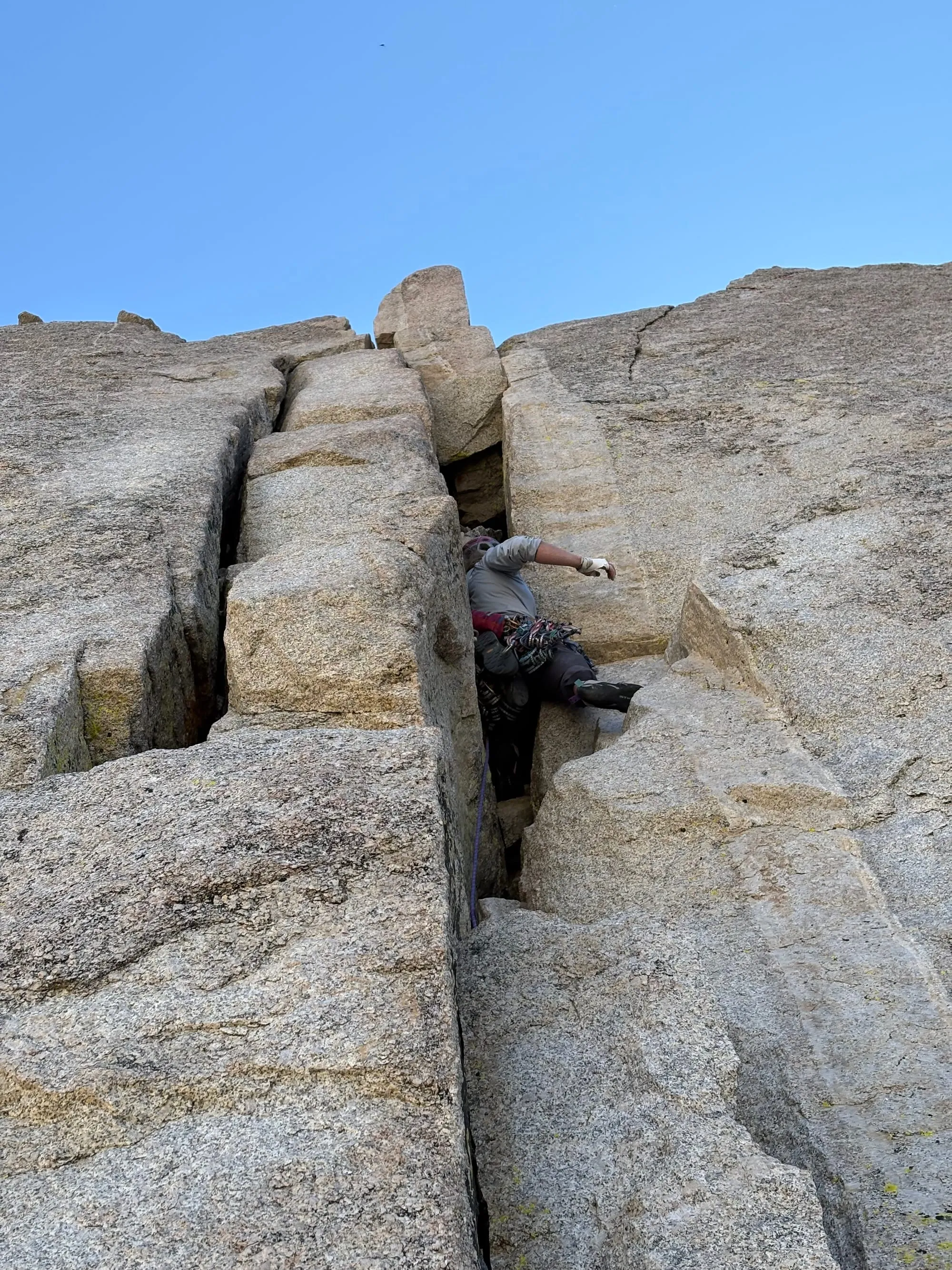
Ellie had been climbing with a backpack up to this point, so in order to not have to deal with it on this pitch we did a little bit of hauling - with our 60m, we had just enough rope for Ellie to go in direct to an anchor at the top of pitch 9 and throw down her end of the rope to haul the pack up on a micro traxion, which worked quite well and avoided the awkwardness of trying to chimney with a pack on or the annoyance of having to climb with a belay pack hanging off my belay loop.
Pitch 10 is the final pitch of roped climbing before the summit, and consists of a wide 5.6 chimney followed by a squeeze/belly-crawl "tunnel" that deposits you on a huge ledge. Because of the tunnel that ends the pitch hauling isn't feasible, so I had the joy of climbing this pitch while trailing a backpack from my belay loop 🙃. Fortunately, the climbing is easy and I was able to push the pack in front of me through the tunnel before emerging into daylight!
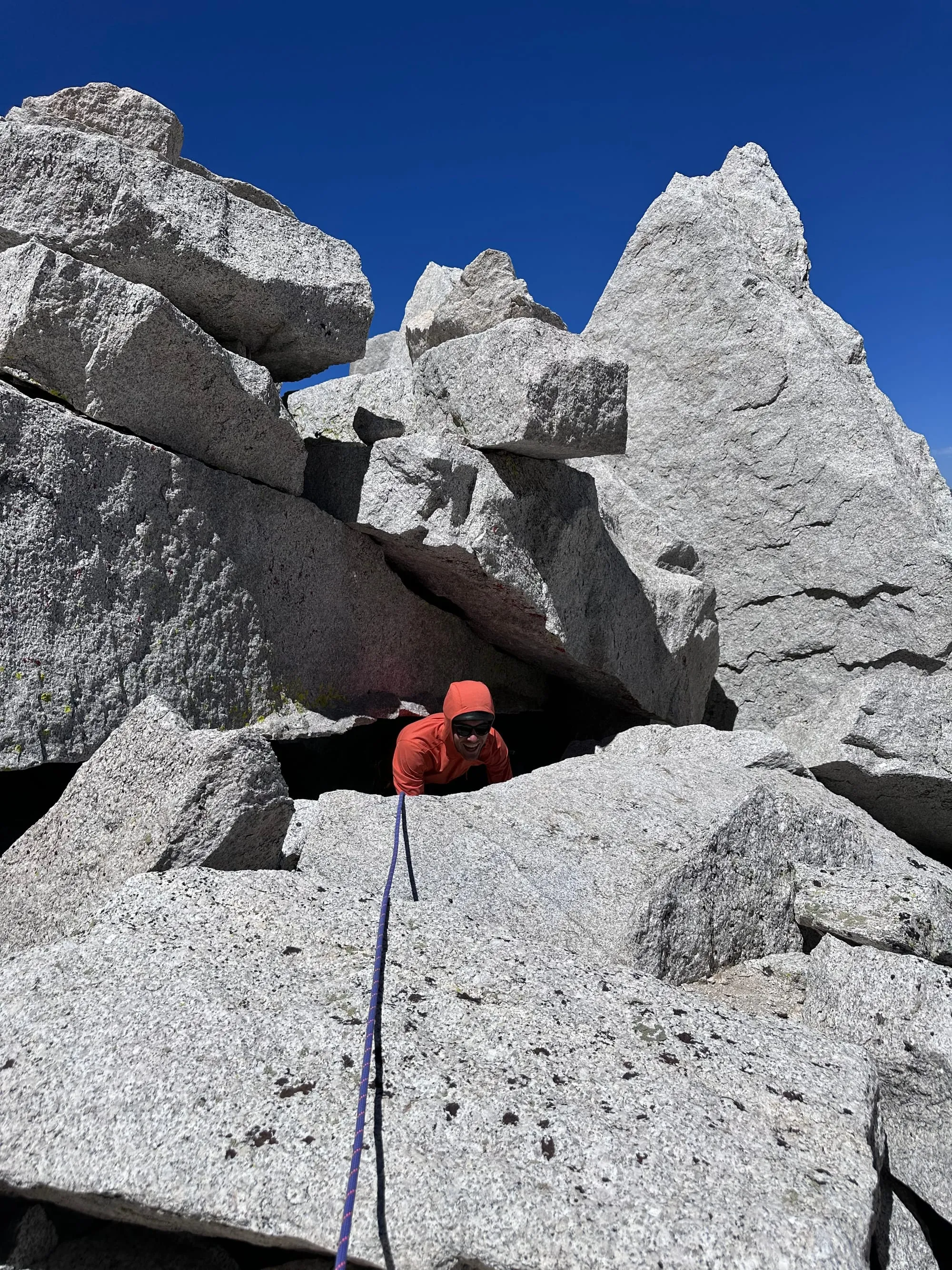
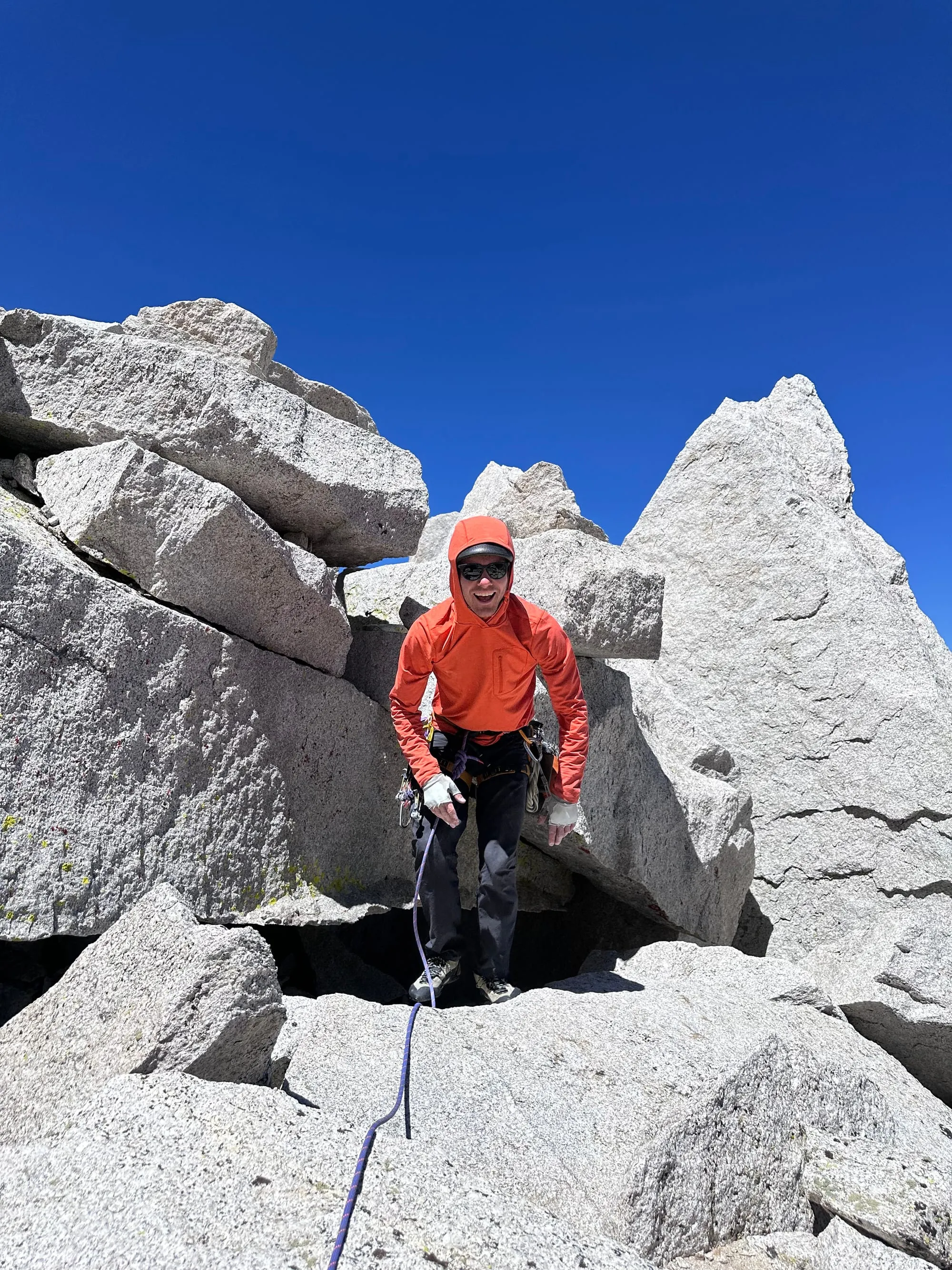
From the top of pitch 10, it's a short scramble to the summit, and soon we were enjoying sandwiches and expansive views on top of the Hulk! There were several parties on other routes that day, but since all of those routes typically end with rappel descents off the ridge rather than continuing to the true summit we had the whole place to ourselves! The weather was pleasant with a light breeze and we hung out for nearly a half hour eating sandwiches and enjoying the views before starting the descent.
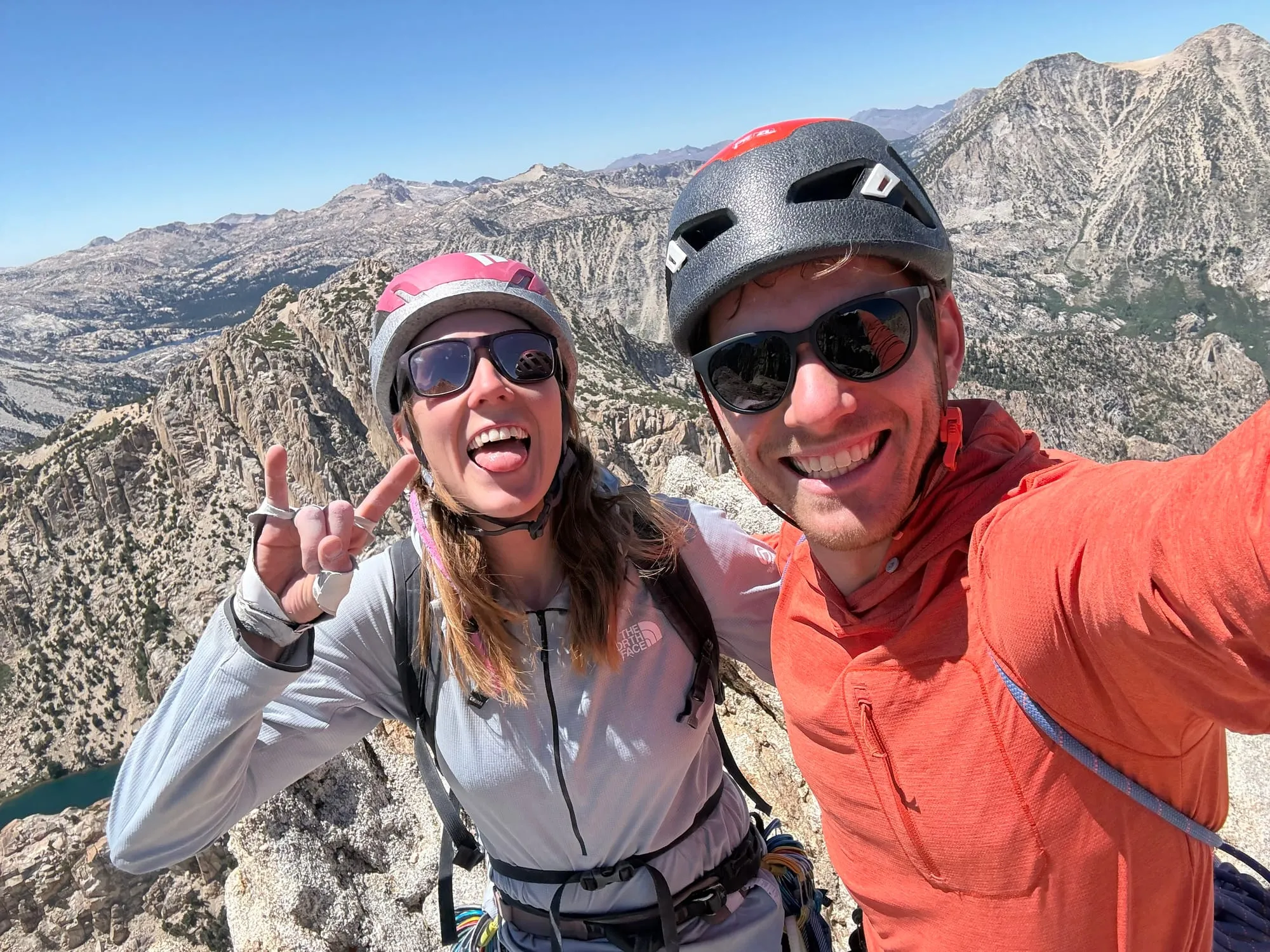
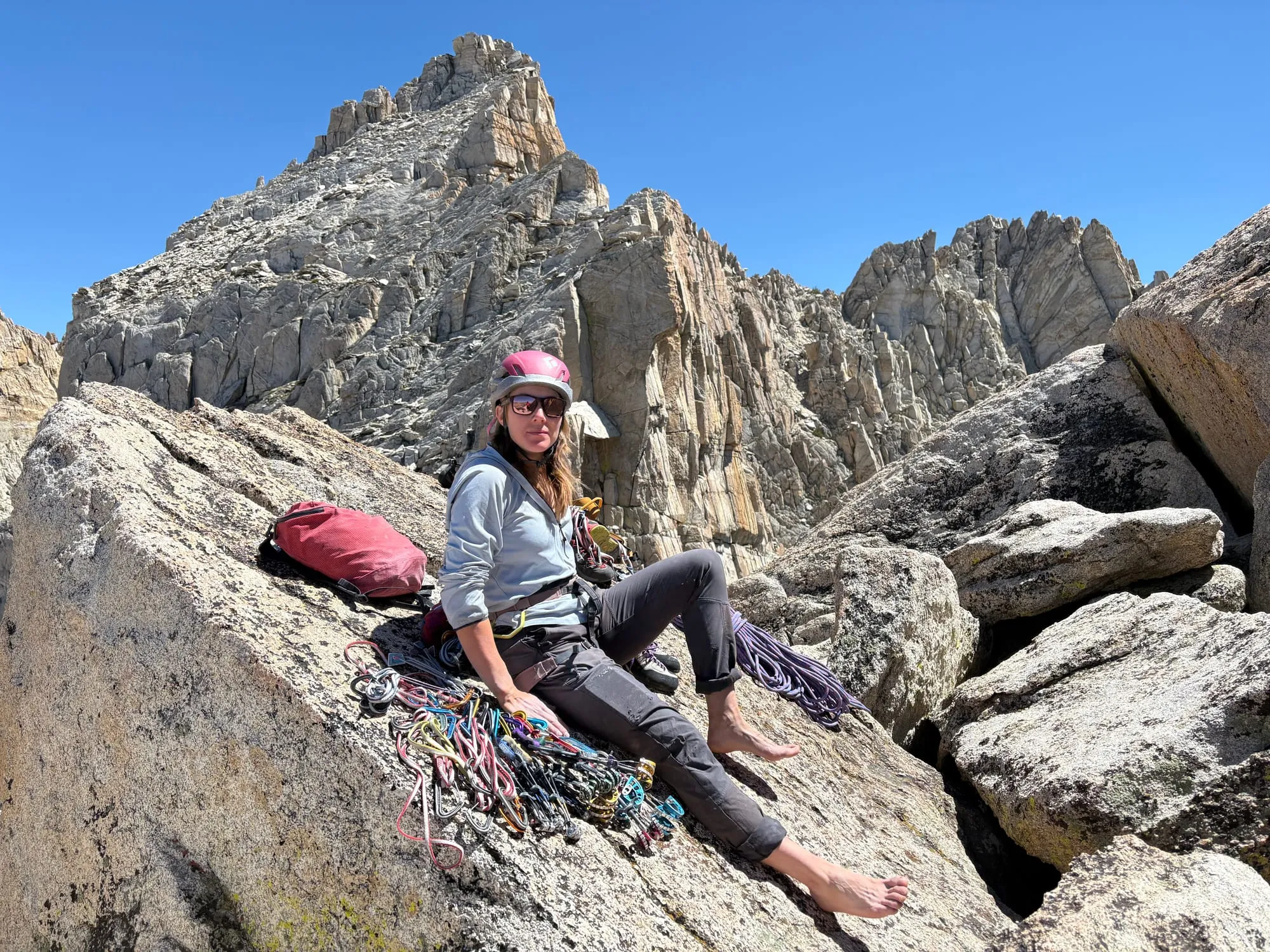
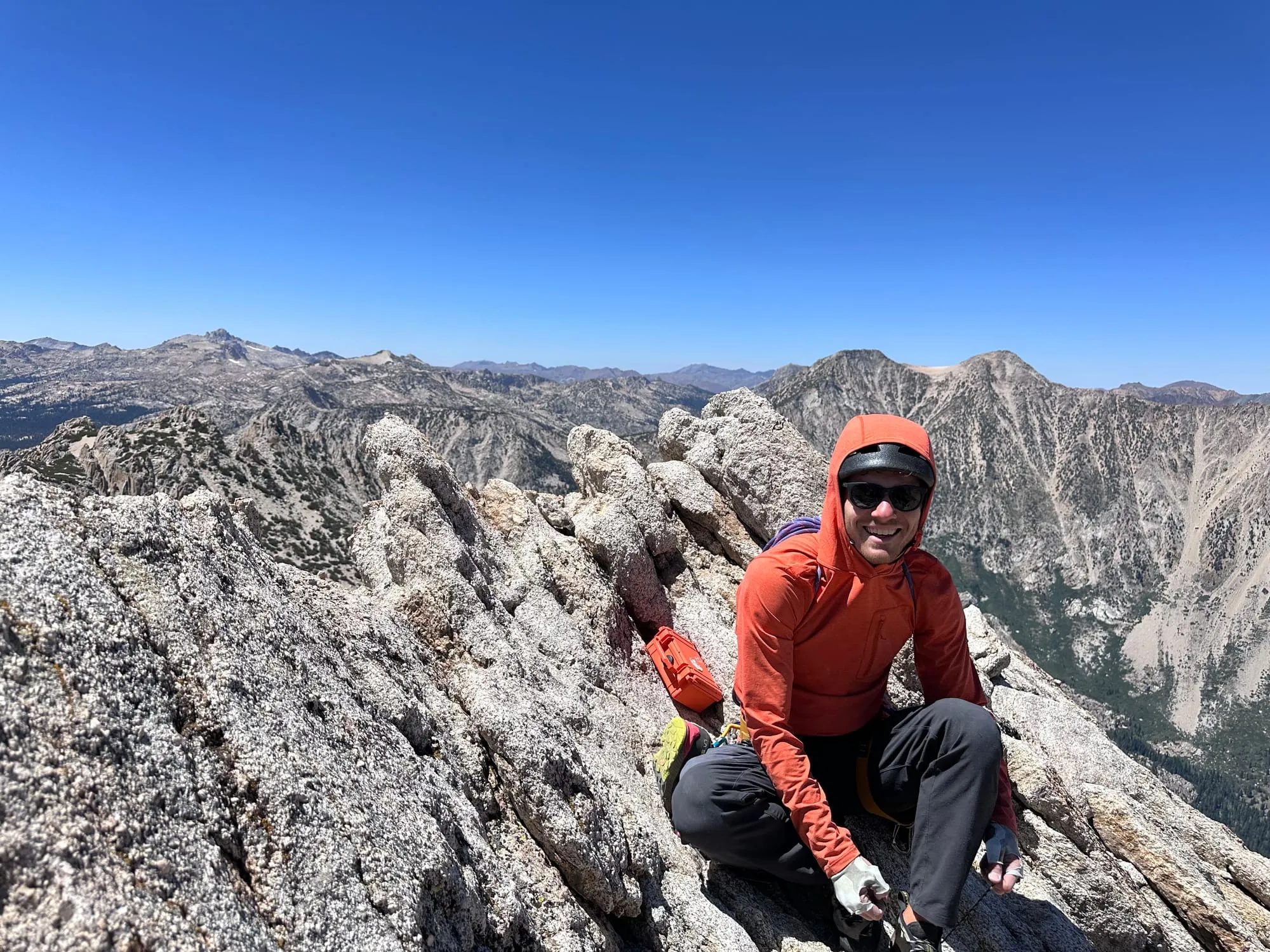
The descent off the Hulk is long but straightforward. You reverse the last ~20m of scrambling from the summit to gain a ledge system that runs south, then scramble down that ridge following cairns until you can see a bolted rappel anchor. The scrambling here is easy 3rd and 4th class, but the routefinding might be a little tricky in the dark.
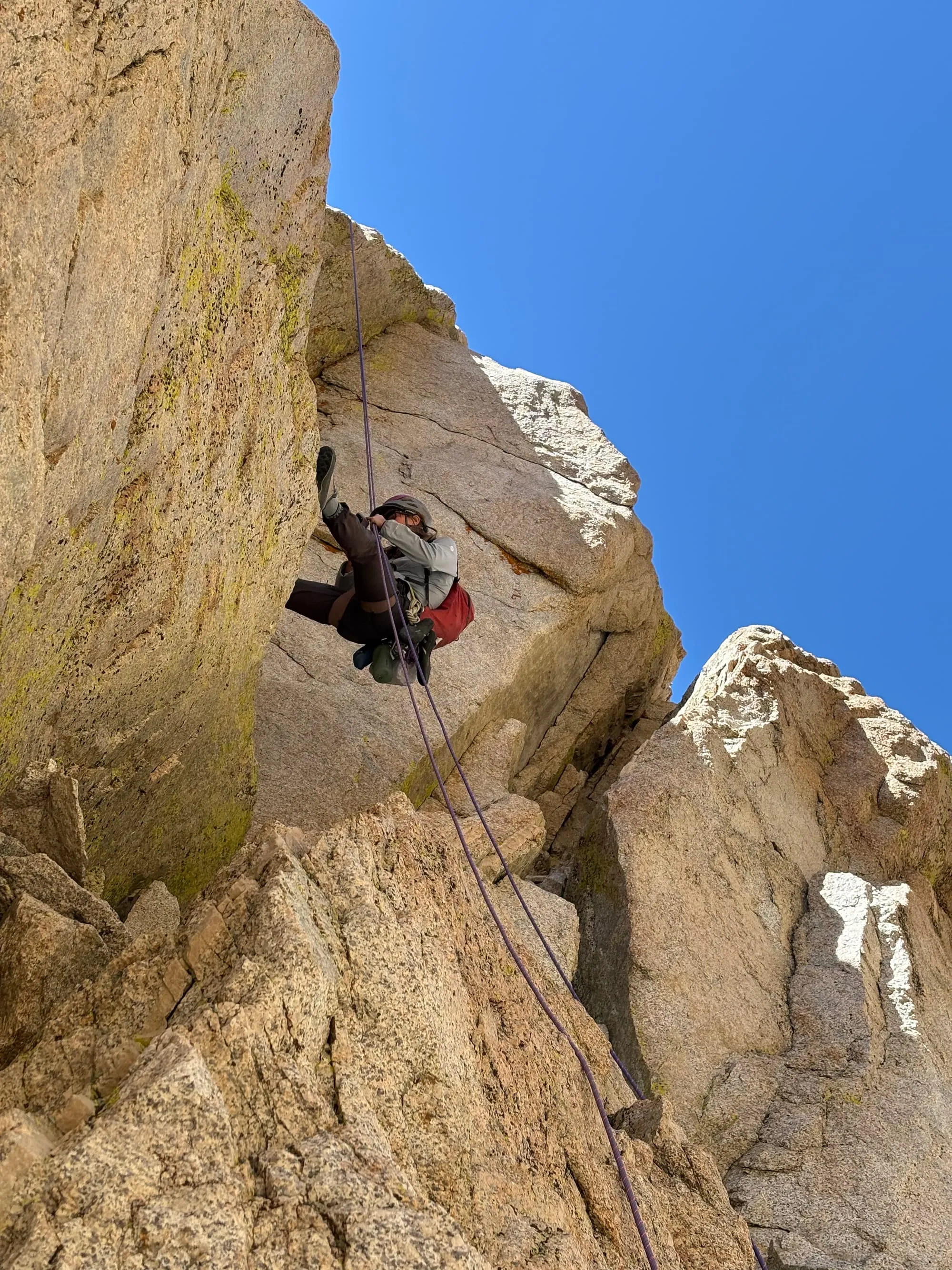
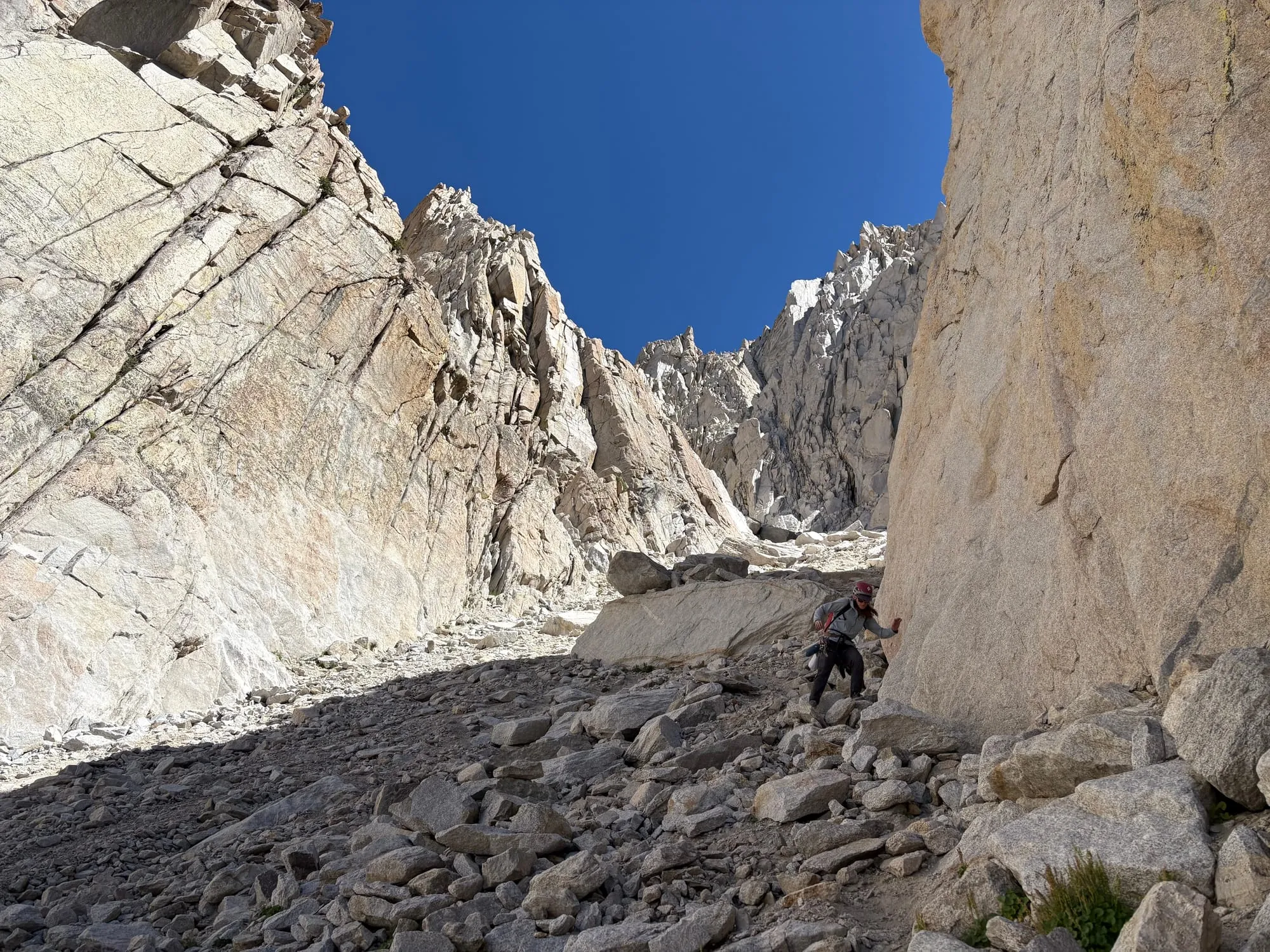
After a 30m rappel (knot the ends of your rope!), we had a long descent down a very loose scree gully with a short step of downclimbing behind a chockstone before contouring down to where we'd left my pack hanging at the base of the route! The map on my watch was useful for finding our way back to the climbers' trail through the talus that would lead us straight back to camp, and less than 2 hours after topping out, we found ourselves back at our tents eating snacks and looking back at the route we'd just climbed!
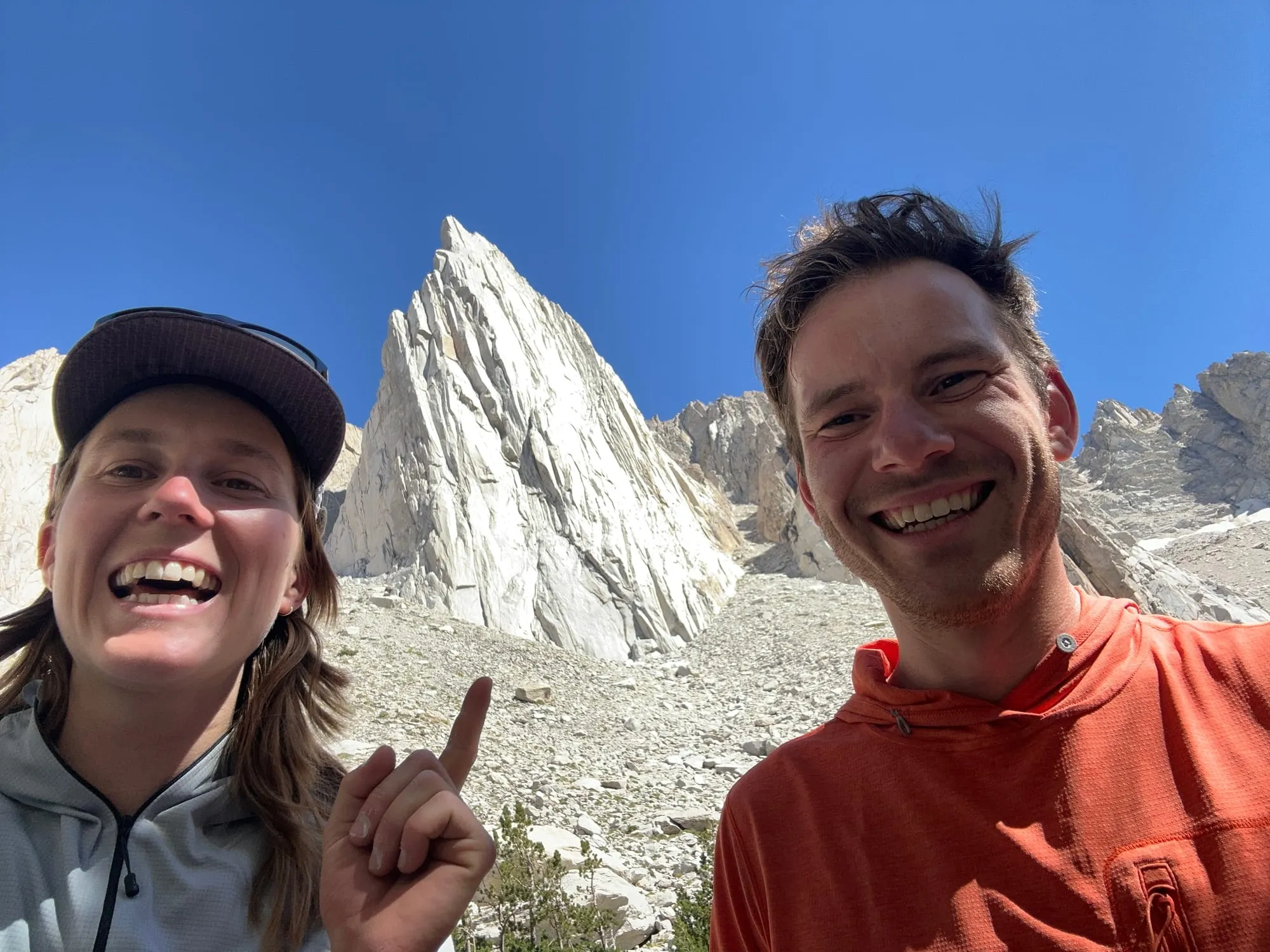
After a nice break, we packed up our camp and headed home, very grateful that the sun had dipped behind the rim of the opposite side of the canyon and we could hike in the shade for the whole walk out!
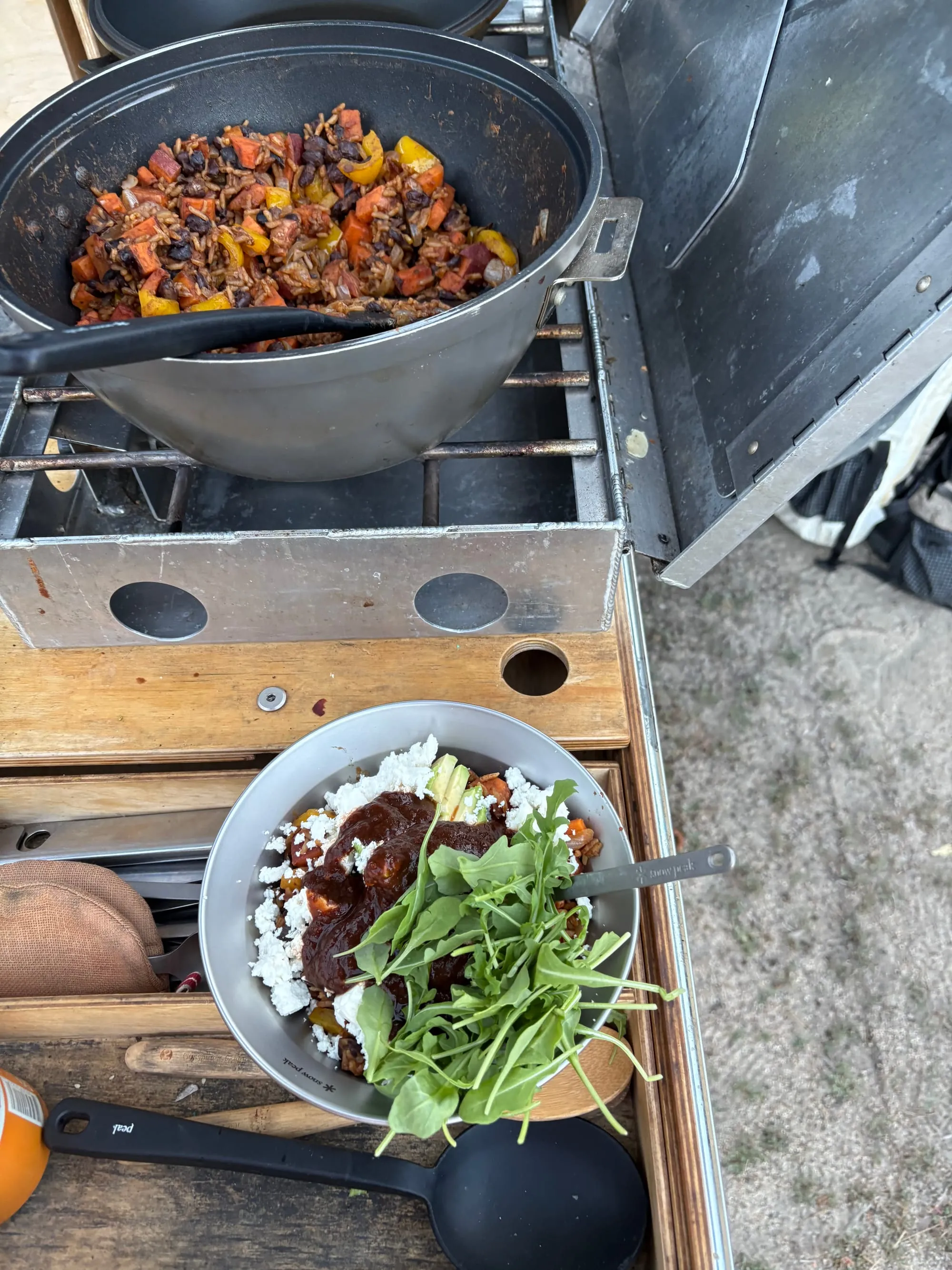
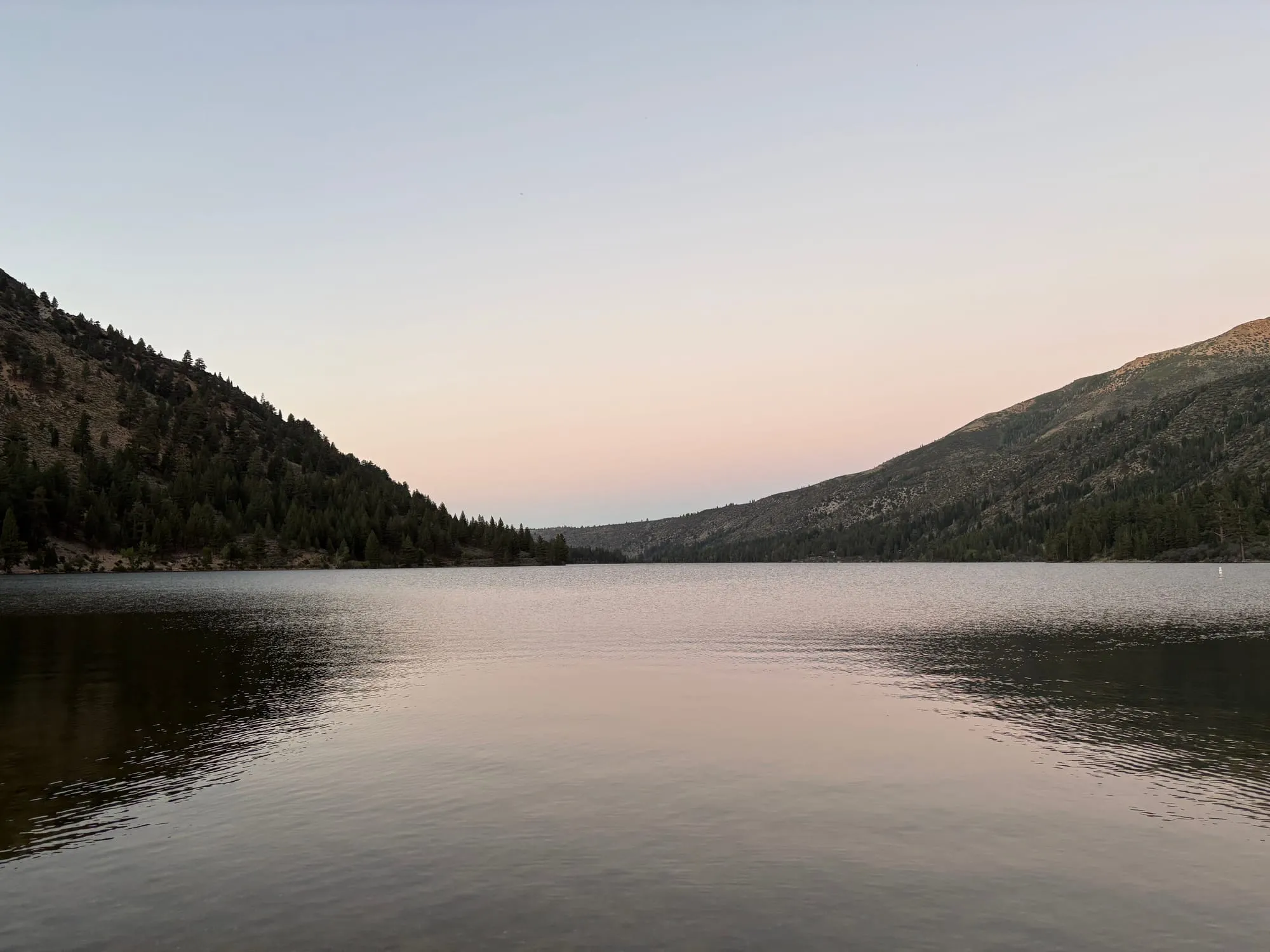
We wrapped up the day with a gear sort and a joint-effort super delicious burrito bowl in the parking lot before watching the sun set over Upper Twin Lake!
This was such a rewarding climb on so many levels for me. We had perfect conditions, both of us enjoyed the climbing and were able to move quickly and confidently on every pitch, and everything went incredibly smoothly - no rope tangles, easy routefinding, great vibes the whole day, just a real Type 1 Fun day in the alpine! I feel really lucky to have been able to introduce my friend Ellie to the Hulk, and it was a satisfying personal progression to get to revisit the Red Dihedral, which I had first climbed three years ago, with very different conditions and being in a very different headspace with my climbing. Back then, I had not really enjoyed the route that much so it felt good to come back and have such an amazing experience with it this time around!
Trip Notes
- It's becoming pretty common to do the Hulk in a day, but camping up in that valley is so special that I think that it's worth it to bring a shelter up there and stay the night! Even though we didn't encounter any parties on our route besides Timmy, we were happy to have gotten on the route early and not have to worry about any traffic above us, too.
- The rappel descent options from the ridge are undoubtably more convenient than the gully walk-off from the summit, but if it's your first time climbing the Hulk don't miss the summit! The chimney summit pitches are definitely a different genre of climbing than the frontside of the Hulk but they have their own charm, and the summit itself is super cool.
Gear Notes
- Because of the various sections of chimney climbing, this climb is better without a pack! I'm biased (since I'm the guy selling them), but I really do believe that bringing your snacks/layers/etc up on your harness in a Micro Hauler is the way to go for this one!
- I was happy to have a small cam in the 0.15ish range as well as a couple of brassies to protect the weird groove on pitch 2.
- The camp spots in the pines just barely accommodate 1p shelters, but the camp spots at the base of the valley in the sandy/grassy area could fit much larger tents (these spots do seem to fill up first though!).