Bear Creek Spire, North Arete
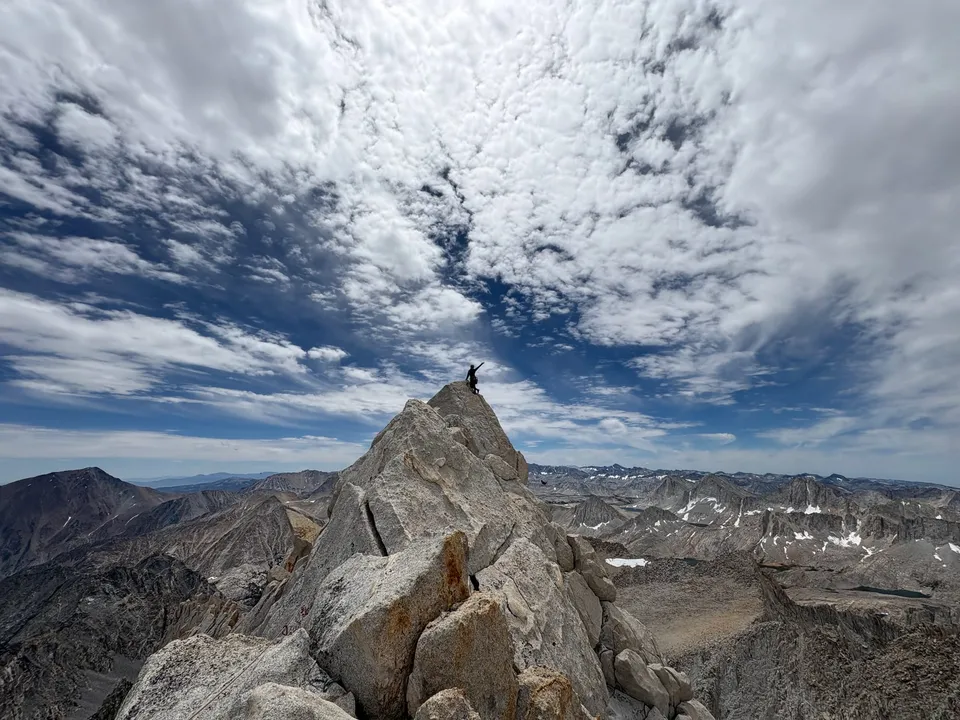
I mostly dislike social media these days, but one of the main reasons I still have Instagram is all of the fantastic impromptu climbing and travel connections it's made happen for me over the years. I had just finished some climbing up in Tuolumne when my friend Adri saw one of my stories on IG and reached out. We know each other from back when I used to live in Bend during the pandemic, and it was great to hear from her.
Adri had just wrapped up a backpacking trip on the Sierra High Route and was looking for alpine climbing partners in the zone; I was excited to move on from Tuolumne dome climbing and get up into the high country. We made plans to crag at Patricia Bowl Saturday morning, then hike in to Dade Lake with bivvy gear and climb the North Arete of Bear Creek Spire on Sunday, a classic Eastside alpine route that is many climbers' first introduction to alpine climbing, and a perfect warm-up route to kick off my alpine season!
Pre-climb festivities - live music and dancing at the Mobil in Lee Vining, which is by far my favorite gas station on the planet!
After an evening of dancing at the Mobil and a morning of cragging at Patricia Bowl (it's great, go check it out), we packed our overnight packs in the absurdly busy parking lot of the Mosquito Flat trailhead. In my head, we had kind of a long slog ahead of us up to Dade Lake. Back in May, I'd done a trail run to scout this approach and it had been a 14-mile round trip affair with a lot of snow post-holing. I somehow forgot to account for the fact that back in May I'd had to run 4 extra road miles since the gate to Mosquito Flat had been closed at the pack station, and also that with the current late July conditions we would be likely encounter zero snow at all.
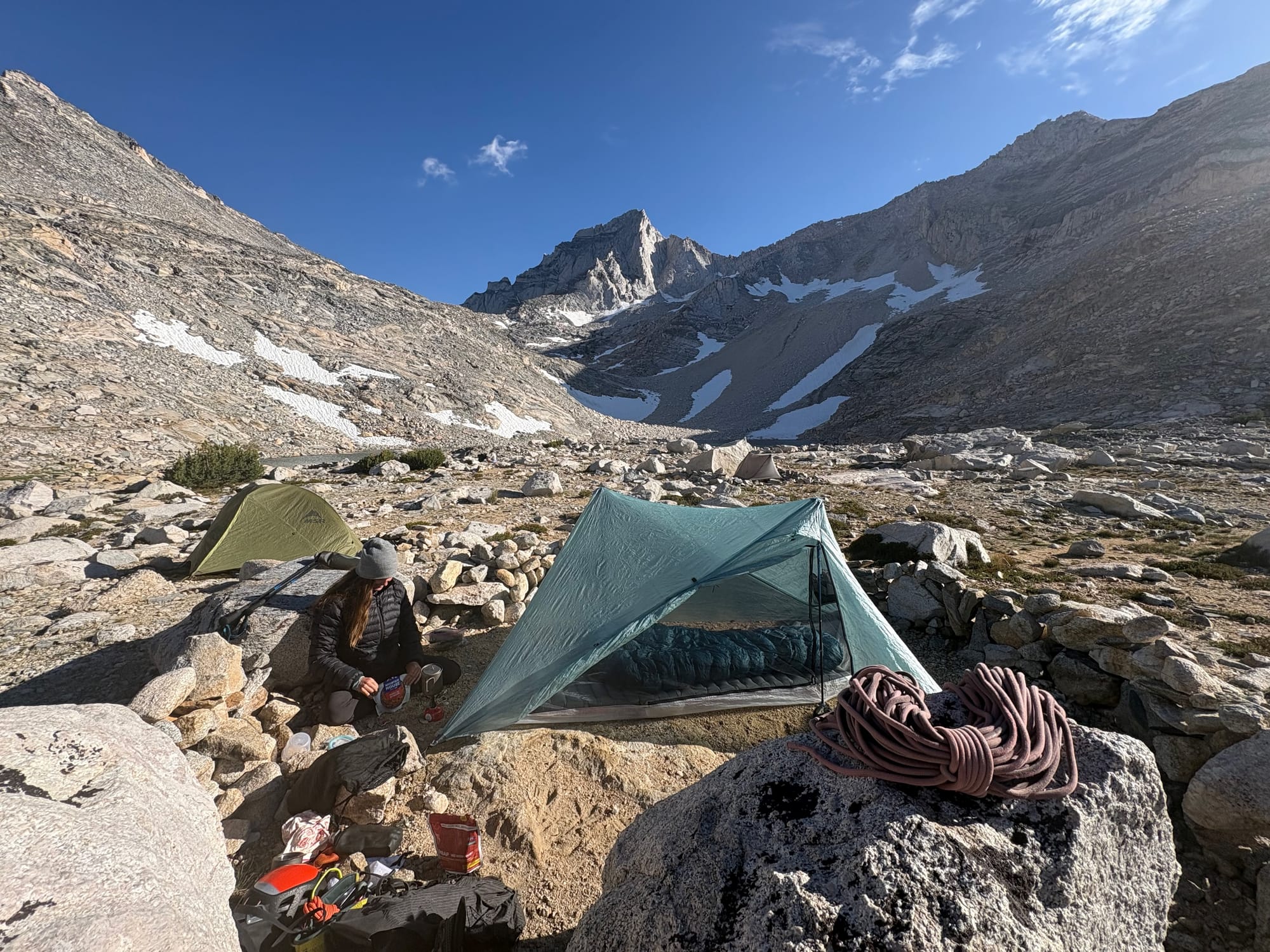
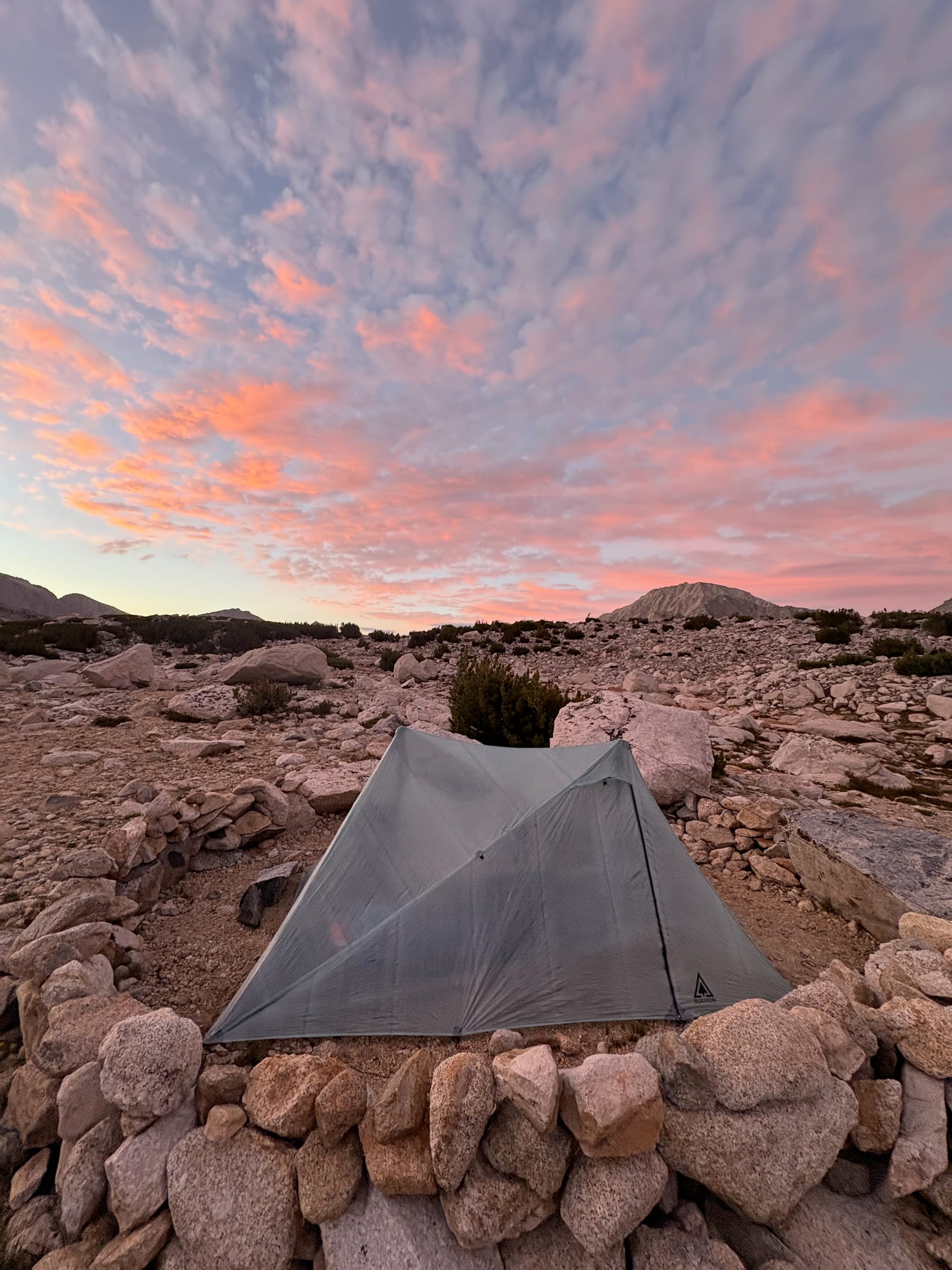
Instead of the 7 mile slog I was expecting, the approach wound up being a pleasant 4.5 mile stroll and we arrived at Dade Lake about 2 hours after leaving our cars, with plenty of daylight left to set up camp, dip in the lake, and watch the *incredible* sunset before turning in for the night.
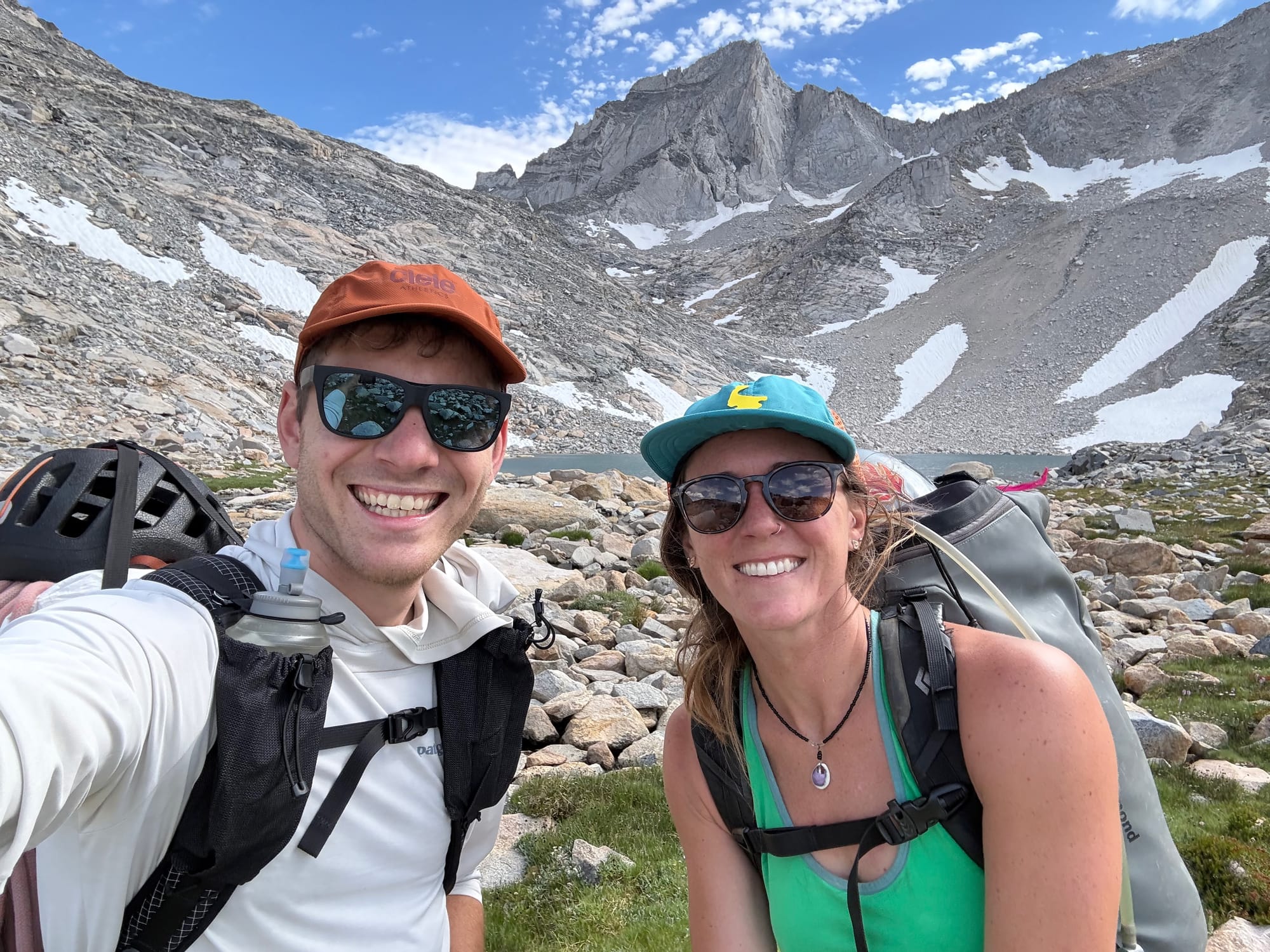
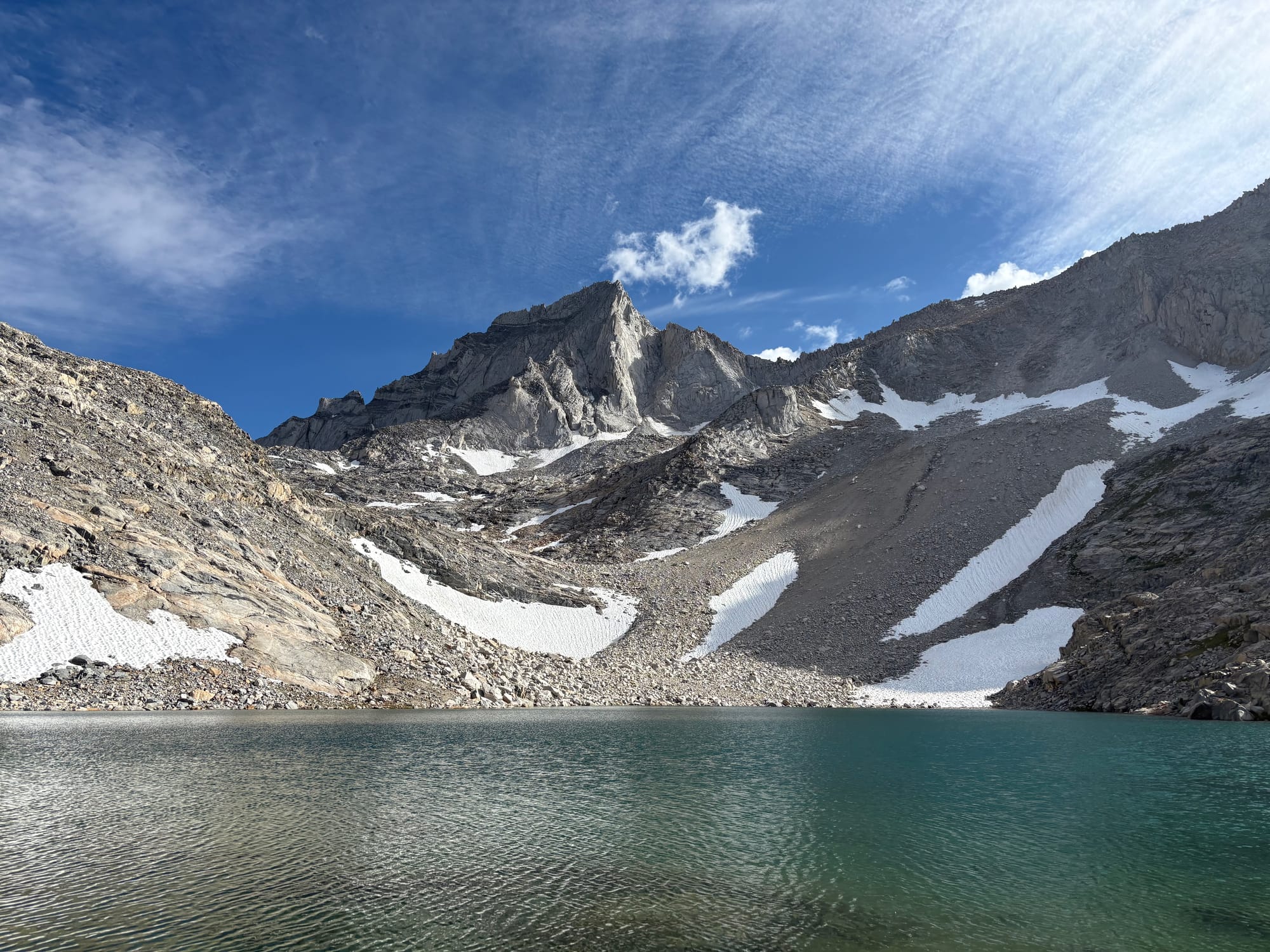
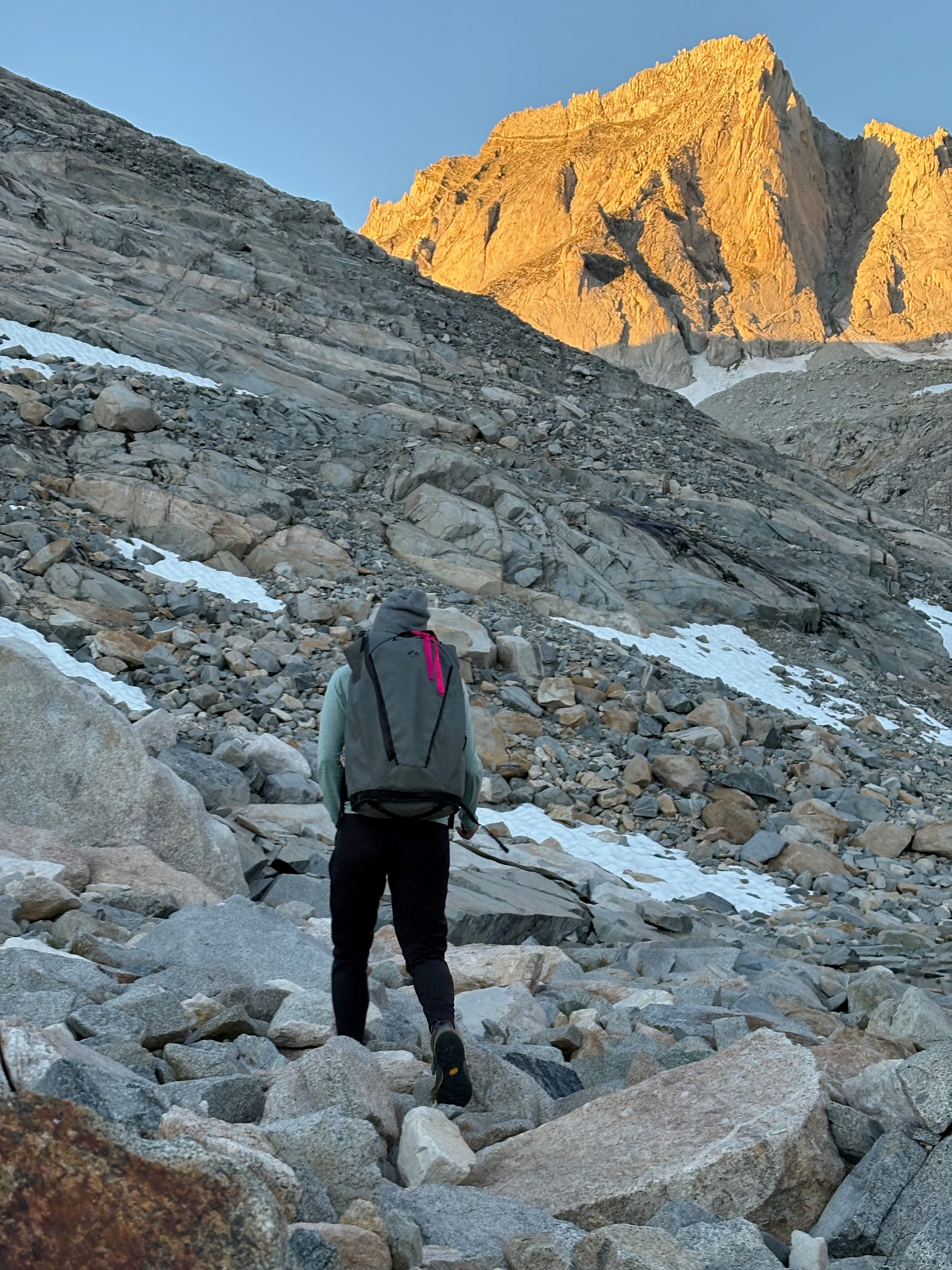
The next day, we departed camp at 6am to start the steep talus approach, leaving the lake at the same time as two other parties that were also attempting the North Arete. Adri and I both move pretty quickly in the mountains, and over the course of the approach we gained enough separation between ourselves and the other parties that we didn't see them (or anyone else) for the rest of the day. After fourth-classing our way up the first section of low angle rock on the buttress that forms the toe of the North Arete, we roped up on a large ledge below the crescent-shaped crack that is the landmark for the start of the route. We were glad to find the route was already getting good sun - reading Steph Abegg's trip report had made us a bit apprehensive about potentially being in for a pretty cold morning. Instead, we had perfect conditions all day! I was able to strategically pick belay ledges that were in the sun, and a sun hoody and a light windbreaker were the only layers I used for the entire climb.
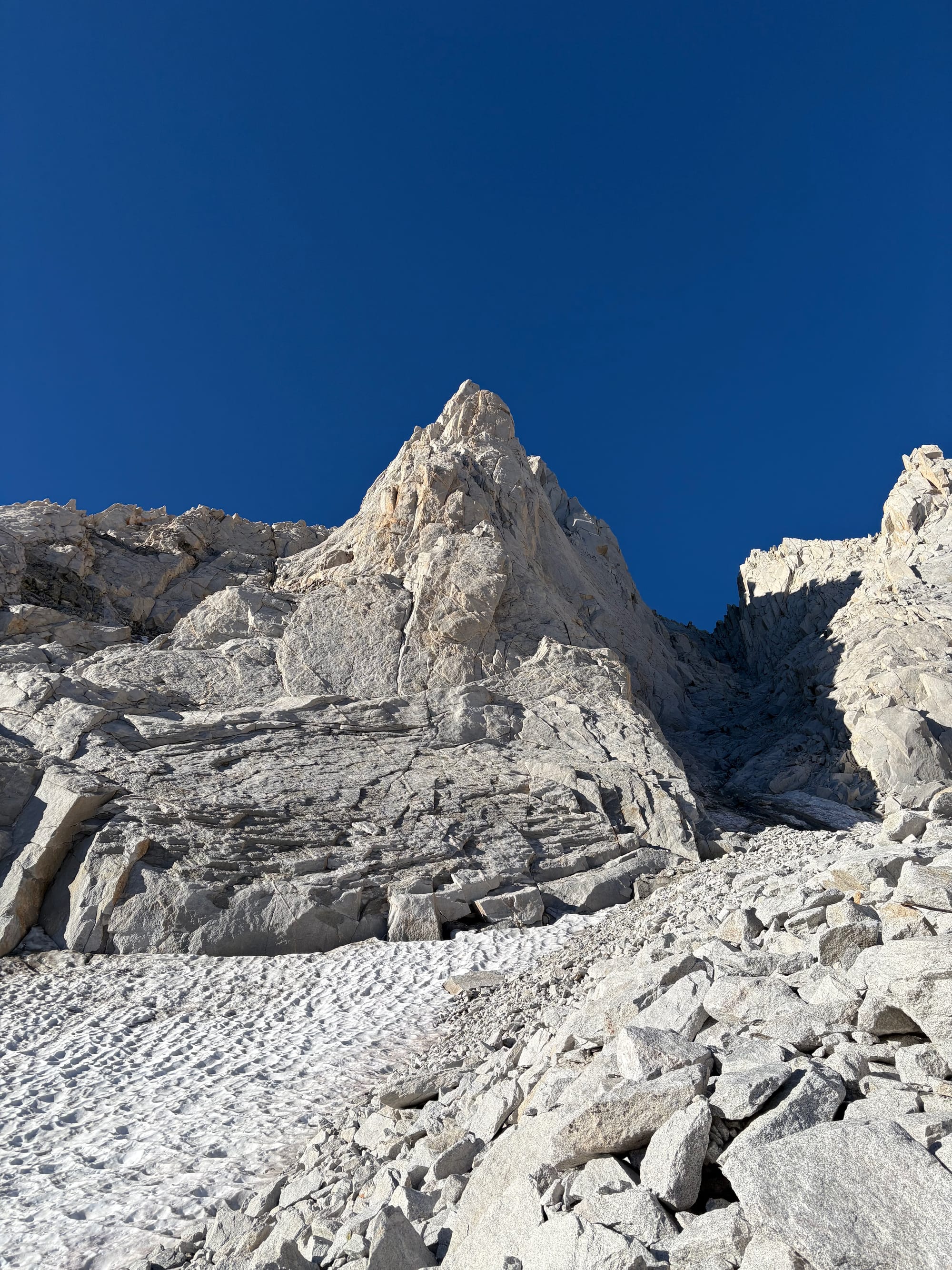
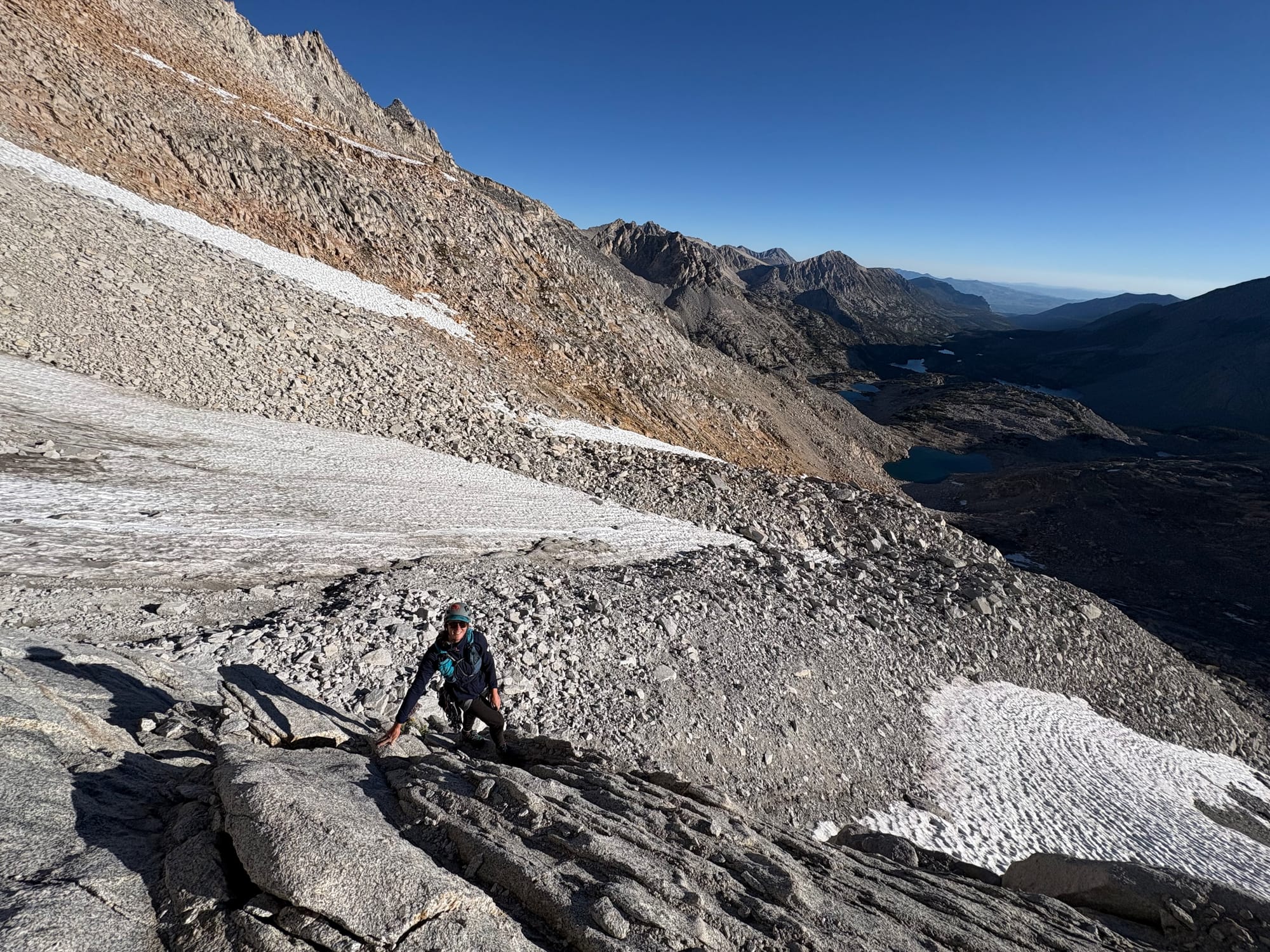
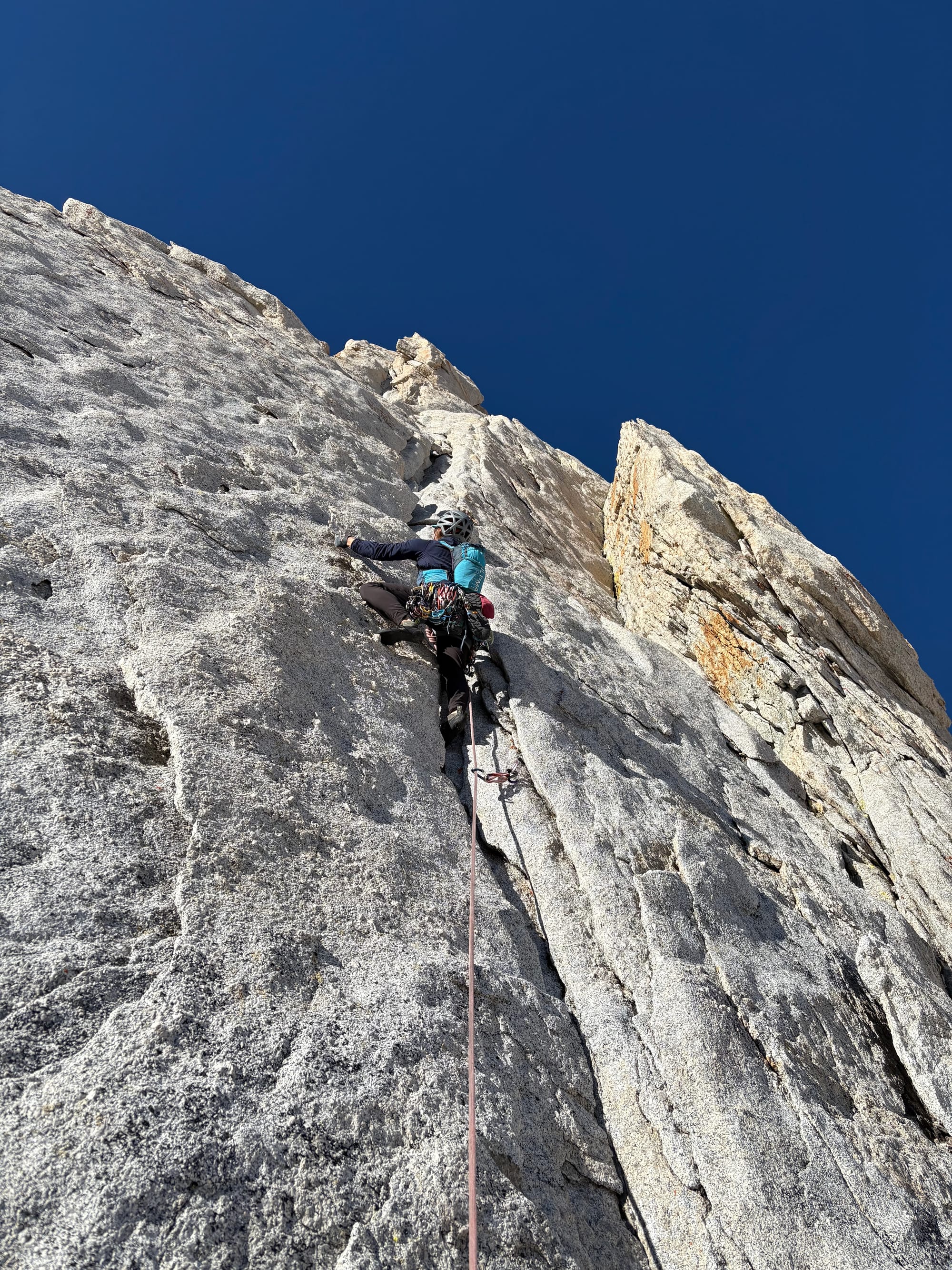
The first pitch (5.8) was some of the best climbing on the route. After this, it got fairly blocky and ledgy for the remainder of the climb – none of the climbing on the route was particularly standout or sustained, but the whole experience of moving quickly over so much rock in such a beautiful alpine setting was fantastic. One bit of climbing that was memorable was pitch 5, where we had the option to either move left towards the short-lived 5.8 chimney on the normal route, or take a 5.10a variation up a clean-looking steep dihedral. It was Adri's lead, and she opted for the 5.10a variation, only to discover that the whole dihedral was pure kitty-litter exfoliating choss, raining down showers of granite pebbles as she carefully picked her way up through the incredibly questionable rock. I followed equally carefully, and we both agreed at the belay that the pitch probably shouldn't be listed on the topo without a warning about the terrible rock quality.
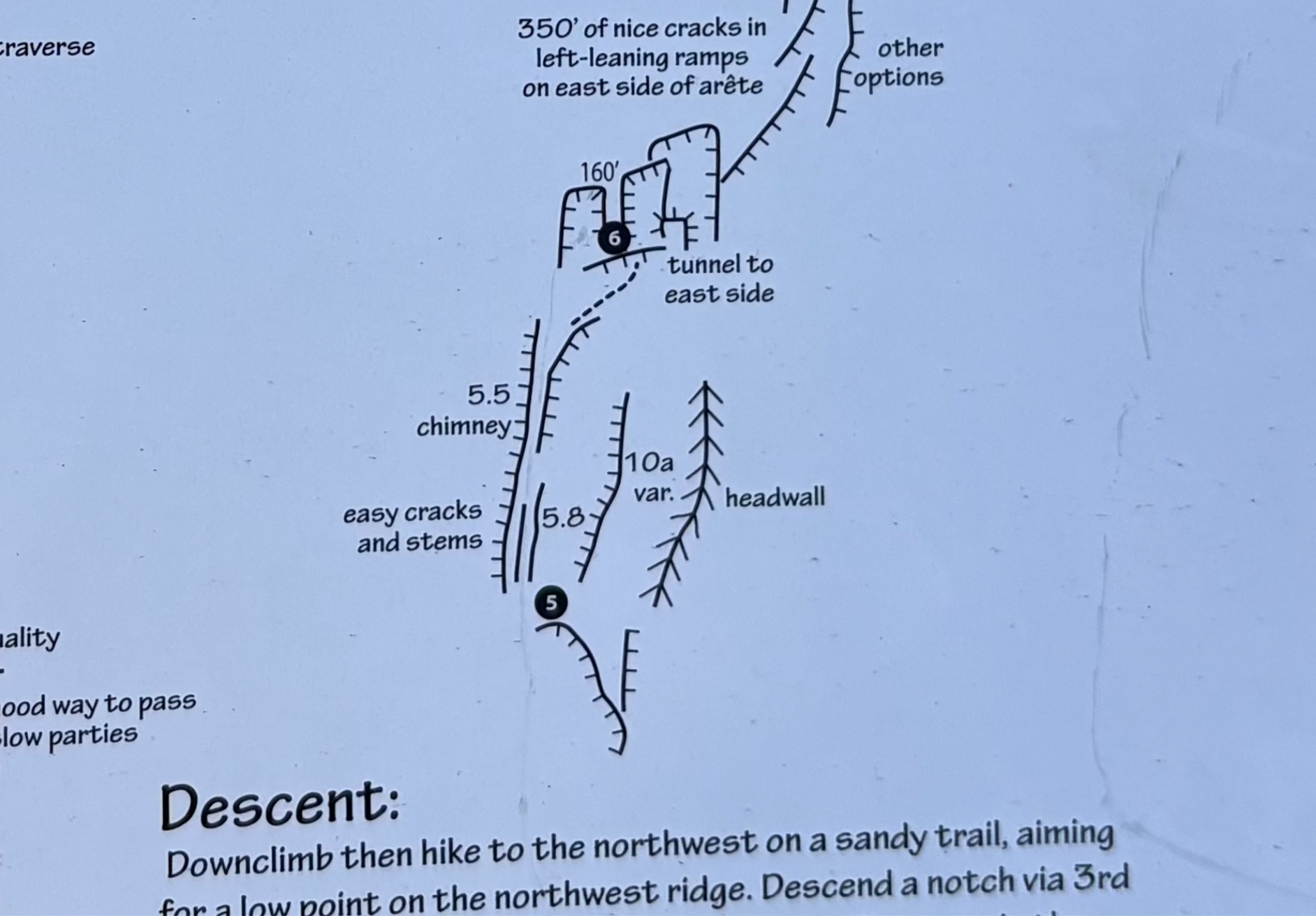
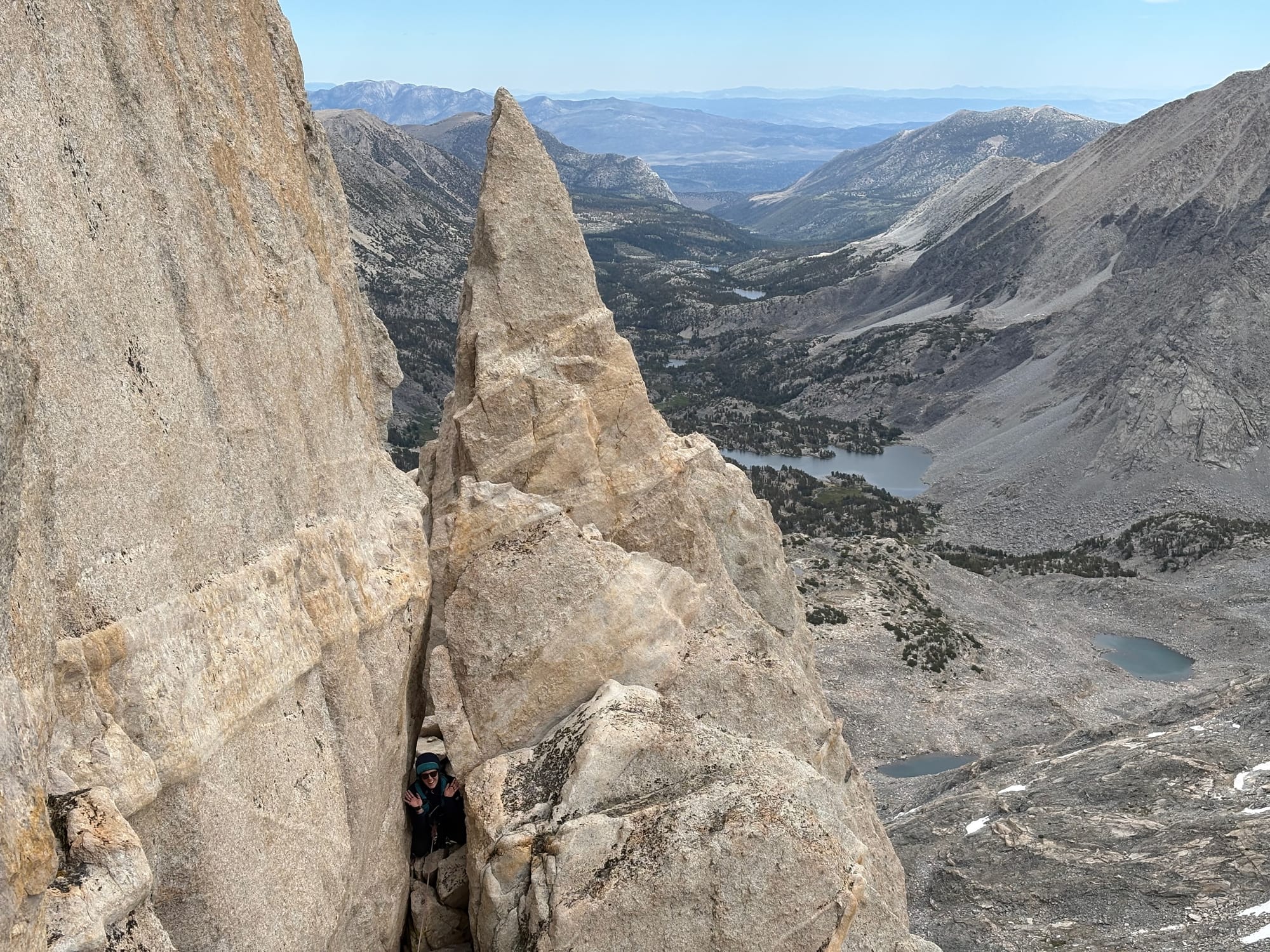
After the tunnel-though on pitch 6, we switched to simul-climbing for the remainder of the route with occasional belays when rope drag got bad or gear ran out.
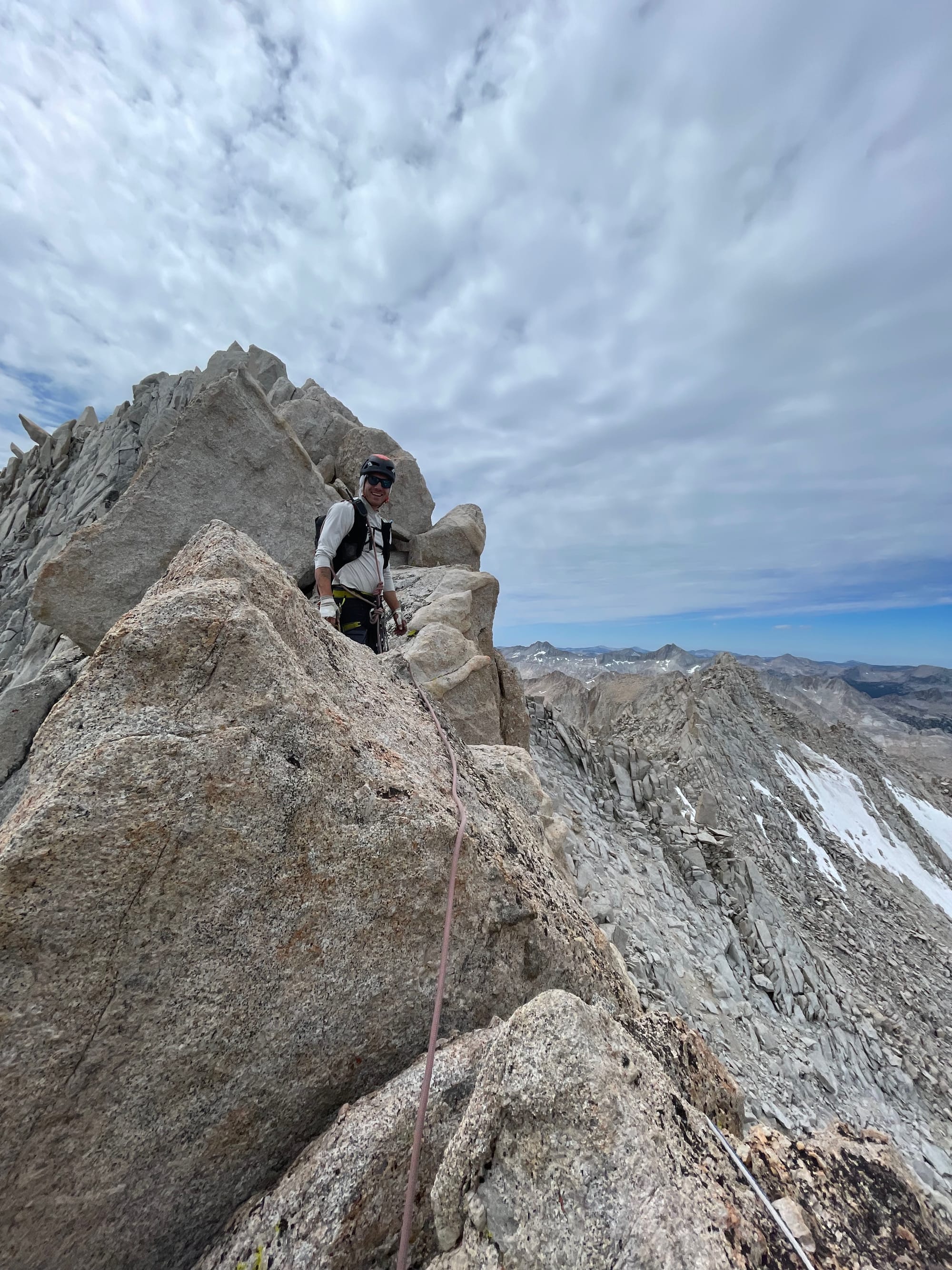
The summit of Bear Creek Spire is delightfully pointy and has some decent handholds to get on top of it. The gear up there is a little iffy but the climbing is easy enough that it didn't really matter.
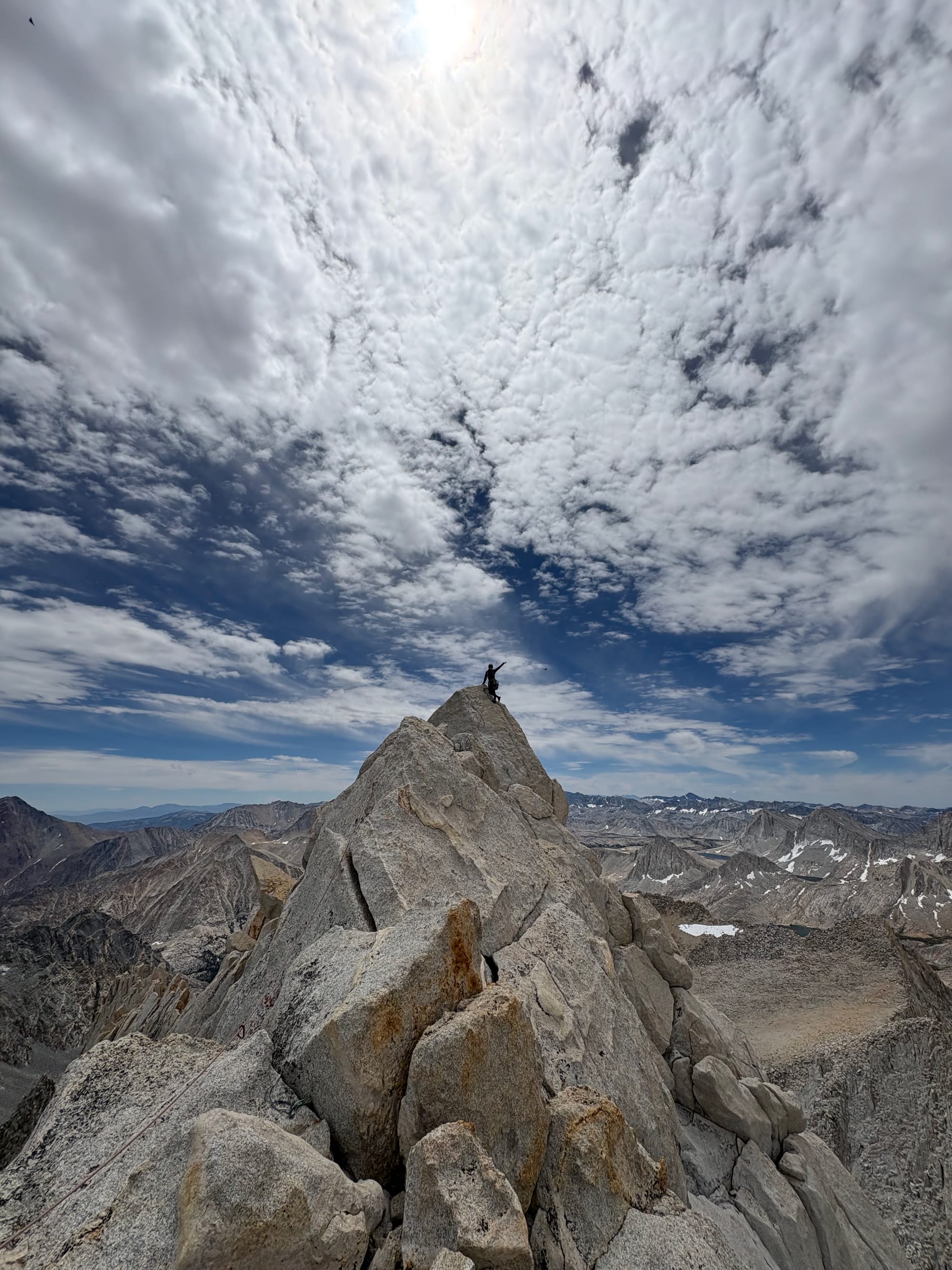
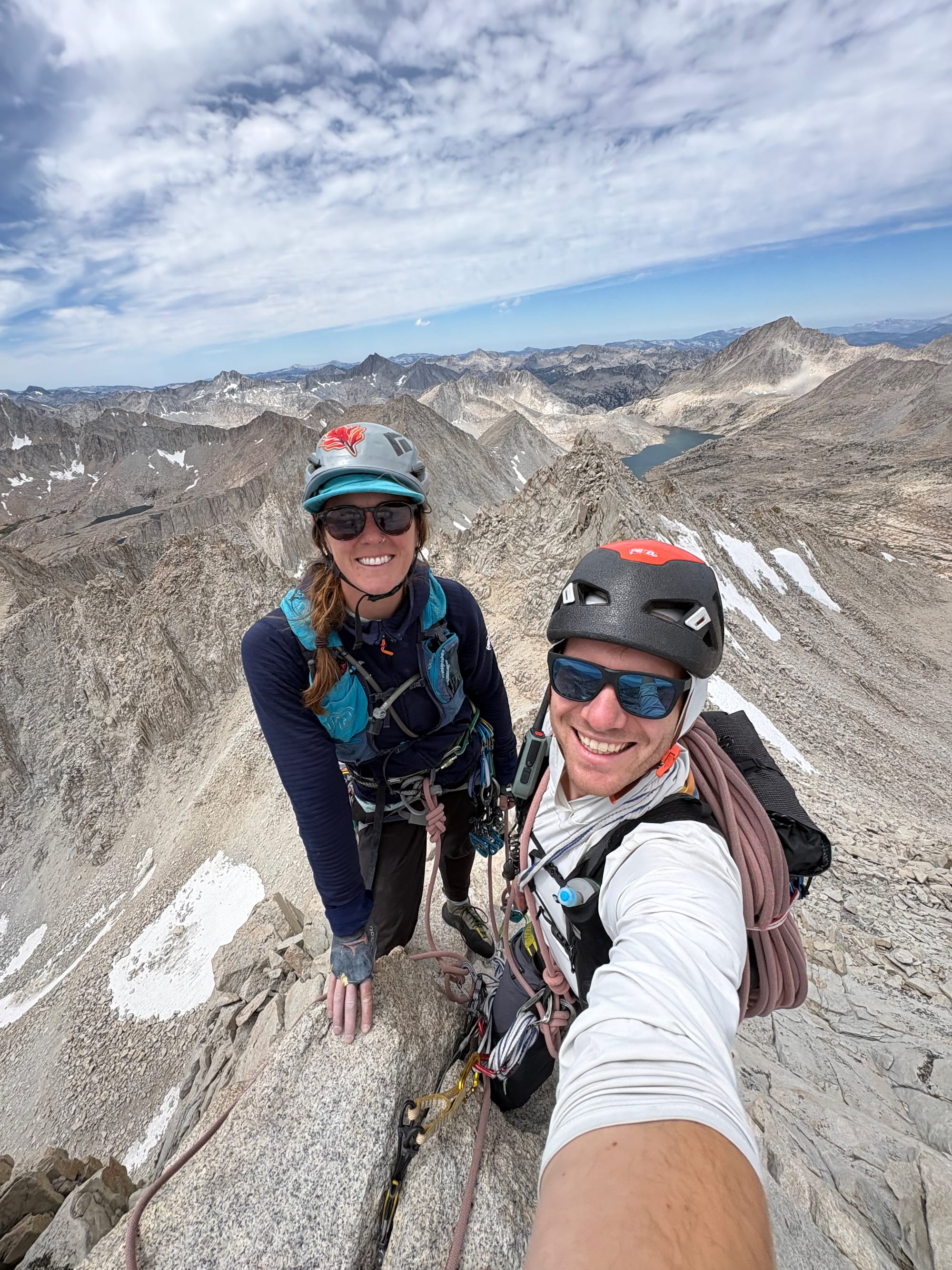
Including the approach, our transitions, some snack breaks, and all the climbing, we took 6hrs and 15min to get from camp to the top of the peak. The climbing was fun but not sustained, and route-finding was extremely straightforward. Everyone talks about this route being one of the Eastern Sierra's "100 best alpine climbs", and it's easy to see why. The only thing I was surprised by was the rock quality – the quality of the granite on the eastside is usually fantastic, but the rock on this climb reminded me more of Joshua Tree, with lots of grainy kitty-litter exfoliating granite and hollow flakes.
After snapping a few more pics on the summit and one short rappel that could be bypassed via easy fourth-class movement, we easily picked our way to the straightforward descent on the peak's western flank. This is where we ran across a full on butterfly migration, with thousands of butterflies filling the air as they flew past us! The migration was hard to capture in photos, but the whole experience was completely magical. It served as a good reminder of why I love doing alpine moderates, even when the rock itself isn't world class. If I was picky about only getting on steep, sustained climbs at my limit, then I would never have gotten to see a California butterfly migration on top of a 13,000 foot peak!
Butterfly migration!
The rest of the short hike back to camp was straightforward with some enjoyable boot-skiing on remaining patches of snow, and we enjoyed a dip in Dade lake before packing up camp and heading back to the trailhead.
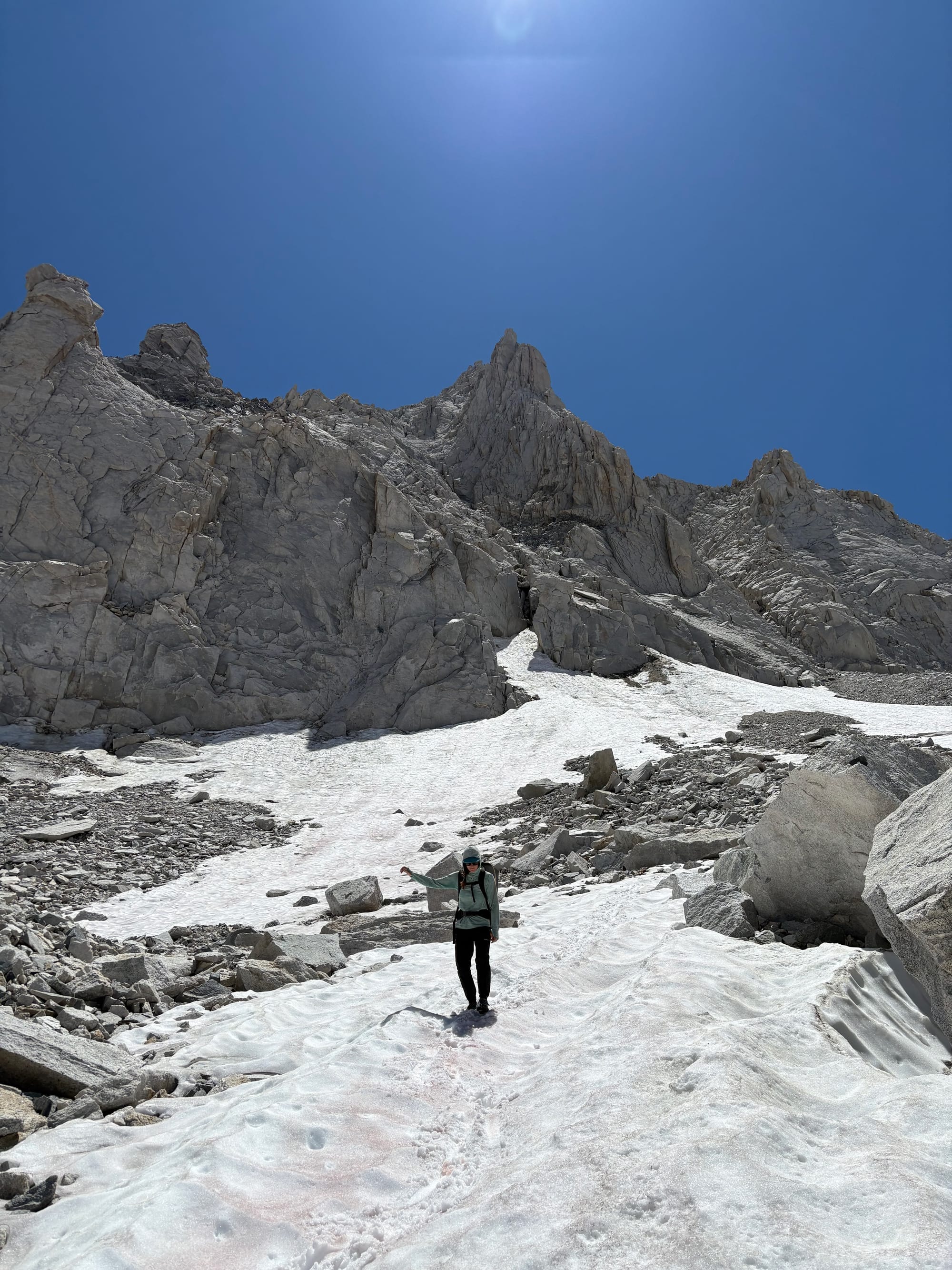
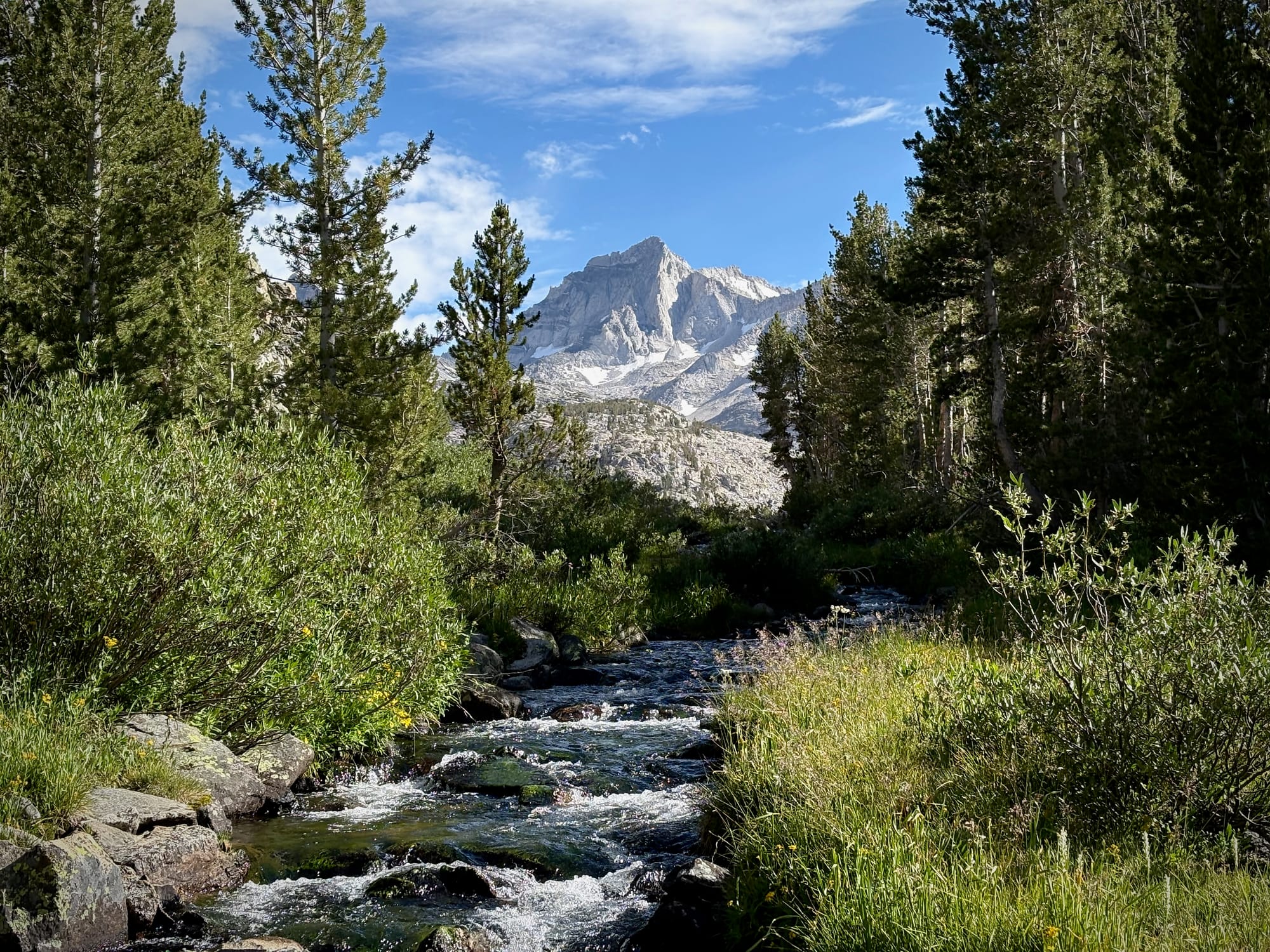
I would recommend the North Arete to anyone who is looking for a fairly chill day in the alpine in a beautiful area. As a full-package alpine experience it's hard to beat and easily up there in my top 10!
Trip Notes
- Overnight permits for this area are hard to come by due to the extreme popularity of the Gem Lakes among backpackers. Plan ahead, or get creative. It would be fairly straightforward to do this objective as a car-to-car mission, but camping at Dade Lake was so beautiful that I would recommend a bivvy.
- We considered cowboy camping but were grateful to have both decided to bring tents; even though the weather during the day was super mild, the evening winds on the Dade plateau were strong.
Gear Notes
- The BD Distance 15 kind of sucks as an on-route rock pack. In particular, the running vest style shoulder straps really want to twist and invert when you take it on and off, so accessing the contents of the pack at belays becomes a bit of a faff. I don't usually climb multipitch with a backpack, but if I need to in the future I'll probably use a bag with more structured shoulder straps. The top strap also isn't really adequate for keeping hold of a full-sized climbing rope.
- We brought a standard rack with doubles in the 0.4-0.75 sizes, but next time I'd probably take a simple single rack. Even though the pitches are long, the climbing is generally not sustained, with long spans where you're basically scrambling over easy 4th or 5th class so you can get away with a lot less protection that you otherwise might expect given the listed pitch lengths.