Third Pillar of Mt. Dana, Regular Route
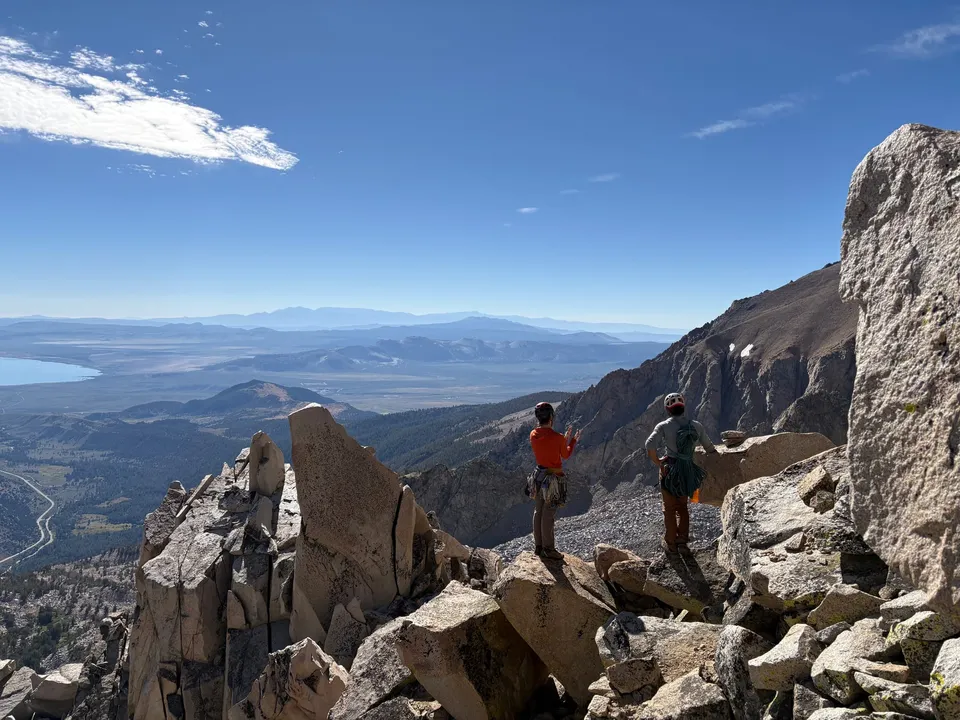
After a very successful first alpine outing of the season on Bear Creek Spire, I was excited to start ticking off more of the area's classic alpine climbs that were on my todo list. Fortunately, my friend Ellie Grimes who works as a rock guide in Moab had a full ~10 days off work and decided to make the drive out to the Eastside to scope out the area for the first time and climb together!
Thinking that it would be a good warm-up for the area (and to being at 9,000'+ above sea level), I suggested we start off with a day of short dome multipitches in Tuolumne. Unfortunately, the flaring shallow cracks and slab footwork in Tuolumne is about as far as you can get style-wise from Indian Creek splitters in Moab, so it turned out to be a bit of an unintentional sandbag for Ellie who, besides never having encountered to Tuolumne style before, hadn't climbed on granite at all since a Wind River trip in Wyoming the previous summer. To top it all off, we managed to get off route on the last walk-off of the day and spent an hour bushwhacking through manzanita in the dark to get back to our cars 🫠.
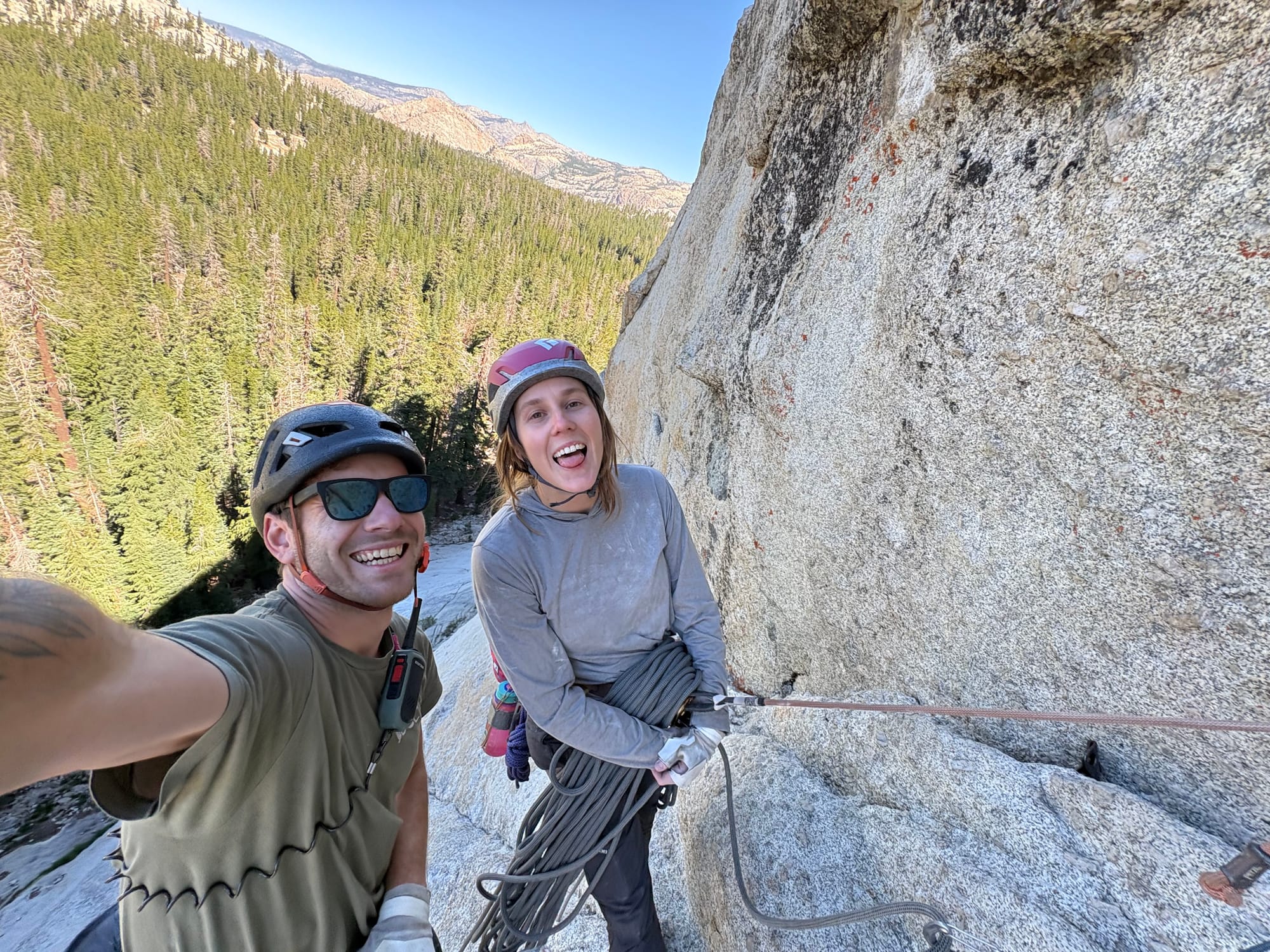
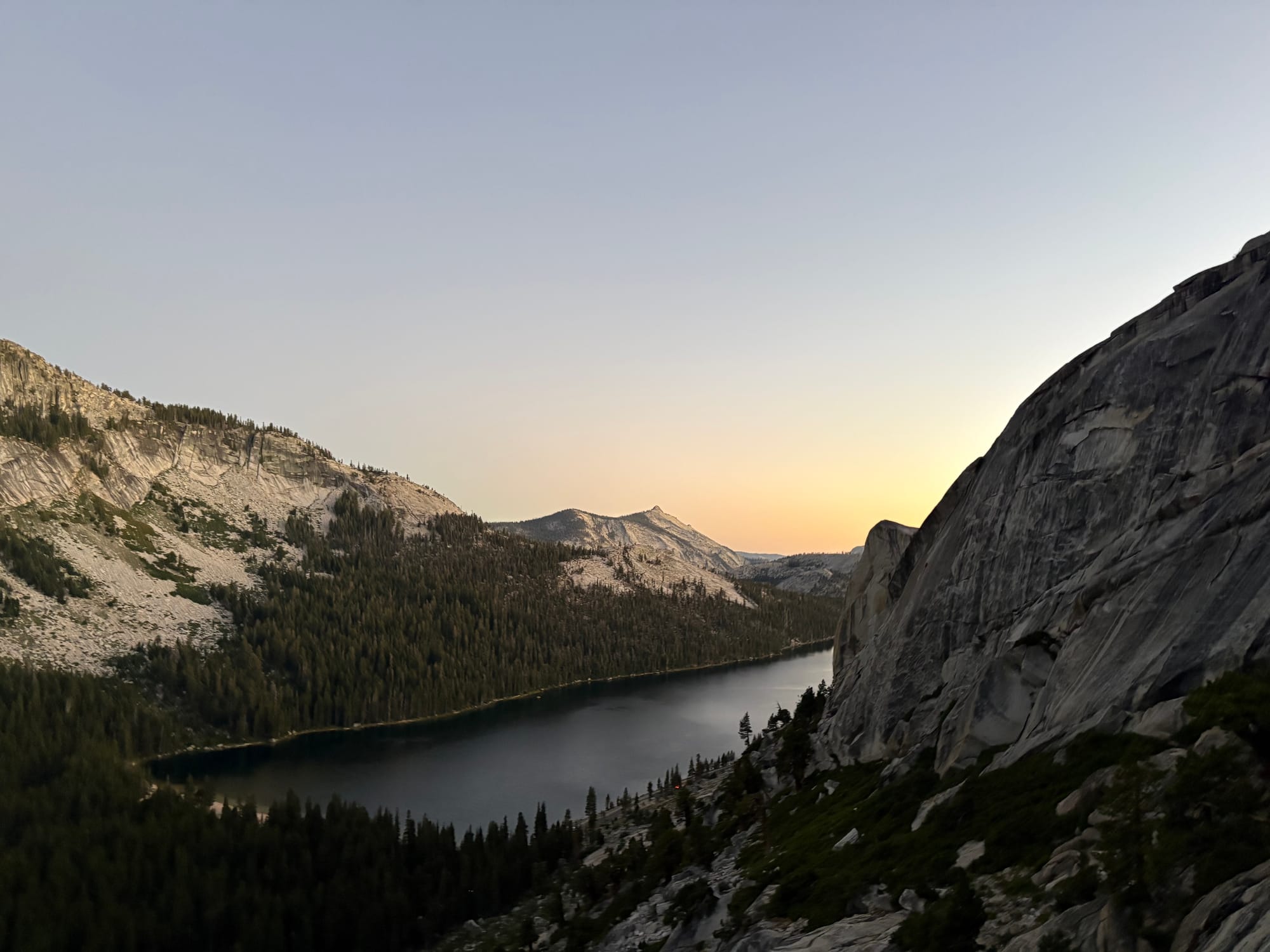
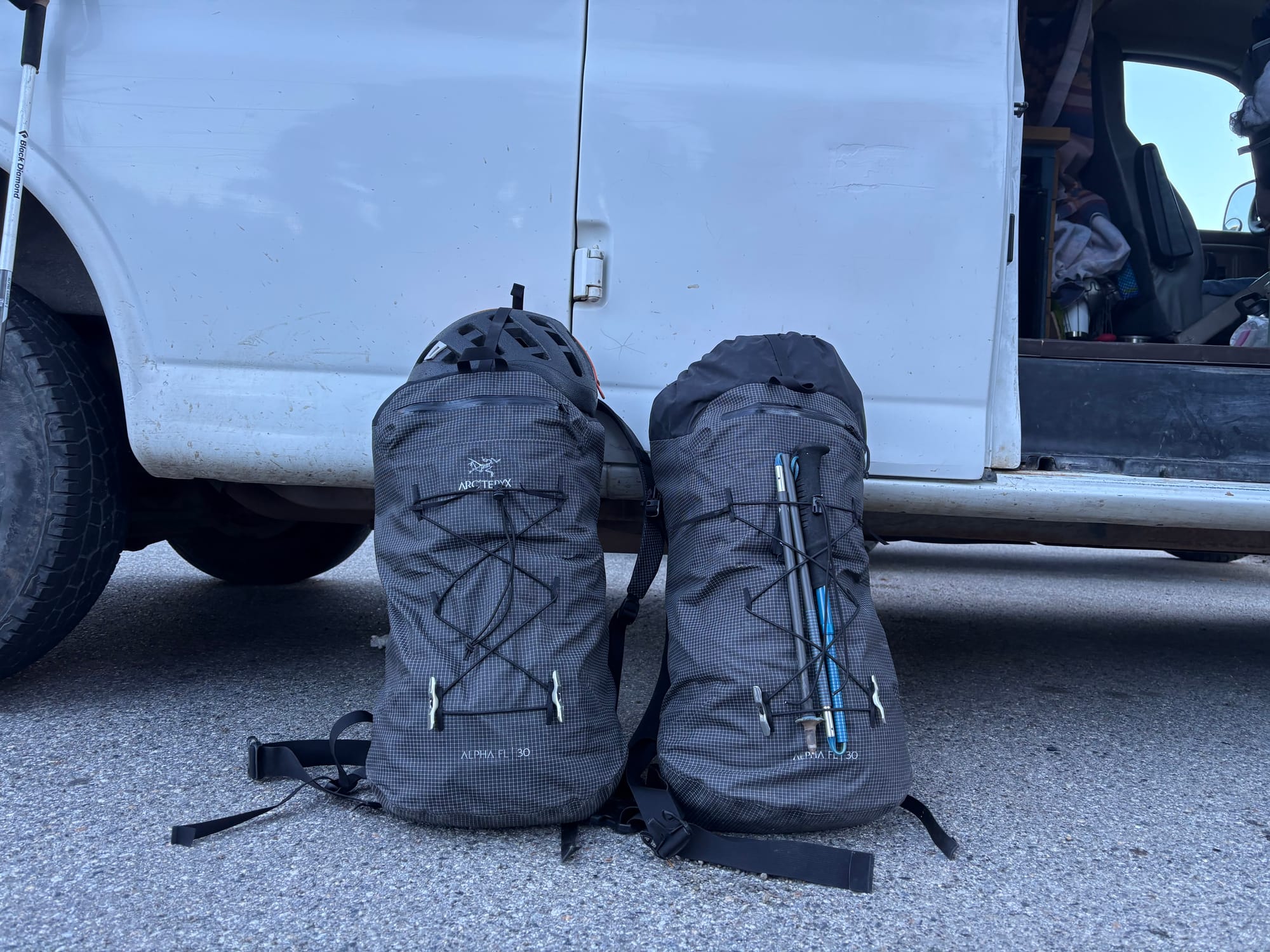
Fortunately, the trajectory of the week only went upwards from there! We took a day to chill and resupply in Mammoth, then set our sights on the Regular Route on the Third Pillar of Mt. Dana, a route that had come up over and over again as one of the best in the area via conversations with friends who have spent extended time in the Eastern Sierra. The Regular Route is unique in that you leave your backpacks at the top of the route and then do the descent prior to starting the climb – I'd already done the approach to the top of Third Pillar with Kelsey Almendariz shortly after our Mt. Tom climb in May, but back then we had been turned around by steep snow filling the descent gully that would have required ice axes and crampons to safely navigate.
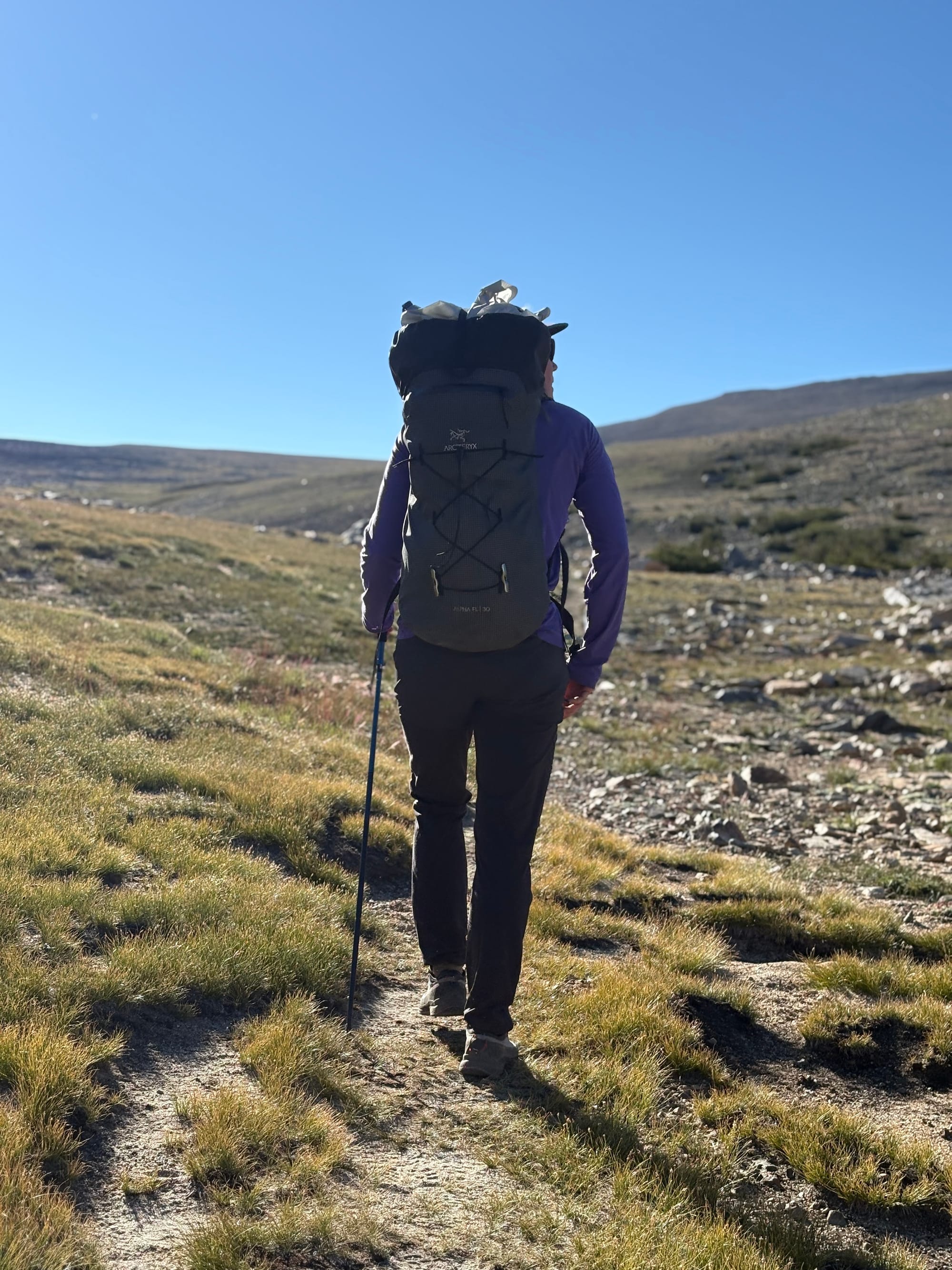
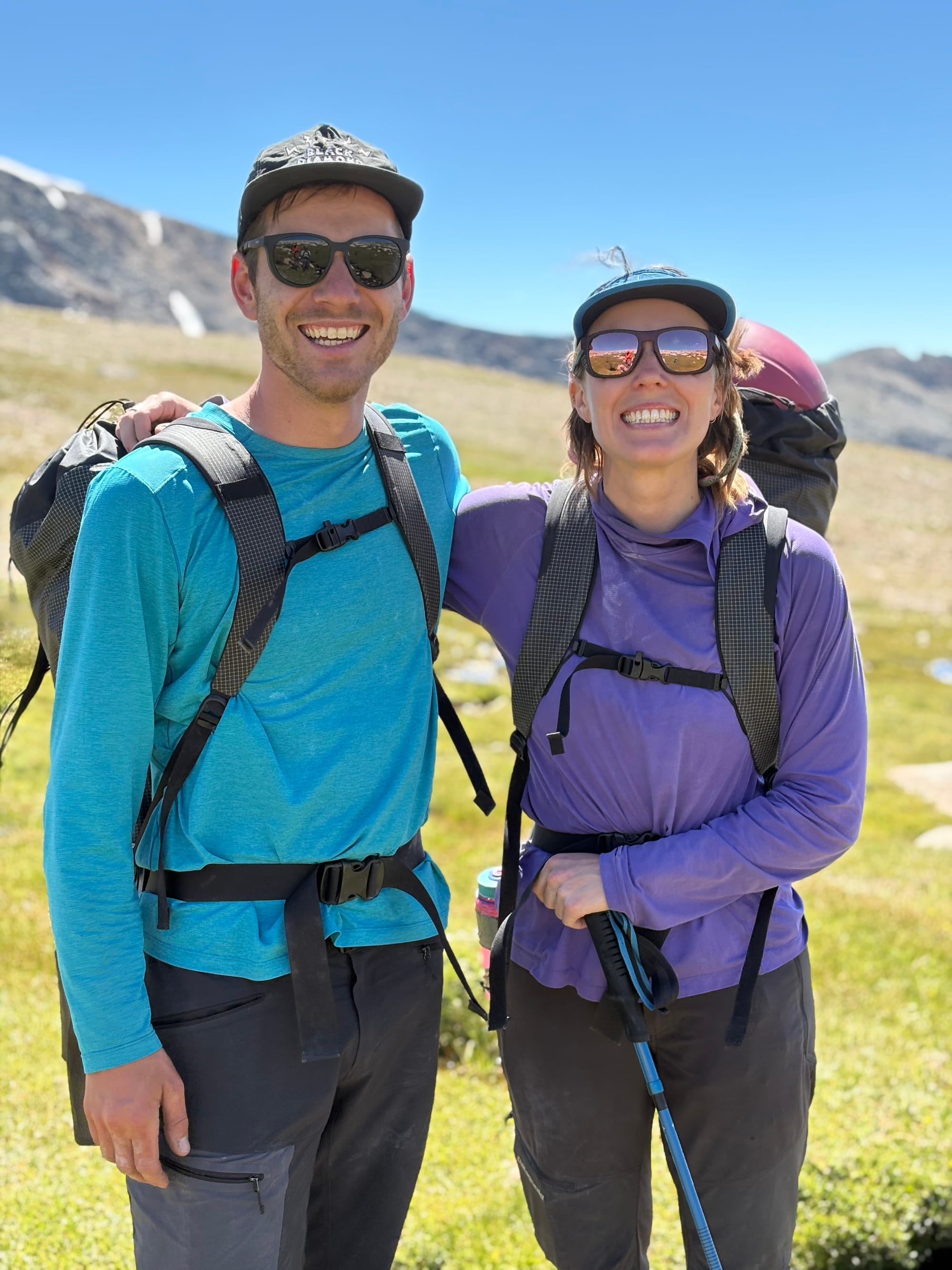
This time around, we expected the approach and the gully to both be fully snow-free. We left the parking lot at 7am and made our way up through the alpine meadows that wind up to the flat-top moonscape of the Dana Plateau. As we approached the route, we saw two other parties already up there doing their transitions, and as we got closer I realized that I recognized one of the other climbers! Dev and I knew each other from Indian Creek in early 2020, where we had both found ourselves sheltering in place in Creek Pasture as part of a crew of about a dozen dirtbags who were living in the campground when the COVID pandemic hit the US. I took my time chatting and catching up with Dev and his climbing partner Pete as Ellie and I racked up and got ready for the descent to the base of the route, hoping that the party ahead would be able to put some distance between us in that time so that we wouldn't get stuck behind them and stacked up at belays.
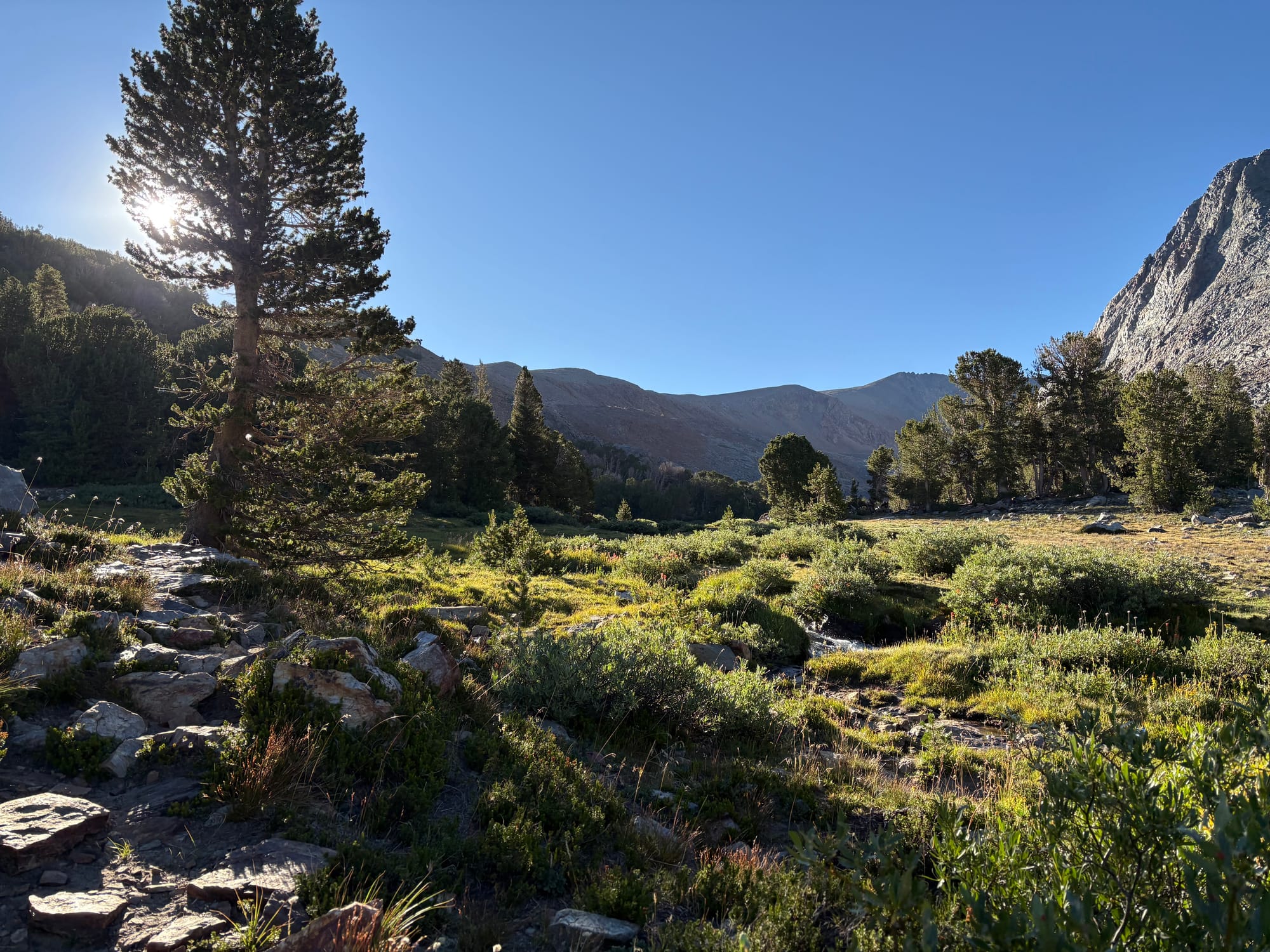
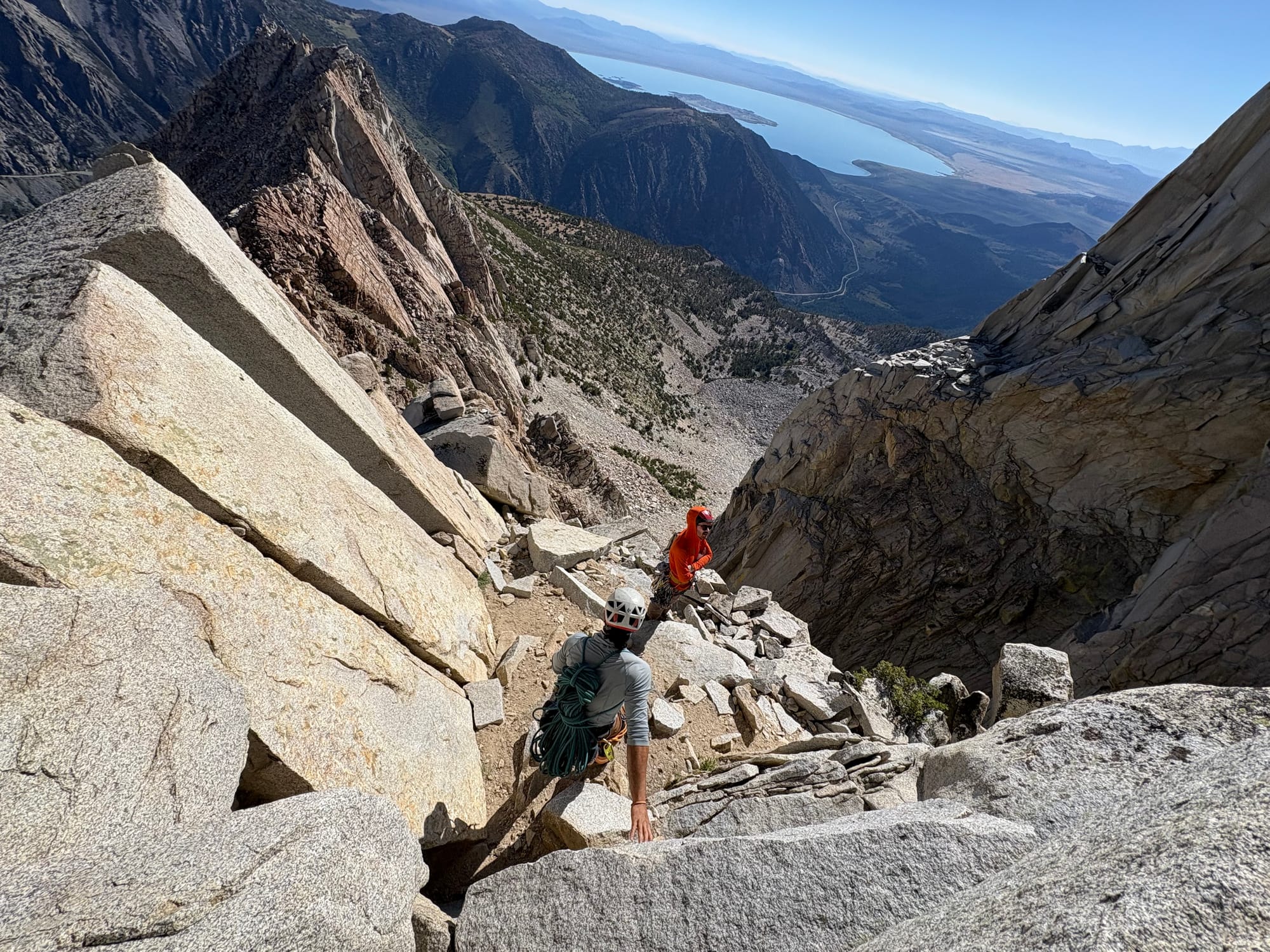
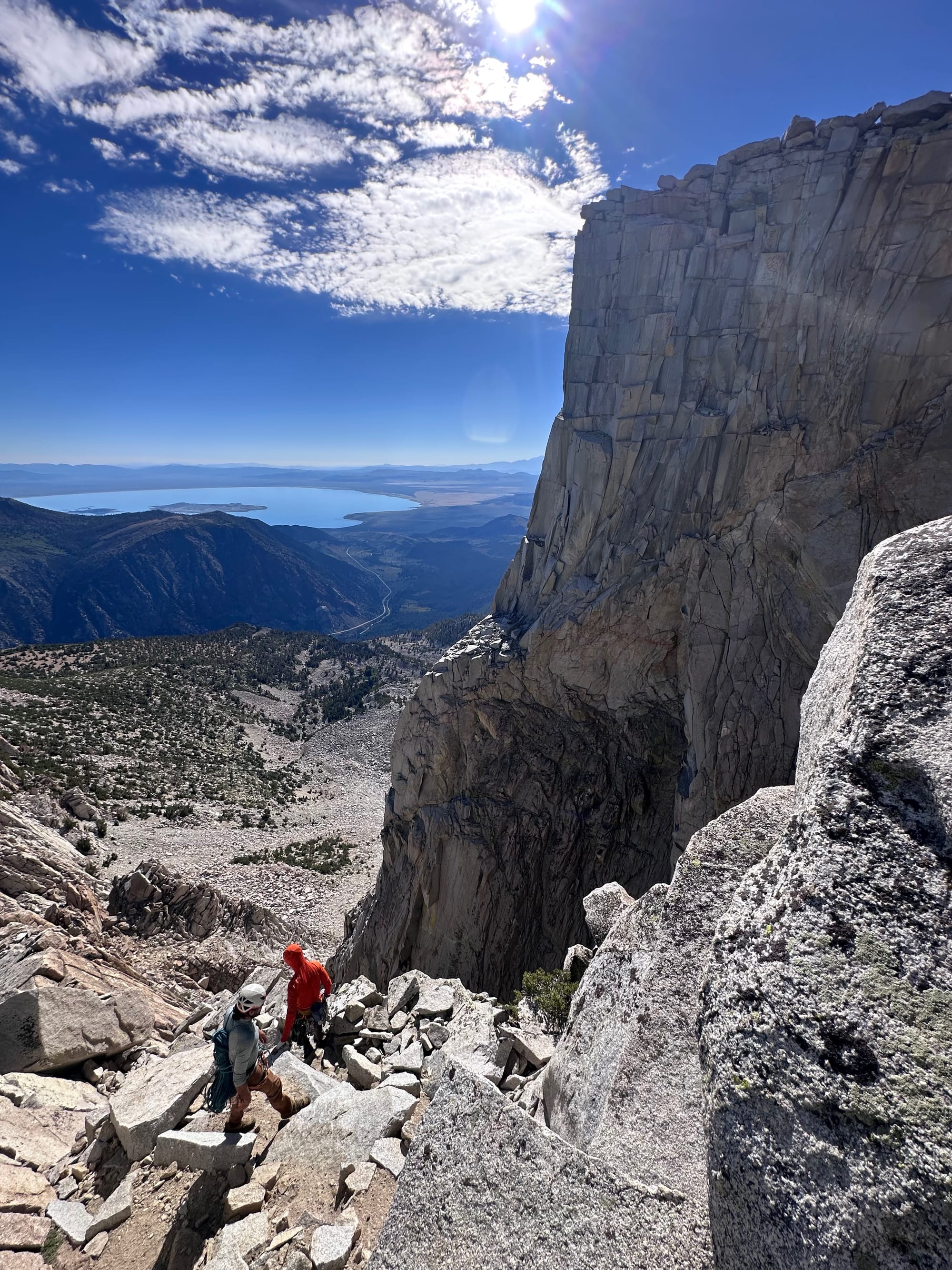
The descent down to the route gets a lot of flak on Mountain Project about how loose and sketchy it is, but we found it to be fairly straightforward class 3 with short spans of not-very-exposed class 4 scrambling. I think that a lot of folks get off route and end up in the gully to skiers' right way earlier than we did, which is where they find all the loose and sketchy terrain. We stayed either on the ridgeline or to the left of the ridgeline until we were nearly level with the start of the route, which seemed to work really well.
All four of us (Dev and Pete, and Ellie and myself) wound up catching up with the other party on this descent, who was obviously moving much slower than all of us. In a strange twist of logic, they agreed that we would all be moving faster than them on the route, but insisted that they wanted to start second in the order, sandwiched between our two faster parties. This seemed like a recipe for awkward and crowded belays, but neither Ellie or I felt like pushing the issue (in hindsight, we probably should have), so we let it slide and started last, with Dev & Pete going first and the other party going up in between us and our friends.
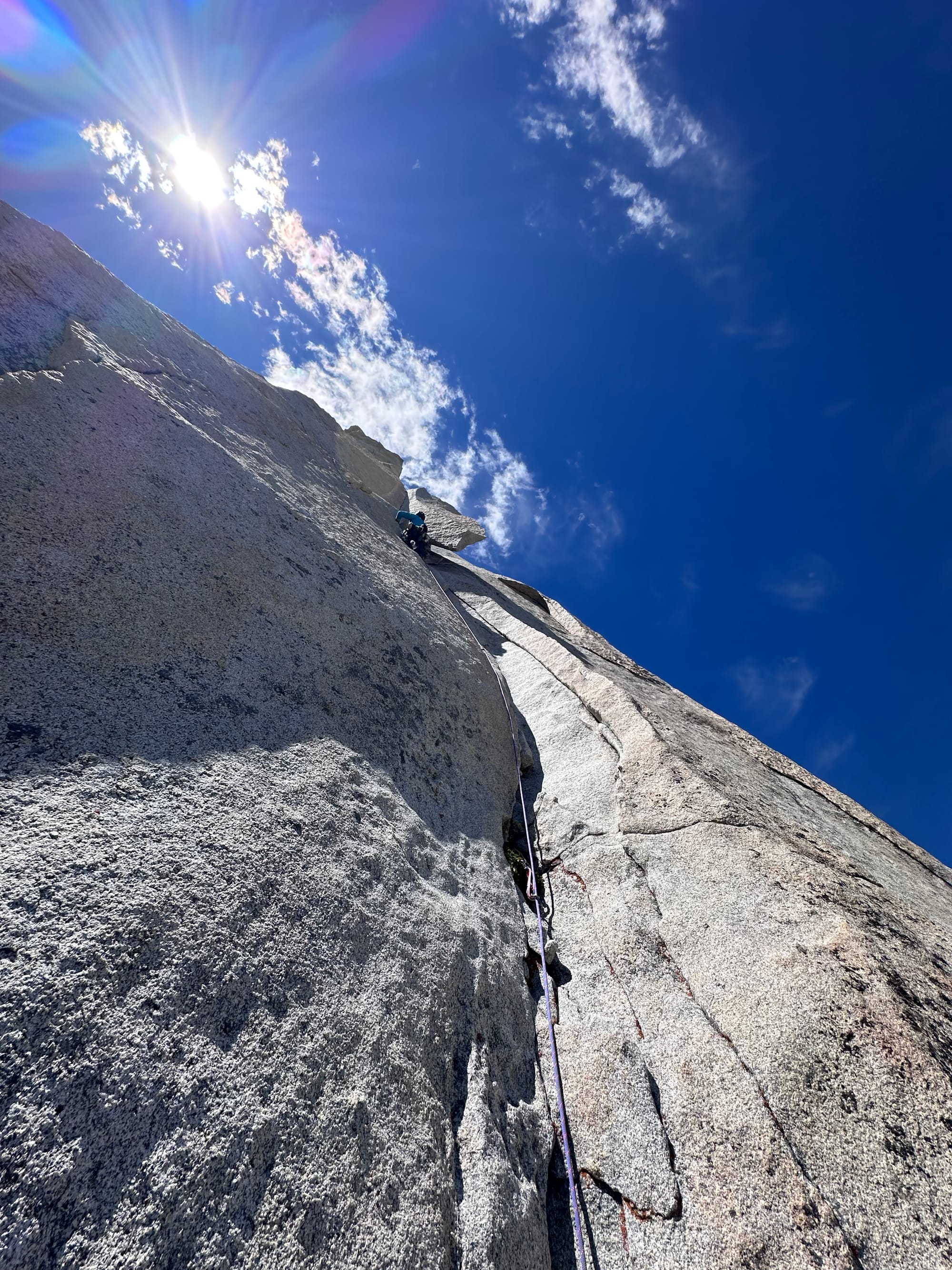
We realized our mistake as the other party started leading the first pitch of 5.8 at a rate that was obviously much slower than our normal climbing speed. We followed close behind with Ellie taking the first lead of the day on pitch 1 - a short but steep 5.8 fist crack that was maybe 20' long, terminating in a short sequence of finger jamming before yielding to easy 4th and 5th class terrain up to a good ledge. We had asked the follower in the other party to let us pass at this ledge and they seemed agreeable about this, but I arrived at the ledge to find the other leader had already started the next pitch, which is a sustained and flaring 5.10- finger crack in a slippery dihedral. Knowing that the next belay ledge was probably one of the only remaining places on the climb to pass comfortably, I decided we had to go for the pass here, leading up the pitch simultaneously with the other party. This turned out to be fairly challenging since many of the key pods in the finger crack were already stuffed full of gear (probably bumping the difficulty of the pitch by a letter grade or two!), but I managed to make it work and topped out on the good belay ledge while the other leader was still setting up their anchor.
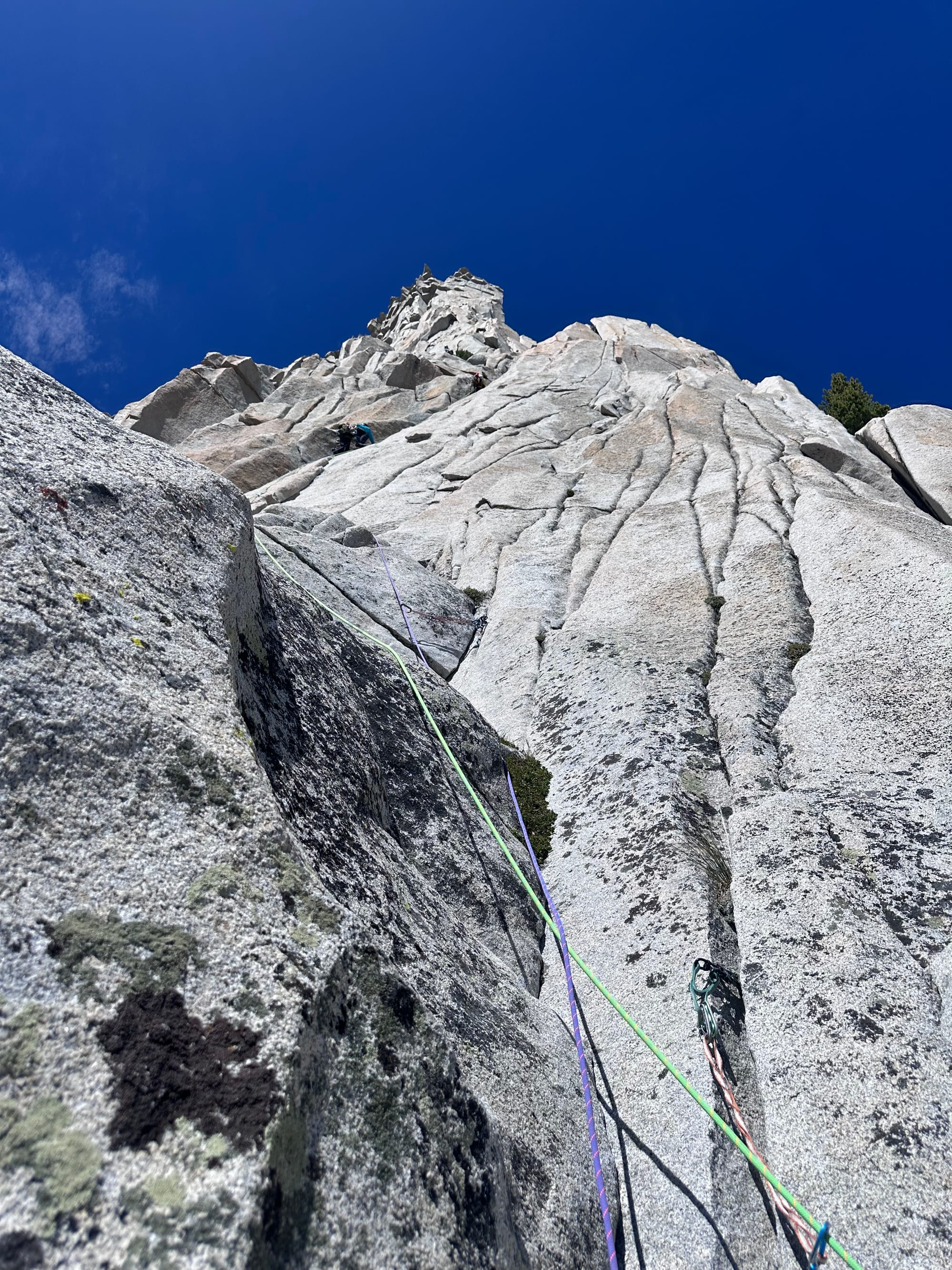
I made small talk with the other climber while I brought Ellie up to the P2 belay ledge. Our point made via my blitz up P2 to catch up with them, they suggested we pass at this ledge and Ellie took the lead for P3, which involves climbing ~5.8ish cracks up to a chimney sequence formed by a large detached flake.
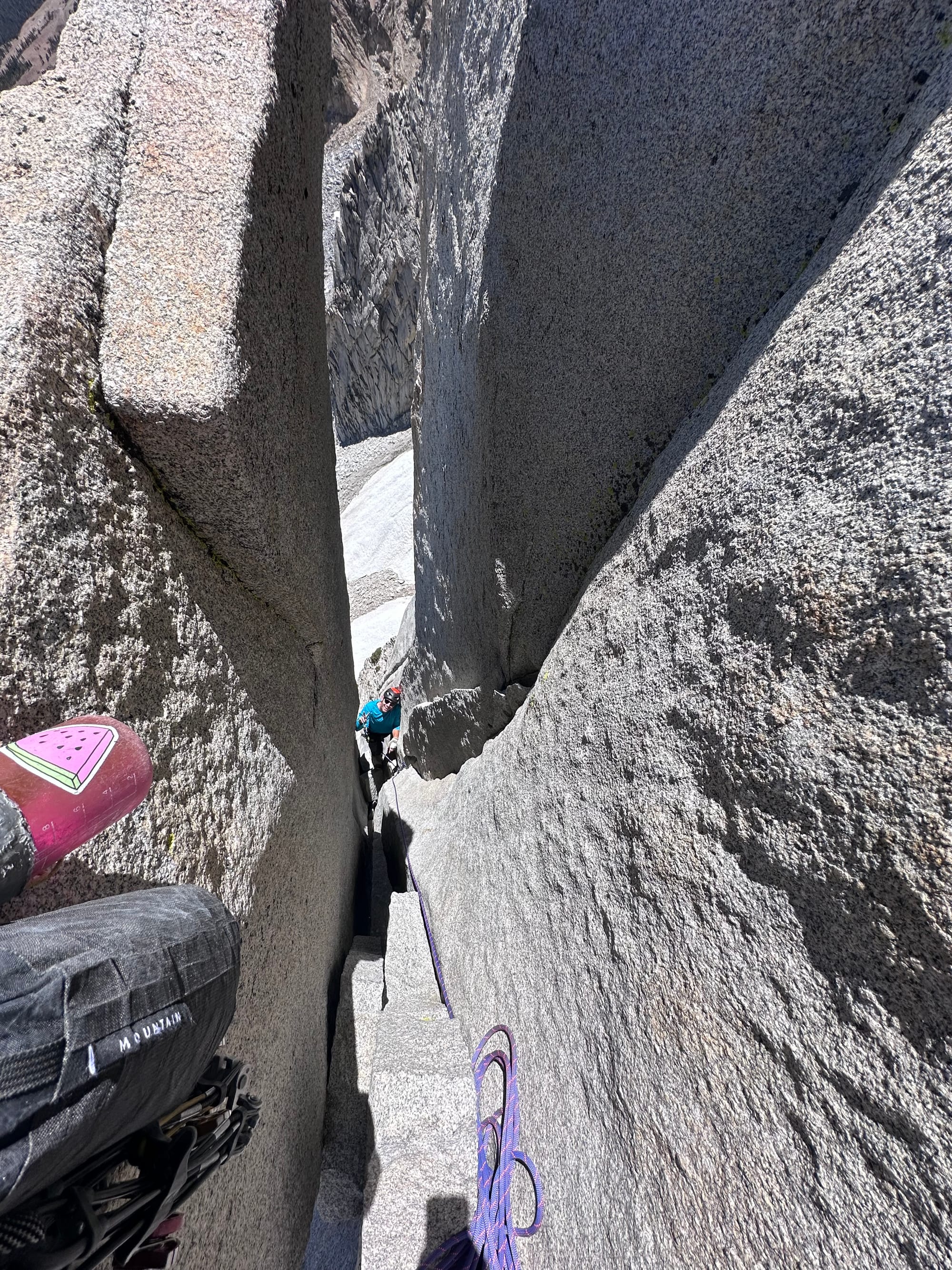
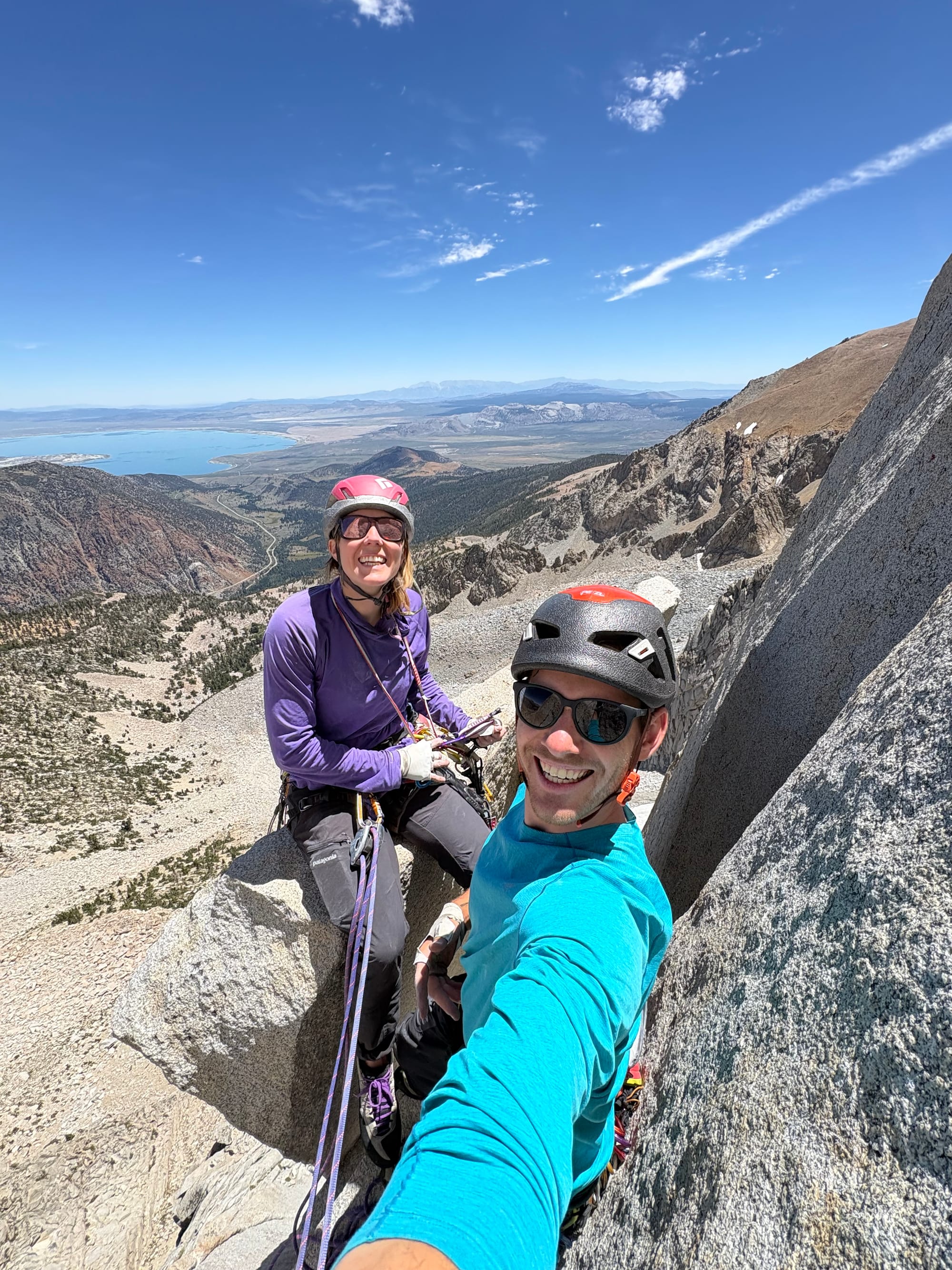
Up to this point the climbing had been quite good and in a beautiful setting, but the last two pitches took this already high bar and raised it even higher. Pitch 4 begins with a fantastic and steep but secure 10a finger crack where the only problem is that it isn't longer! After that, you get a break on a ledge before a really cool face climbing crux (10b-ish) that protected well with DMM brass offsets and microcams, then a juggy romp up good flake holds to an excellent belay ledge. Fun, engaging, and varied climbing for nearly 40m!
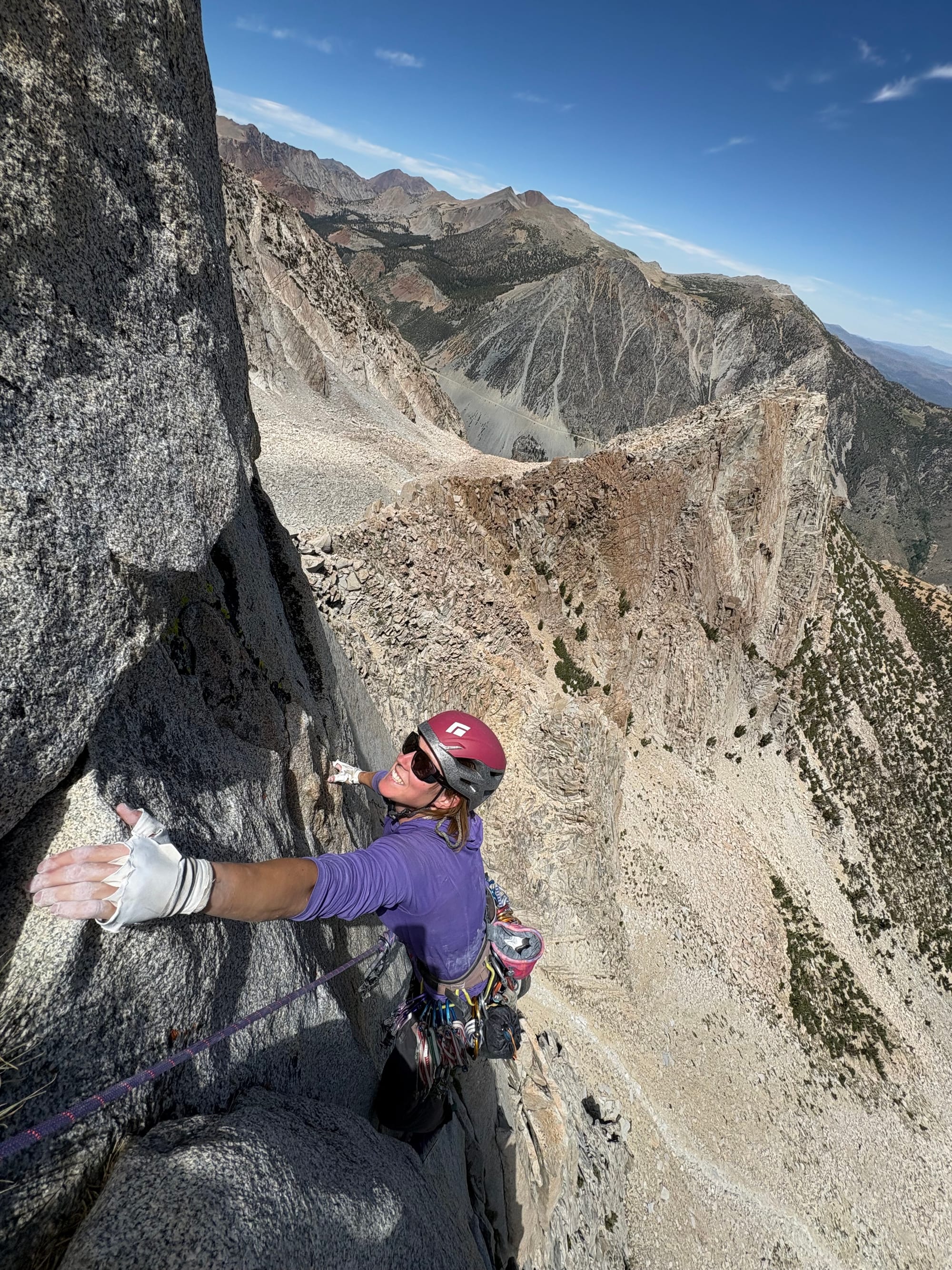
Pitch 5 has two more brief but interesting cruxes - a cool changing-corners move from a dish/ledge feature into a short splitter finger crack, and a two-move boulder problem up crimpy flakes to gain a jug that takes you up into the finishing hand crack. From there, it's steep and fun hand jamming all the way to a sporty rightwards traverse finish that deposits you on the top of the Third Pillar prow, with expansive views of the Mono Basin and a two minute walk back to your gear that's already at the top of the formation!
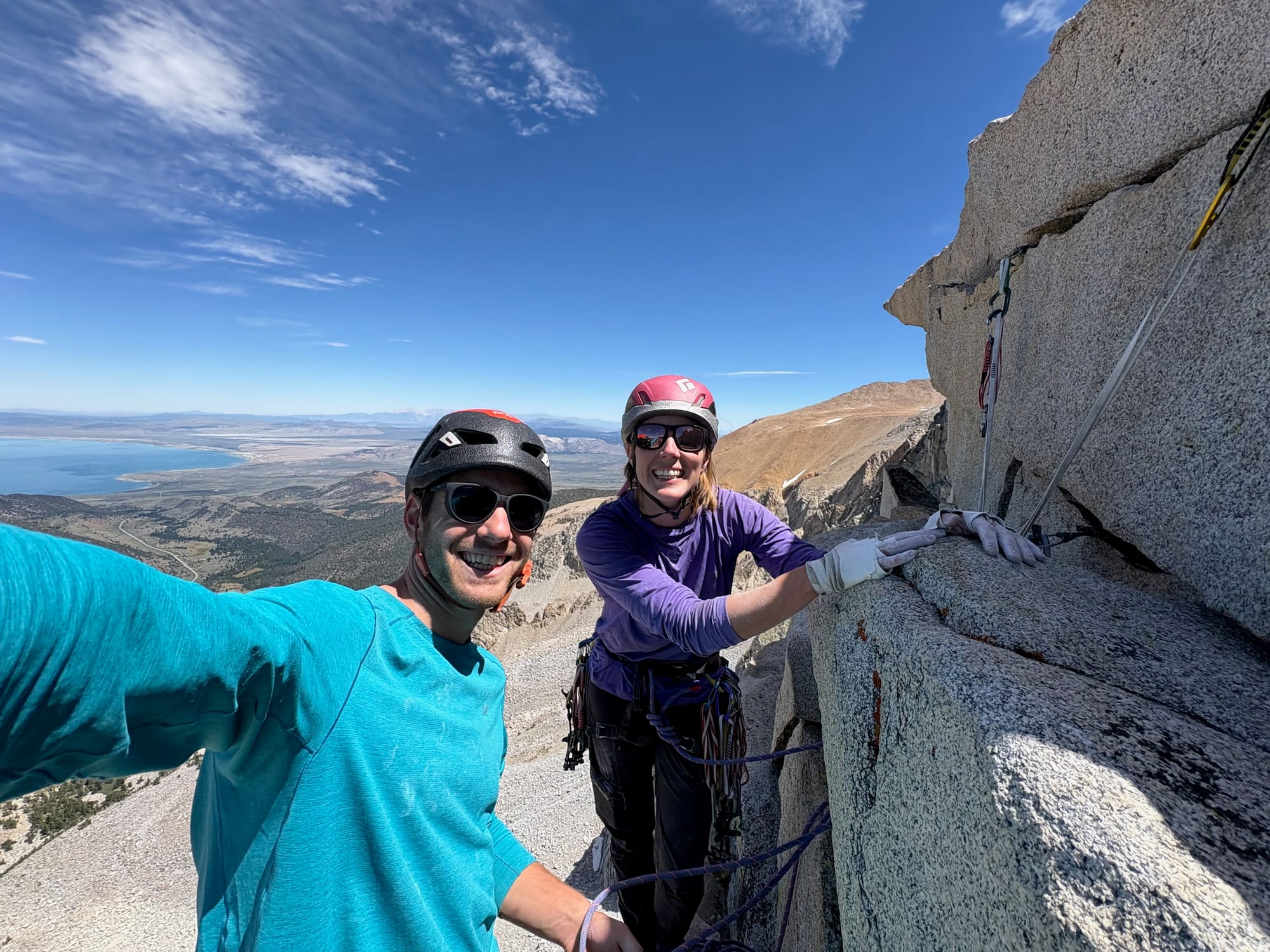
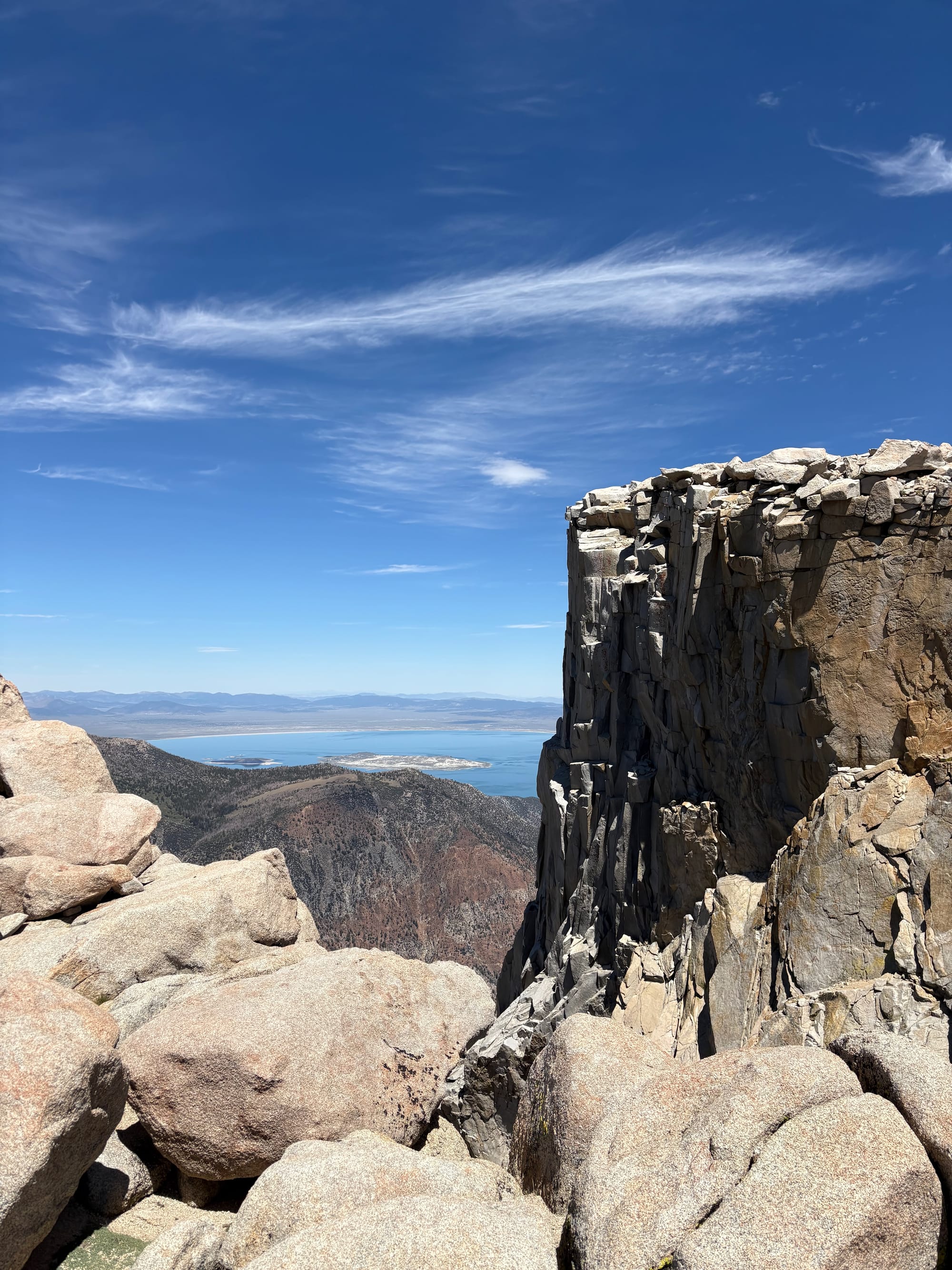
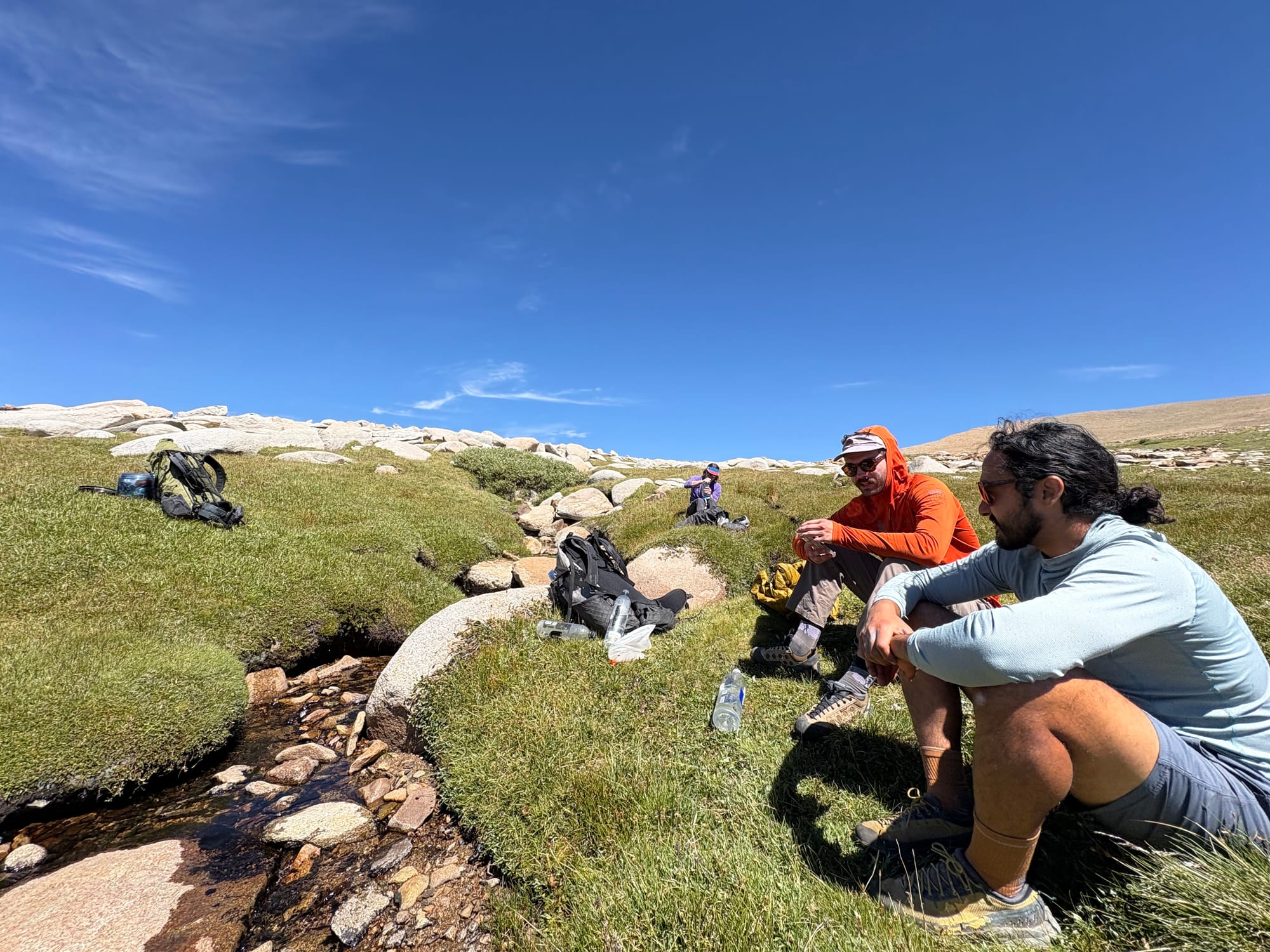
We packed up our gear and started the descent to find our friends Dev and Pete filtering water at the little alpine stream at the edge of the Dana Plateau! After stopping for snacks and water and to compare notes on the climb, we all ambled back down the trail to dip in Tioga Lake before making our way to the parking lot. Our total car-to-car time including lake dips, water stops, etc, was 9h 33min. Such a good day!
Trip Notes
- Weekends are busy on Third Pillar and can cause traffic back-ups on the route; try to climb it on a weekday if you can. The slower party we encountered started hiking at 6am, and in addition to them, us, and Dev + Pete, we witnessed another fast party show up around 11am and get stuck behind the conga line somewhere around P3, for a total of 4 parties on the route simultaneously 🙃
- I found the cruxes to be short-lived and accurate to the grade (not at all sandbagged), but it is true that they protect with small gear and all of the cruxes on the upper two pitches have ledge fall potential. This route has a bit of a reputation that you want to be a solid 5.10 leader in order to attempt it, and I would tend to agree.
- Since the route bakes in the sun until about 1 or 2pm, it's idea to aim for a cooler day to climb it. An afternoon start might be a viable strategy too, if you can move fast! We were pretty warm, but fortunately the top two pitches went into shade while we were still on the route (which was a relief after three pitches of sun)!
- Have a look at the descent beta available online (Steph Abegg's trip report is helpful here!) to avoid traversing too early and getting stuck in the loose gully!
Gear Notes
- Microcams (I brought and placed DMM dragonflies in 1, 2, and 3) and brassies were very helpful in protecting the cruxes on the Regular Route!
- Even in early August there was plenty of water on the Dana Plateau, so having water treatment options (Ellie brought a BeFree, I brought Aquamira) was nice to carry a lot less water up the approach and still have ways to stay hydrated!